
Why Swiss Schools Graduate Financial Illiterates (And How to Fix Yourself)
That assumption breaks spectacularly when you’re the first in your family to navigate Swiss banking, or when your parents’ financial strategy consists of stuffing cash in a PostFinance account earning 0.01% interest. The result? A nation of mathematically gifted twenty-somethings who can calculate compound interest by hand but have no clue how to apply it to their actual lives.
The Curriculum Gap Nobody Talks About
Walk into any Swiss Oberstufe (upper secondary school) classroom and you’ll find students grinding through calculus problems that would make Euler proud. Meanwhile, their bank accounts hemorrhage money on foreign transaction fees they don’t know they could avoid. One former student recalls months of math lessons on percentages and compound interest, concepts drilled into teenage brains and immediately forgotten because nobody connected them to the AHV/AVS (Old Age and Survivors’ Insurance) contributions printed on their first payslip.
The problem isn’t lack of content. It’s lack of relevance. A teacher can walk you through the formula for compound interest, but without showing you how that CHF 6,883 annual Säule 3a contribution could become CHF 400,000 by retirement, the knowledge evaporates the moment you leave the classroom. The system teaches the how but not the why.
This gap widens depending on your educational track. Students in the economics and law track at Gymnasium (academic high school) might glimpse tax forms and basic budgeting. Everyone else? Good luck. Vocational students in Lehre (apprenticeship) programs sometimes get practical training through Berufsmittelschule (vocational school), but coverage varies wildly by canton and instructor. In Zurich, you might fill out a full paper tax return. In Geneva, you might get a thirty-minute lecture on budgets that leaves you more confused than when you started.
Why Your Family Might Be Your Worst Teacher
The traditional Swiss fallback, “learn from your family”, works brilliantly if your parents understand the difference between a global equity ETF and a Swiss real estate fund. For everyone else, it’s like learning to drive from someone who only knows horse-drawn carriages.
Many Swiss families treat money discussions with the same enthusiasm as discussing politics at a family dinner: it’s taboo, uncomfortable, and likely to end in shouting. Parents who struggled with their own Steuererklärung (tax declaration) for decades aren’t equipped to explain why you should max out your Säule 3a before investing in a brokerage account. They’ve absorbed the same financial superstitions everyone else has: “property is always safe” (tell that to anyone who bought in 1989), “Swiss stocks are stable” (Nestlé dropped 40% in 2008 too), “debt is dangerous” (while paying 4% mortgage interest on a property that appreciates 2% annually).
The result is generational transmission of financial folklore, not financial literacy. You learn that your father checks his UBS account balance daily, so you do too, never mind that behavioral finance research shows this leads to worse investment decisions. You watch your mother hoard cash in savings accounts because “it’s safe”, missing out on decades of compound growth that could fund her actual retirement instead of just scraping by on AHV/AVS.
The Self-Education Survival Kit
Here’s the uncomfortable truth: nobody is coming to save you. Not the school system, not your employer, not the friendly advisor at your bank who makes commission selling you expensive actively-managed funds. The Swiss financial education gap is a feature, not a bug, of a system that profits from your confusion.
So where do you actually learn this stuff?
Your first payslip arrives with mysterious deductions, AHV/AVS, BVG/LPP (Occupational Pension), Krankenkasse (health insurance) premiums. Don’t just accept them. Google each line. Calculate what they mean. That CHF 400 monthly Krankenkasse payment? Understanding your deductible could save you CHF 1,000 annually.
Platforms like Fintool.ch offer courses tailored to Swiss residents, not generic American advice about 401(k)s and Roth IRAs. Their workshops cover Aktien (stocks), Blockchain, and other topics with actual Swiss context: how Quellensteuer affects your investment decisions, why your Säule 3a provider matters more than you think, how to avoid the foreign transaction fee traps that cost Swiss residents hundreds annually.
Open a Säule 3a account and make your first investment. Yes, you’ll make mistakes. You’ll panic when markets drop 10%. You’ll buy a fund with a 1.5% TER (Total Expense Ratio) before discovering cheaper options. But that CHF 500 mistake teaches you more than a thousand hours of classroom theory. The cost of financial ignorance isn’t the occasional error, it’s the decades of inaction while inflation erodes your savings.
You need to understand:
- The three-pillar system and why Säule 3a is your best tax-advantaged friend
- How Quellensteuer differs from ordinary tax assessment and when it benefits you
- Why avoiding hidden foreign transaction fees and bank charges matters more than chasing 0.1% better interest rates
- The difference between Betongold (concrete gold – real estate) and liquid investments, and why smart sellers are dumping real estate for ETFs
- How Swiss living expenses can derail your budget before you notice
The Real Cost of Financial Illiteracy
Let’s get specific. You earn CHF 70,000 annually in Zurich. You don’t understand how Quellensteuer works, so you never file a Steuererklärung. You leave CHF 10,000 in a PostFinance savings account earning 0.1% instead of investing it. You use your UBS credit card abroad, paying 2% foreign transaction fees on your €3,000 summer vacation.
Over five years, these “small” gaps cost you roughly CHF 8,000 in lost returns, unnecessary fees, and missed tax deductions. That’s a semester of university tuition. A down payment on a used car. Three months of rent.
The math gets uglier with bigger decisions. You liquidate your entire portfolio for a Swiss mortgage because “renting is throwing money away”, not understanding that renting versus buying is a leverage and opportunity cost calculation, not a morality play. You lock CHF 200,000 into a property yielding 1.3% while your ETFs would have returned 7%. Over a decade, that decision costs you CHF 100,000 in lost wealth.
Or you panic during the next market downturn and sell your global equity ETF, terrified by currency fluctuations you never properly understood. You crystallize a 30% loss that would have recovered within eighteen months. The classroom taught you to calculate percentages, but not to stomach volatility.
Building Your Own Curriculum
Forget waiting for the system to change. By the time Swiss schools add financial literacy to the Lehrplan (curriculum), you’ll be halfway to retirement. Here’s what to learn, in order:
Year 1: Survival
- Understand your payslip and all deductions
- Optimize your Krankenkasse deductible
- Open and fund a Säule 3a account
- Learn to file a Steuererklärung (even under Quellensteuer, you can often save money)
Year 2: Defense
- Build an emergency fund (3-6 months expenses)
- Eliminate high-interest debt
- Understand your insurance needs (liability, legal, supplemental health)
- Stop bleeding money on bank fees and foreign transaction charges
Year 3: Offense
- Start investing in low-cost global equity ETFs
- Understand asset allocation and your risk tolerance
- Learn about Swiss property market realities if homeownership is a goal
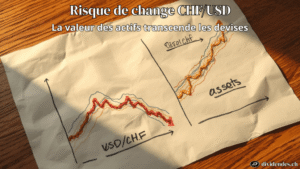
- Grasp how currency fluctuations actually impact your investments (hint: less than you think)
Year 4: Optimization
- Advanced tax optimization (pillar 2 buybacks, timing of deductions)
- Estate planning basics
- Portfolio rebalancing and tax-loss harvesting
- Evaluate whether rental property yields versus equity ETF returns make sense for your situation
Each stage builds on the last. You can’t optimize taxes before you understand your income. You shouldn’t invest before you have insurance. The order matters.
The Bottom Line
Swiss schools fail at teaching money management because the system was never designed to create financially independent citizens. It was designed to create productive workers who trust institutions, banks, insurance companies, pension funds, to handle the complexity for them. That model worked when pensions were generous and bank advisors actually advised. It collapses when you’re responsible for your own financial future in a world of zero interest rates and 2% inflation.
The good news? You don’t need permission to educate yourself. The resources exist. The communities exist, online forums where Swiss residents share actual numbers and strategies, not theoretical fluff. The tools exist: cheap brokerage accounts, Säule 3a providers with 0.0% fees, tax software that guides you through declarations.
Your Gymnasium might have failed you. Your Lehre might have skipped the important stuff. Your family might have passed down myths instead of methods. But you have something previous generations didn’t: unlimited access to information and a community of Swiss residents who’ve already figured out which paths lead to wealth and which lead to the poorhouse.
The only question is whether you’ll take the first step. Open that Säule 3a account. Download that tax software. Join that forum. Make that first investment mistake. Because the cost of waiting for someone to teach you is far higher than the cost of teaching yourself.
The Swiss education system won’t save you. But you can save yourself. Start today.