
You’ve just signed the final papers. The notary in Zurich has stamped everything, and CHF 3,000,000 is hitting your Swiss bank account. After years of grinding, your tech startup finally sold, not for unicorn money, but enough to change everything. You’ve waited for this moment for years, but now it’s just… a day. The money lands with a whisper, not a bang.
Your first instinct? Dump it all into VOO and get back to work. After all, you’ve been dollar-cost averaging into the S&P 500 for years. It’s simple, proven, and beats trying to outsmart the market. But here’s the problem: that simple move could quietly erode your wealth faster than a Swiss tax audit.
When Your Windfall Meets Swiss Reality
Let’s talk about the 30-year-old founder who posted about his CHF 3 million windfall. His existing portfolio was already 80% S&P 500. The logical next step feels like going all-in, why complicate what works? But Switzerland has a way of punishing simplicity at scale.
The first danger isn’t obvious: currency concentration risk. When your entire life is denominated in Swiss francs, your rent in Zurich, your health insurance premiums, your eventual property purchase in Zug, holding 100% of your wealth in USD-denominated assets is like building your house on a fault line. You might not feel the tremors daily, but when they hit, the foundation cracks.
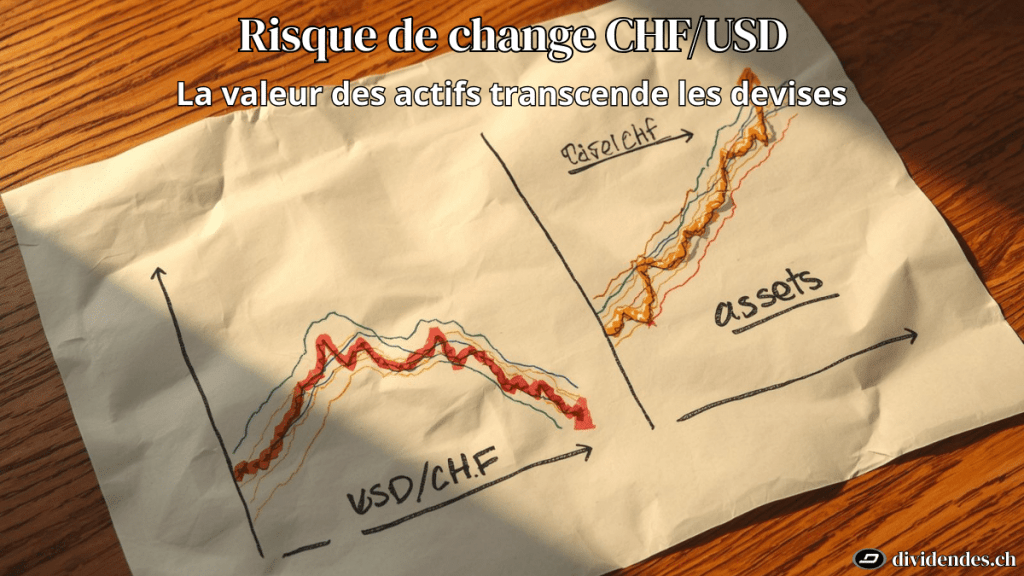
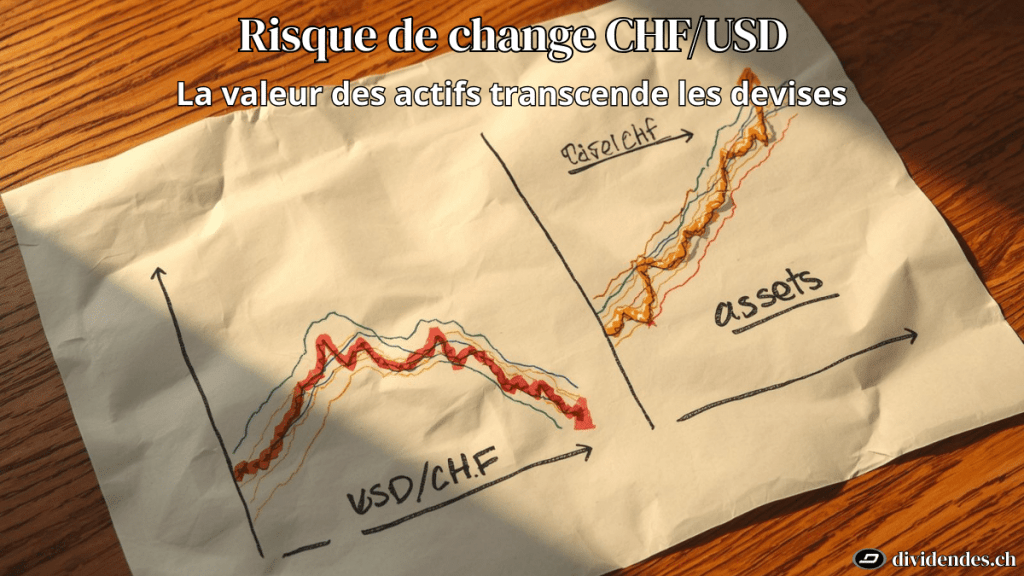
In 2025 alone, the dollar shed over 12% against the CHF. If you’d dumped your CHF 3 million into VOO at the start of the year, you’d have watched CHF 360,000 evaporate purely from currency movement, before even considering market performance. Sure, the S&P 500 gained about 3% in CHF terms, but that’s cold comfort when you’re down six figures on exchange rates alone.
The 2015 Lesson Most Expats Missed
January 15, 2015. The SNB (Swiss National Bank) dropped the EUR/CHF floor. The franc surged 20% in minutes. Panic. Brokers went bankrupt. Export companies saw their margins compressed overnight. But here’s what the headlines missed: investors holding international equities didn’t suffer permanent damage. Why? Because assets have intrinsic value that transcends currency stickers.
This is the critical distinction most new Swiss residents get wrong. An ETF traded in USD doesn’t “contain” dollars, it contains Apple factories, Microsoft cloud infrastructure, Johnson & Johnson patents. These are real assets generating revenue in dozens of currencies. When the dollar weakens, these multinationals actually benefit: their international revenues translate into more dollars on their financial statements.
But here’s the Swiss-specific twist: your Quellensteuer (withholding tax) obligations, your Säule 3a (Third Pillar) contribution limits, and your eventual Steuererklärung (tax declaration) complexity all depend on CHF-denominated calculations. A massive USD position creates a reporting nightmare and potentially suboptimal tax treatment.
Why Swiss Bank Structures Aren’t Just for Oligarchs
The knee-jerk reaction is to assume Swiss wealth management means hidden vaults and numbered accounts. Reality check: firms like VZ VermögensZentrum and BNP Paribas Wealth Management in Switzerland offer something US brokers don’t, multi-currency asset structuring designed for Swiss tax residency.
BNP Paribas Wealth Management, managing EUR 517 billion globally, provides actual Vermögensverwaltung (wealth management) that considers your entire Swiss life: mortgage planning, pension optimization, and cross-border tax efficiency. They’re not trying to beat the market, they’re trying to prevent CHF 3 million from becoming CHF 2.3 million after a currency swing and a poorly timed US tax event.
Independent advisors at VZ focus on optimizing income, wealth, and taxes simultaneously. For a CHF 3 million windfall, they’d likely structure:
– CHF 500k-800k in CHF-denominated bonds or real estate for stability
– CHF 1.5M in global equities (not just US)
– CHF 300k in your Säule 3a and BVG/LPP (Occupational Pension) top-ups
– CHF 400k in alternative assets (private equity, commodities)
This isn’t about being conservative, it’s about being antifragile in a system where your wealth is measured in francs but your investments are in dollars.
The Scaling Problem No One Talks About
Your existing CHF 280k in stocks taught you that scaling up monthly ETF contributions works. But scaling from CHF 280k to CHF 3.28M overnight breaks that model. Suddenly, you’re not a retail investor anymore, you’re a private banking client whether you like it or not.
The risks of scaling up monthly ETF contributions significantly change dramatically at this level. Market impact becomes real. A CHF 3 million market order moves prices. Your brokerage sees you differently, suddenly those “free” trades come with hidden costs through ETF provider relationships that profit from your flow.
More importantly, your asset allocation becomes a tax event. Selling CHF 280k of existing positions to rebalance? Capital gains. Dividend distributions from your CHF 3M VOO position? US withholding tax that may or may not be recoverable in Switzerland, depending on your Steueramt (Tax Office) and double taxation treaties.
Hedging: The Expensive Illusion of Safety
“Fine”, you think. “I’ll just buy CHF-hedged S&P 500 ETFs.” Bad move. Research from Morningstar and Acadian Asset Management shows hedging costs 1-2% annually through forward contract rollovers. Over 20 years, that’s CHF 600k-1.2M in friction costs, more than most currency swings.
Academic studies confirm that currency hedging over long horizons loses effectiveness and can even increase volatility. You’re paying a certain premium for random protection. It’s like buying insurance that might pay out, might not, but definitely costs you either way.
The smarter approach? Use CHF strength as a buying lever. When the franc surges, your purchasing power increases. Instead of hedging, keep 30-40% in CHF cash or near-cash instruments, then deploy during USD weakness. You’re effectively dollar-cost averaging on a currency level.
What Actually Works for Swiss Startup Millionaires
Here’s the allocation that makes sense in Switzerland:
Immediate Actions (First 30 Days):
– Park CHF 2M in a Swiss Kantonalbank money market account yielding 1.5-2%
– Max out your Säule 3a for the tax deduction (CHF 7,056 in 2026)
– Consult a Steuerberater (tax advisor) about Quellensteuer optimization
Phase 1 (Months 2-6):
– Deploy CHF 1M into global equities via Swiss-domiciled ETFs (lower withholding tax)
– Keep CHF 500k in CHF bonds or Swiss real estate funds
– Allocate CHF 300k to your BVG/LPP pension gap if you’ve been self-employed
Phase 2 (Months 7-12):
– Diversify into private equity or venture (your network gives you edge here)
– Consider transitions from real estate liquidation to ETF accumulation if property makes sense for your life plans
– Review with a wealth manager, not for stock picks, but for estate planning and cross-border mobility
This approach acknowledges that weighing real estate ownership against equity market exposure is different when you have CHF 3M and Swiss property prices start at CHF 1.5M for a two-bedroom in Zurich.
The Tax Trap You Didn’t See Coming
Here’s where it gets spicy. Switzerland taxes wealth, not just income. Your CHF 3M in VOO gets hit with Vermögensteuer (wealth tax) annually, regardless of performance. But the US also taxes dividends at 15-30% withholding. You can reclaim some via DA-1 form, but the process is Byzantine and often incomplete.
Worse, if you ever move back to the US or another country, you’re sitting on massive unrealized gains in a foreign-domiciled account. Swiss wealth managers structure assets to be portable, US brokers don’t.
And let’s talk about financial knowledge gaps affecting investment decisions. The Swiss system assumes you understand these complexities. Schools teach Goethe, not Quellensteuer. Your Steueramt won’t hold your hand. They’ll just send a bill.
The Bottom Line: Don’t Confuse Simplicity with Intelligence
The Bogleheads philosophy works, until it doesn’t. At CHF 3M, you’re not optimizing for returns anymore. You’re optimizing for survival through currency shocks, tax efficiency, and life changes.
Dumping everything into VOO feels smart because it’s simple. But Swiss wealth preservation demands a different kind of intelligence: the ability to see how CHF 3M can become CHF 2M through invisible leaks, currency, taxes, opportunity cost, and regulatory friction.
Your startup succeeded because you understood a complex system better than others. Your wealth will survive for the same reason. Don’t let the anticlimax of the windfall blind you to the complexity of keeping it.
Actionable next step: Before you click “buy” on that CHF 3M order, book a consultation with an independent Swiss wealth advisor. Not to hand over control, but to map the minefield. The first meeting is often free, and it might save you CHF 500,000 in mistakes you didn’t know existed.
The S&P 500 isn’t going anywhere. But your CHF 3 million? That’s a once-in-a-lifetime opportunity to build something truly antifragile, if you resist the siren song of simplicity.