Swiss Wealth Temptation: Ditching Your Rental Properties for ETF Dreams
You’re 39, pregnant, and staring at a spreadsheet that shows your rental property yielding 1.3% while your ETFs are hitting 7-8%. The urge to smash that “sell” button feels almost physical.
That CHF 1.25 million apartment you bought for CHF 700k four years ago? It represents everything wrong with Swiss real estate right now: low returns, high maintenance, and the fantasy of stability that might be costing you your financial independence.
This isn’t just a math problem. It’s a psychological cage match between the Swiss obsession with “concrete gold” (Betongold) and the cold, hard logic of modern investing. Let’s break down why that property feels safe but might be the riskiest thing you own.
The Numbers That Make You Question Everything
The Reddit post that sparked this debate tells a familiar story: three rental apartments, CHF 1.9 million already in ETFs, and a serious buyer offering CHF 1.25 million for one property.
The net yield? A miserable 1.3% after all costs. Meanwhile, their ETF portfolio is delivering 5-8% returns.
Market Reality Check
- Real Estate: ~1.3% Net Yield
- ETF Portfolio: 5-8% Gross Return
- S&P Average (since 1900): 6.8%
Here’s the kicker: Swiss stocks have delivered an average nominal annual return of 6.8% since 1900. Even conservative estimates suggest 5-6% is realistic for a long-term equity strategy. That property isn’t just underperforming, it’s actively sabotaging your FIRE timeline.
But before you call your notary, you need to understand the tax guillotine waiting for you.
The Grundstückgewinnsteuer: Your New Worst Friend
Selling that property triggers the Grundstückgewinnsteuer (property gains tax), and it’s more brutal than most sellers realize. The tax is calculated on your profit, CHF 550,000 in this case, and the rate depends on your canton and holding period.
Short-Term Pain
In Zurich, that four-year holding period puts you in the highest tax bracket. A CHF 500,000 gain after four years faces roughly 38% tax.
Long-Term Relief
After 20 years, it drops to about 19%. You held for four years. Do the math.
The notary will withhold 5-10% of the sale price to secure this payment. You’ll get a refund if you overpaid, but don’t count on it. And here’s what keeps tax lawyers in business: if you reinvest in another Swiss primary residence within two years, you can defer the tax through Ersatzbeschaffung (replacement procurement). But you’re not buying another home, you’re going all-in on ETFs. That tax bill is coming due.
Keep every receipt since 2020. Every renovation, every notary fee, every handyman invoice. These documents are unverjährbar (never expire) and can reduce your taxable gain. But even with perfect documentation, you’re looking at a significant haircut.
Currency Risk: The Silent Portfolio Killer
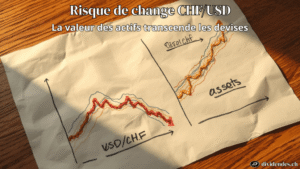
One commenter nailed the elephant in the room: “The low-yield of the property is in CHF. And the return of your ETF are USD dependant.”
Last year, the S&P 500 rose 15% in USD terms but only 2% in CHF. That 7-8% ETF return you’re celebrating? It might be mostly currency illusion. When you compare a 4% USD high-yield savings account to CHF sitting in a Swiss bank account, the CHF often comes out ahead after currency fluctuations.
This is where many Swiss investors get burned. They see juicy global ETF returns and forget that their future expenses—rent, health insurance, groceries—are all in Swiss francs. A 50% CHF appreciation against the dollar could wipe out years of nominal gains.
You can hedge currency risk with CHF-hedged ETFs, but these carry higher fees and their own complexities. The property, for all its faults, pays you in the currency you’ll actually spend.
The Leverage Trap That Looks Like Opportunity
Option 3 in the original post suggests keeping the property and borrowing against it via Lombardkredit (Lombard loan) or mortgage to invest in ETFs. At current fixed rates around 0.8% for 5-7 years, the math seems compelling.
The Theory
Borrow at 0.8%, invest at 5-8%, pocket the difference.
The Reality
A margin call during a market downturn could force you to liquidate ETFs at the worst possible moment.
What could go wrong? Everything, actually. Interest rates could rise, squeezing your spread. And you’re now exposed to both property market risk and equity market risk simultaneously.
One commenter wisely advised against Lombard loans specifically, suggesting fixed-rate mortgages instead. But even that adds complexity when you’re pregnant and craving simplicity. The psychological burden of debt-fueled investing while starting a family isn’t trivial.
Why “Safe” Real Estate Is Riskier Than You Think
That property feels safe because it’s tangible. You can touch the walls, see the neighborhood, understand it. But safety and low volatility aren’t the same thing.
- Rising interest rates pressuring valuations
- Potential regulatory changes
- Ongoing construction boom in many cities
- Geographic concentration risk
Your 1.3% yield doesn’t account for vacancy risk, major repairs, or the fact that you’re geographically concentrated in one market.
Meanwhile, a global ETF portfolio spreads your risk across thousands of companies in dozens of countries. Yes, it’s more volatile day-to-day. But over a 30-year retirement horizon, volatility is less dangerous than low returns.
The real risk isn’t market fluctuations, it’s running out of money because your assets didn’t grow fast enough. That “stable” property could be the anchor that sinks your FIRE plans.
The All-In ETF Strategy: What You’re Really Buying
If you sell and net CHF 1.1 million after taxes, then invest at a conservative 3% withdrawal rate, you’re adding CHF 33,000 annually to your FIRE income. That’s CHF 2,750 per month, real money that pays for health insurance, groceries, and childcare.
But the psychological shift is bigger. You’re trading landlord headaches for portfolio management. No more 2 AM calls about broken heating. No more tenant screening or deposit disputes. Just you, your ETFs, and the discipline to stay invested when markets panic.
This is where liquidating investments for housing vs maintaining liquidity becomes relevant in reverse. Many Swiss residents face the opposite choice, cashing out their Säule 3a (Third Pillar) and ETFs to buy property. You’re lucky enough to have the choice to go the other way.
The Tax Optimization You’re Probably Missing
Here’s a strategy few consider: instead of selling, could you donate the property to your child? Gift taxes vary dramatically by canton, and some have generous exemptions for direct descendants. Zurich, for instance, offers substantial allowances.
But you’re pregnant, not planning. And gift taxes combined with potential Grundstückgewinnsteuer might not save you money compared to selling now and investing the proceeds in a tax-advantaged way.
Speaking of tax-advantaged, are you maximizing your Säule 3a contributions? At CHF 7,056 annually (2026), that should be your first stop for fresh cash. The tax deduction alone is worth 20-40% depending on your marginal rate.
The Verdict: Sell, But Don’t Look Back
If your goal is financial independence and simplicity, sell the property. The math is clear: 1.3% yield versus 5-8% expected returns is a no-brainer over decades. The tax hit hurts, but it’s a one-time cost versus a lifetime of underperformance.
But—and this is crucial—don’t go 100% equities. Keep 6-12 months of expenses in cash or short-term bonds. Consider a 10-20% allocation to Swiss real estate investment trusts (REITs) through funds like UBS SIMA or similar. This maintains some property exposure without the landlord headaches.
One commenter warned about high agios (premiums) on these funds, sometimes exceeding 50%. That’s a valid concern. Do your homework or stick with simple global equity ETFs from providers like Vanguard or iShares.
And remember that currency risk. Either accept it as part of global diversification or use partially hedged ETFs. But don’t let currency fears keep you in a low-yield property.
Your Action Plan
- Calculate the exact tax bill: Contact your cantonal Steueramt (Tax Office) with your specific numbers. Don’t estimate.
- Get three notary quotes: Notary fees vary. Shop around.
- Line up your ETF strategy: Decide on your allocation before the cash hits your account. Analysis paralysis with CHF 1.1 million in your checking account is expensive.
- Consider dollar-cost averaging: Invest the proceeds over 6-12 months to reduce timing risk. Yes, it might cost you returns, but it buys peace of mind.
- Update your withdrawal strategy: With CHF 3 million total, a 3% withdrawal rate gives you CHF 90,000 annually. Is that enough for your family plans?
The property felt safe because it was familiar. But financial independence requires optimizing for growth, not comfort. Sell it, pay the tax, invest systematically, and never think about tenant issues again.
Your future self, sleeping soundly while ETFs compound, will thank you.