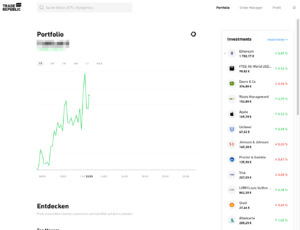
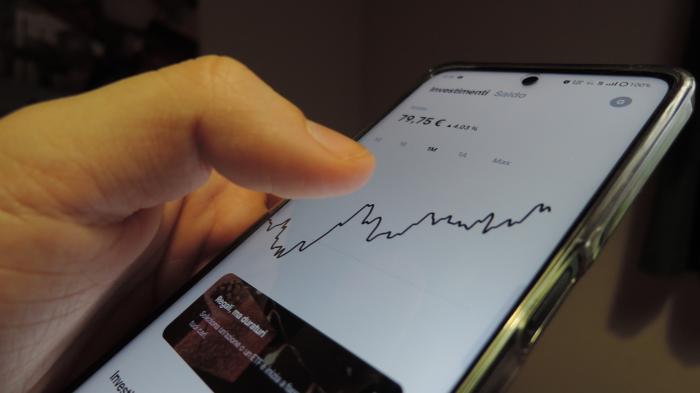
You’re scrolling through your Trade Republic app, and there it is. Shiny. Bold. Begging for your attention: “Zeichne jetzt SpaceX-Aktien (Subscribe to SpaceX shares now).” A rocket ship emoji dances next to the button. Across town, Commerzbank has plastered the same offer across its homepage. Even the taxi driver at the Berlin Hauptbahnhof mentioned it this morning.
Something is very, very wrong.
The last time I saw this level of aggressive marketing for a financial product aimed at normal people, it was 2021, and we all remember how that crypto/NFT/meme-stock hangover felt. But this time, it’s different. This time, it’s the largest IPO in human history, SpaceX, Elon Musk’s crown jewel, and for the first time ever, German retail investors are being invited to the party.
The question is: are you the guest of honor, or the dinner?
Let’s dig into why the marketing machines are running at full throttle, what the data says about hyped IPOs, and why the smartest move might be to sit on your hands until the dust settles.

The Great Retail Gamble: Why Is Everyone Pushing This So Hard?
Here’s the thing about IPOs in the traditional world. When a company goes public, the process looks nothing like the shiny “buy now” button you see in your trading app. Investment banks spend weeks in a “Bookbuilding” process, calling up institutional investors, pension funds, insurance companies, sovereign wealth funds, people who employ PhDs to analyze balance sheets for a living. These are the folks who decide the actual price.
Retail investors? Historically, you were lucky to get the scraps after the big boys had their fill.
So when Trade Republic, Commerzbank, and a dozen other platforms suddenly start throwing millions into marketing budgets to get you and your €1,500 to subscribe, you have to ask: Why now?
The uncomfortable answer comes from the market itself. A prevailing sentiment among experienced market participants is that institutional investors have shown lukewarm interest. When the big money isn’t lining up, you need to find capital somewhere. And where better than the emotionally-driven retail market, fueled by Elon Musk’s mythos and dreams of Mars colonies?
As one market observer aptly summarized: “The bank doesn’t care if the stock crashes afterward. They earn twice, once when you buy into the hype, and once when you sell, whether at a profit or a loss.”
This isn’t a charity to democratize finance. It’s a distribution channel.
The Historical Bloodbath: What IPOs Actually Do in Year One
Let’s talk about reality. There’s a well-known piece of data circulating that examines the performance of major tech IPOs in their first year of trading. The numbers should make you wince.
Nearly 60% of the companies tracked were underwater within 12 months of their debut. But here’s the kicker, it’s not just that they went down. They went down hard. On average, even the eventual multi-baggers like Meta, Spotify, and Shopify crushed early investors first. The data shows an average maximum drawdown of roughly 55% from the IPO high within that first year.
Think about that. Even if you pick the next trillion-dollar company, there’s a coin-flip’s chance you’ll watch your investment fall by more than half before it eventually recovers.
One experienced investor recalled: “I remember the Facebook IPO well. I was secretly happy when it tanked. If you had bought at the IPO, you’d have a more than 10-bagger in your portfolio today.” That sounds great, right? But another voice cut in with the money quote: “And for all stocks, you’d have made an even better return if you hadn’t bought at the first price but in the first year when it fell at least 20% (up to 90%).”
The crystal-clear conclusion: never be in at the IPO. Wait until it’s down 20% before even considering it.
The data is not an opinion. It’s a pattern.
Bewertung (Valuation) vs. Fiction: Morningstar’s Nuclear Warning
This brings us to the $1.75 trillion elephant in the room. SpaceX is targeting a valuation that would make it one of the most valuable companies on Earth, instantly rivaling the likes of Apple and Saudi Aramco.
But does the business justify it?
Let’s look under the hood. According to the IPO prospectus and independent analysis:
- Revenue (2025): ~$18.67 billion
- Net Loss (2025): ~$4.94 billion
- Q1 2026 Net Loss: ~$4.3 billion (meaning losses are accelerating)
The company is hemorrhaging cash. Sure, Starlink is profitable, but that’s a small piece of the puzzle. The rest is a collection of capital-intensive ventures, rocket launches, the unprofitable xAI acquisition, and development costs for Starship.
The independent analysis house Morningstar looked at this and didn’t just say “caution.” They effectively screamed “GET OUT.” Using discounted cash flow models, they arrived at a fair value of approximately $780 billion, less than half of the IPO target.
This means that even if SpaceX is wildly successful and meets every optimistic projection, you could still be paying double what it’s worth on day one. As one commenter noted, paraphrasing Morningstar’s stance: the pricing is driven more by “Elon’s narratives than by economic realities.”
When a Danish pension fund puts SpaceX on its blacklist for being “generously overvalued”, you know the hype has exceeded all rational bounds.
The “Lex SpaceX”: Index Funds Forced to Buy Your Bags
If you’re an ETF investor and think this doesn’t affect you, think again. The game is rigged in a new way.
In a move that reeks of regulatory capture, the Nasdaq recently changed its index rules, dubbed “Lex SpaceX” by critics, to allow newly listed companies into the Nasdaq 100 after just 15 trading days instead of the previous multi-month wait.
Why does this matter? Because trillions of euros are tied up in passive index funds that track the Nasdaq 100. These funds don’t have a choice. They must buy SpaceX shares to match the index, regardless of price or valuation.
This creates a perfect storm. A small free float (~5% of shares) meets forced buying from passive investors and a wave of retail demand all at the same time. It artificially drives the price up in the short term, creating a window for early sellers to dump their shares on the very index funds and retail investors who are forced to buy.
This isn’t investing. It’s a trap similar to how retail investors often overlook the hidden risks of scaling up a portfolio, except the stakes here are even higher.
The Five Deadly Sins of Buying SPCX
Let’s get practical. If the FOMO is burning a hole in your pocket, here are the specific traps you need to avoid, backed by analysis from market experts.
1. Buying on Day One (The “First-Day Pop” Illusion)
Everyone expects a massive first-day pop. It will happen. The tiny free float guarantees a supply-demand imbalance. But price discovery takes time. After the initial euphoria, the early birds (institutional investors who got allocations) will take profits, and without natural buyers, the stock will likely collapse. Buying at the opening bell is the financial equivalent of catching a falling knife, in reverse.
2. Subscribing for More Than You Can Afford
Trade Republic’s system isn’t “first come, first served.” It’s proportional allocation, pro rata. If the IPO is 50x oversubscribed, and you subscribe for €10,000, you might get €200 worth of shares. The problem is you had to lock up the full €10,000 of liquidity to place that order. If the stock tanks on day two, you’ve lost a meaningful percentage of your available capital, all for a tiny position of a volatile stock.
3. Trusting Perpetual Contracts (The “Black Peter” Game)
Coinbase and others are offering “Perpetual” contracts on SpaceX shares before the IPO. These are not shares. They are bets on the price, with no guarantee they’ll convert into real equity. As one analyst described it, this turns into a “Schwarzer-Peter-Spiel” (pass-the-parcel game), “where the last owner loses everything.” Avoid this like a bad Döner at 4 AM.
4. Buying at the Wrong Time (Spread Trap)
If you absolutely must buy on day one, do it during US trading hours (3:30 PM to 10:00 PM German time). Buy during European off-hours, and you’ll get eaten alive by the spread, the gap between the buy and sell price. You could be starting your investment 3-5% in the red before the trade even settles.
5. Buying the Wrong Ticker (The Virgin Galactic Trap)
This sounds silly, but it happens every time. Virgin Galactic trades under “SPCE.” The stock crashed 99.6% from its peak. SpaceX trades under “SPCX.” Don’t be the person who clicks the wrong button because you were in a hurry.
The Case for Patience (And Why It Makes You More Money)
Let’s say you’re bullish on space. You believe in Starlink’s dominance and the long-term potential. That’s a legitimate thesis.
But the best way to play that thesis is not to buy at the hype peak.
As the data shows, 60% of IPOs trade below their first-day close after a year. For the ones that become winners, the best entry point was almost always within the first six months after the initial euphoria faded, when the stock was down 20-50%.
This is a massive market of hype. Be greedy when others are fearful. Watch from the sidelines. Let the early sellers take their profits and the bagholders absorb their losses.
There’s nothing wrong with being a buyer of a great company at a fair price. But there’s everything wrong with the risk of concentrated investing into a single hyped asset, especially at a record valuation backed by accelerating losses.
The Bottom Line: Exit Liquidity or Long-Term Investor?
The marketing machines of Trade Republic and Commerzbank are not your friends. They are brokers. They earn a commission when you buy. They earn a commission when you sell. They don’t earn anything when you sit on your hands and wait for a better opportunity.
The question you need to ask yourself is brutally simple: Are you providing the “exit liquidity” for early investors and venture capitalists who need to cash out, or are you making a calculated investment?
The data suggests that for the vast majority of retail investors who jump into this IPO, the answer is the former. The all-time record is set. The marketing is omnipresent. The valuation is detached from reality.
My advice? Do nothing. Set a price alert for SPCX at, say, $90. Check back in a few months. If the thesis still holds, you’ll have your entry point. If it doesn’t, you’ll have saved yourself from a very expensive lesson.
Sometimes the best trade is the one you don’t make.
Disclaimer: This is not financial advice. I am not a financial advisor. I’m just a guy who’s been burned by enough “once-in-a-lifetime” opportunities to know that they come around more often than you think.