
So here’s a scenario that’s about to play out in millions of portfolios across Austria: you’re diligently running your ETF-Sparplan (ETF savings plan), buying a bit of MSCI World every month, feeling good about your passive, diversified approach. Then, without you lifting a finger, without even asking, your portfolio becomes a shareholder in SpaceX, a company that lost nearly $5 billion last year and trades at roughly 94x revenue.
Welcome to the weird world of mega-IPOs and passive investing.
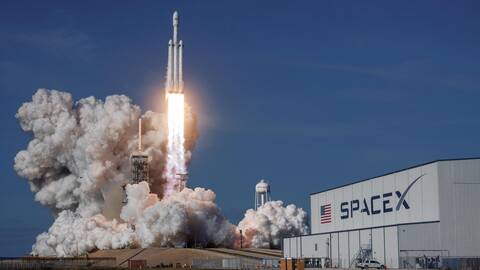
SpaceX is listing on June 12 with a valuation around $1.8 trillion. OpenAI has filed confidentially for what could be a trillion-dollar IPO. Anthropic just filed too. Three of the most-hyped private companies on earth are hitting public markets within months of each other. And if you own broad-market ETFs, you’re along for the ride, whether you researched these companies or not.
The Fast-Entry Loophole That Changes Everything
Index providers normally take their sweet time adding new stocks. The S&P 500, for example, requires 12 months of trading history and four consecutive quarters of positive GAAP net income before even considering you. That’s why you won’t see SpaceX in your S&P 500 ETF anytime soon, the company isn’t profitable.
But other indices have created what’s effectively a VIP lane.
The Nasdaq 100, FTSE All-World, and MSCI World all have “Fast Entry” rules for exceptionally large IPOs. According to Christian Röhl from Scalable Capital, here’s the expected timeline:
| Index | Entry Timeline | Indicative Starting Weight |
|---|---|---|
| FTSE All-World | 5 trading days | Under 0.1% |
| MSCI World | 10 trading days | ~0.1% |
| MSCI ACWI | 10 trading days | Under 0.1% |
| Nasdaq 100 | 15 trading days | ~1% (with 3x free float weighting) |
| S&P 500 | Not applicable yet | At least 12 months |
So within two weeks of SpaceX’s IPO, if you hold an MSCI World ETF, you’re automatically a SpaceX shareholder. The Nasdaq 100 goes further, it’s applying what some are calling a “Lex Megacap” rule that triples the free float weighting to accommodate SpaceX’s size.
The Indirect Financing Question That’s Making People Uncomfortable
Here’s where it gets spicy. The original Reddit question that sparked this topic asked something many passive investors haven’t considered: “Are these companies using their IPOs to indirectly finance themselves through ETF inflows?”
The short answer is yes, and the mechanism is both brilliant and troubling.
When SpaceX gets added to the Nasdaq 100, every ETF tracking that index must buy SpaceX shares. We’re talking about the Invesco QQQ ETF alone, worth nearly half a trillion dollars, needing to allocate roughly $5 billion to SpaceX. Total ETF buying pressure across all indices could hit $22-27 billion according to some estimates.
That buying pressure comes from your monthly Sparplan contributions. And it happens regardless of valuation.
Morningstar, one of the most respected independent research firms, values SpaceX at roughly $780 billion, about 55% below the IPO target price. The company’s revenue multiple of 94x makes Nvidia’s 22x look like a bargain basement deal. Yet passive funds are contractually obligated to buy at whatever price the market sets.
This isn’t speculation about whether SpaceX will succeed. Starlink is genuinely profitable, and Starship could transform global logistics. The issue is that millions of investors who never chose SpaceX are being forced into a position on day one, at a valuation that research firms consider extreme.
What This Actually Means for Austrian ETF Investors
Let’s get practical. You’re sitting in Vienna, running a Flatex or Dadat depot, buying your monthly ETF-Sparplan. What changes?
For MSCI World or FTSE All-World holders
Almost nothing visible. SpaceX enters at under 0.1% weighting. That’s roughly €1 for every €1,000 invested. You won’t notice it on your statement, and honestly, it doesn’t matter much for your portfolio’s behavior.
For Nasdaq 100 holders
This is where it gets real. At roughly 1% initial weighting, SpaceX becomes a meaningful position. If you hold a Nasdaq 100 ETF, you’re making a material bet on Elon Musk’s rocket company, whether you realize it or not.
For S&P 500 holders
Nothing changes for at least 12 months. SpaceX needs to show four profitable quarters first, which is far from guaranteed given their current loss trajectory.
For OpenAI and Anthropic investors
These IPOs haven’t happened yet, but similar dynamics will apply. Both companies are likely unprofitable and carry sky-high valuations. They’ll enter global indices through similar Fast Entry mechanisms.

The Austrian tax angle matters too. If you’re using a steuereinfach (tax-simple) broker like Flatex, all capital gains taxes and the 27.5% KEst (capital gains tax) are handled automatically. But the automatic buying and selling that happens during index rebalancing creates taxable events you can’t control.
The Deeper Problem: When Passive Isn’t Really Passive
The core tension here is uncomfortable for anyone who’s bought into the passive investing philosophy. Indices are supposed to be neutral market barometers. But the Nasdaq explicitly changed its rules, creating what one commenter called “Lex SpaceX”, to accommodate this IPO.
That’s not a neutral market snapshot. That’s an active decision by an index committee to fast-track a specific company.
As the fynup article puts it, “ETF investors believe they have control over their investment. They chose diversification, passive investing, a rule-based approach. But they never decided to buy SpaceX, an index committee did it for them.”
The structural issue is symmetric: for every euro that flows into SpaceX, existing index members get sold. Apple, Microsoft, Nvidia, all get trimmed to make room. Your portfolio is being reshuffled by committee decision, not market fundamentals.
Now, does this matter in practice? For most people with diversified global portfolios, probably not. A 0.1% position in SpaceX won’t make or break your retirement. But it’s worth understanding that the “set and forget” narrative has a hidden assumption: that index rules won’t change in ways that surprise you.
They just did.
Should You Do Anything Different?
The honest advice from most commentators, including the Finanzfluss video referenced in the original discussion, is basically: “Keep doing what you’re doing.”
That’s probably right for the vast majority of investors. The impact is small, the diversification benefits of global ETFs remain enormous, and trying to time or predict index changes is a fool’s game.
But the situation does raise a legitimate question about concentration risk. If SpaceX, OpenAI, and Anthropic all enter major indices within months of each other, the Nasdaq 100 becomes even more top-heavy than it already is. Your “diversified” tech ETF becomes increasingly concentrated in a handful of mega-companies with extreme valuations.
For Austrian investors who want more control, options exist. Factor ETFs that weight by value or quality metrics would avoid automatically buying overvalued IPOs. Active ETFs give a manager discretion over entry timing. The Doppel-Nettopolizze (double net policy) structure, mentioned by fynup, allows for fully customized fund selection without forced index exposure.
But those options come with higher costs and require active decision-making. For most people running a simple ETF-Sparplan, the right move is probably to stay the course and accept that you’re buying a bit of SpaceX at a stretched valuation. It’s a small price to pay for the simplicity and power of passive investing.
The Bottom Line
The SpaceX, OpenAI, and Anthropic IPOs represent a fascinating stress test for the passive investing model. We’re about to see billions of euros in forced buying at valuations that independent analysts consider extreme. Most ETF investors won’t even notice.
That doesn’t mean passive investing is broken. It means it’s not magic. Index rules are made by humans, changed by humans, and sometimes optimized for reasons that have nothing to do with your financial plan.
The real takeaway isn’t about SpaceX specifically. It’s about understanding that your ETF portfolio makes decisions on your behalf, including buying companies you might never choose yourself. That’s always been true. Mega-IPOs just make it visible.
The Austrian banking system may operate with the same efficiency as a Viennese coffee house, but at least your ETF-Sparplan keeps ticking along. SpaceX will land in your depot whether you want it or not. Maybe enjoy the ride, and don’t check the valuation too closely.