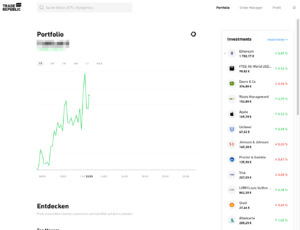

At 4:10 PM on May 4, 2026, the LS Exchange (Berlin-based trading venue) logged a data point that should make every German investor pause. Between 16:10:56 and 16:14:59, a window barely long enough to finish an espresso, Trade Republic’s ETF-Sparplan (ETF savings plan) engine executed orders worth roughly €102.8 million into the iShares Core MSCI World ETF. Not across a week. Not across a month. In four minutes. For context, the same broker saw only about €5.2 million flow into the distributing share class of the Vanguard FTSE All-World and €46.8 million into its accumulating sibling on that same day. One product, one platform, one afternoon. Welcome to the German capital-market equivalent of a flash mob.
When Discipline Turns Into Herd Behavior
There is a lot to admire here. Germany essentially invented the modern ETF-Sparplan (ETF savings plan), turning passive investing into a national reflex. According to the extraETF research study commissioned by BlackRock, Continental Europe executed roughly 15.1 million ETF-Sparpläne per month in 2025, translating into an annual savings volume of €22.7 billion. That is not a niche hobby, it is a structural pillar of private retirement planning.
But success breeds monoculture. When millions of households all tune into the same wavelength, iShares Core MSCI World, ticker URTH, the result is the opposite of diversification across investors. You might hold 1,500 stocks inside the fund, yet the country’s aggregate household balance sheet starts to look like one enormous, heavily concentrated bet on US large-cap tech. That “diversified” label on the factsheet is technically true. Sociologically, it is becoming a lie.

Your “World” Fund Is 70 Percent Uncle Sam
Let us strip away the marketing. The iShares MSCI World ETF currently parks over 60 percent of its assets in US equities, with the technology sector accounting for roughly 26 to 29 percent of the portfolio. The top ten positions alone make up about 27 percent of the fund. Nvidia sits at roughly 5.6 percent, Apple near 4.6 percent, and Microsoft above 3 percent. When you buy this ETF, you are not buying the world, you are buying Silicon Valley with a light European garnish.
This concentration recently pushed the fund’s Relative Strength Index (RSI) to 94.6, deeply overbought territory, before a tech selloff dragged it back below $200. If you had checked your depot (brokerage account) that Friday, you saw the paradox in real time: a record inflow on May 4, followed days later by a reminder that what goes up on AI fumes can wobble just as fast. It is the exact dilemma of sticking with MSCI World versus diversifying into BRICS that more contrarian German investors are now debating.
The Engineering Beneath the Euphoria
Here is where it gets technical, and slightly uncomfortable. Trade Republic and similar Neobroker (neobrokers/digital brokers) typically route these massive Sparplan batches via market orders onto exchanges like LS or Gettex. Observers note that dumping nine-figure sums into a single ETF in minutes can briefly act like a miniature issuance premium, nudging the price above fair value. Meanwhile, some traditional banks execute Sparpläne außerbörslich (off-exchange), which can result in tighter pricing because the order does not immediately hit the lit market. The difference might be fractions of a basis point on each monthly contribution, but multiplied across millions of plans over decades, the slippage adds up.
That volume also hands enormous power to the brokers themselves. Platforms with this scale can demand kickbacks, Beständeprovisionen, or trailing commissions, from fund issuers simply for keeping a product on their curated savings-plan list. The product you think you chose freely may, in fact, be sitting there because your broker gets paid to nudge you toward it. Before you peninsula-scale your monthly contribution in celebration of the boom, consider the hidden risks of scaling an ETF-Sparplan beyond €2,000 monthly.
Fee Wars Distract From the Real Problem
If you follow German ETF Twitter (without naming platforms), you know the current obsession: TER (total expense ratio) compression. Invesco recently slashed its competing MSCI World ETF to 0.05%, forcing a fee war that now pressures iShares’ 0.24% offering. Every blogger celebrates the race to zero. Hardly anyone asks whether the product should be this popular in the first place.
Cheaper is not safer. When every German landlord, every dental technician, and every software engineer in Berlin pumps their monthly surplus into the same market-cap-weighted wrapper, the country accumulates a systemic concentration risk disguised as prudent index investing. You stop pricing assets and start crowding them. And can you actually trust ultra-low fee ETF offerings amid price wars when the business model increasingly relies on volume kickbacks rather than investor outcomes?
The June Reckoning Nobody Is Pricing In
Beyond the technical froth, there is a concrete event looming. On June 1, MSCI will implement changes to its Free-Float-Faktoren (free float factors), adding new categories for high, low, and very low free-float percentages. For mega-caps like Nvidia, even small tweaks can force index-tracking funds to reshuffle billions in assets simultaneously. ETF providers must rebalance into that window while the market is already digesting inflation prints and interest-rate noise. If you thought May’s record inflow was impressive, wait until the mechanical selling (and buying) around the index rebalancing hits the same thin liquidity.
This is not doomsaying. It is mechanics. And mechanics matter when the demographic risks to the core assumptions behind World ETF investing are already looming over European pension math.
Break the Script Without Breaking Your Plan
So what do you actually do? Stop saving? Absolutely not. The ETF-Sparplan remains one of the sharpest tools for long-term Vermögensaufbau (wealth building) Germany has ever built. But you owe yourself a portfolio that is diversified across products, not just inside one of them.
If US tech concentration makes you queasy, look at the cheapest emerging FTSE All World ETF alternatives to the iShares MSCI World, or explore an All-Cap ETF as a potential alternative for MSCI World investors concerned about US concentration. Check whether your broker fills Sparpläne on-exchange or off-exchange, the latter can save you from becoming the counterparty to your own euphoria. And if you are sitting on a hefty Nvidia-driven gain within that “passive” fund, rebalance. Passive does not mean brain-dead.
The Quiet Takeaway
Germany turned monthly saving into a mass-market masterpiece. On May 4, that masterpiece briefly looked like a speculative stampede. There is nothing wrong with owning the iShares Core MSCI World. There is something slightly ominous when an entire nation’s brokerage accounts all click “buy” on the exact same ticker during the same four-minute window. Diversification is supposed to protect you from the crowd. It stops working when the crowd is diversification.