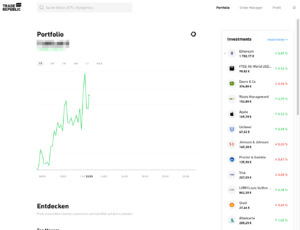
Imagine this: You’re scrolling through your Trade Republic app, and there it is. Shiny. Bold. Begging for your attention: “Zeichne jetzt SpaceX-Aktien (Subscribe to SpaceX shares now).” A rocket ship emoji dances next to the button. Across town, Commerzbank has plastered the same offer across its homepage. Even your slightly-annoying colleague who bought Bitcoin in 2021 is suddenly a space industry expert.
SpaceX is coming to the Nasdaq on June 12 under the ticker SPCX, and the numbers are absolutely bonkers. We’re talking a target valuation of $1.75 trillion. That’s not a typo. That’s more than the entire GDP of South Korea. That’s about 94 times SpaceX’s annual revenue. For context, Apple – the most valuable publicly traded company on earth – trades at roughly 7 to 8 times its revenue.
So the question burning through every investor’s mind right now is simple: Is SpaceX genuinely worth $1.75 trillion, or is this the mother of all hype bubbles about to pop?
The Three-Headed Monster Under the Hood
Let’s start with what SpaceX actually is in 2026, because the answer has gotten complicated. This isn’t just a rocket company anymore. It’s three distinct businesses welded together under Elon Musk’s iron grip.
First, the rocket business. Falcon 9 changed the game by making launches reusable and dramatically cheaper. The NASA contracts alone are worth billions. The US Department of Defense is a loyal customer. But here’s the uncomfortable truth: the space launch segment lost $657 million operationally in 2025 on $4.1 billion in revenue. It’s not the profit center everyone assumes.
Second, Starlink. This is the crown jewel – the only part of SpaceX that actually makes money. With over 10 million subscribers and 11.3 billion in revenue in 2025, Starlink posted a healthy 39% operating margin. It’s printing money. It’s growing 50% year-over-year. If SpaceX were just Starlink, we’d be having a very different conversation about valuation.
Third, the AI gamble. After SpaceX merged with Musk’s xAI in February 2026, the company now owns Grok, the X platform, and a pile of GPUs that cost $10 billion to acquire in 2025 alone. The problem? The AI segment lost a staggering $6.4 billion operationally on just $3.2 billion in revenue. That’s a negative 200% margin. Ouch.
The $1.75 Trillion Question
Here’s where things get spicy. The independent analysis firm Morningstar ran the numbers and landed on a fair value of roughly $780 billion – less than half the IPO target. Other research houses like PitchBook put the reasonable range between $1.1 and $1.7 trillion, which is at least in the same solar system.
The IPO prospectus itself is a wild read. SpaceX had $24.8 billion in cash at the end of 2025, against total assets of $92 billion and debt of $50.8 billion. The company lost $4.94 billion in 2025. That’s a company burning through cash like a Starship prototype going through landing tests.
Some market observers are particularly blunt about what they see. One financial expert described the situation with a memorable phrase: “When Musk finds the timing and price for selling his SpaceX shares attractive right now, that should be rather expensive for those paying that price.” The logic is brutally simple – company insiders typically know when their stock is overvalued better than anyone else.
The German Retail Investor Gambit
This is where it gets personal for anyone reading this from Germany. SpaceX has done something unprecedented: it’s reserving up to 30% of its IPO shares for retail investors, with a significant chunk allocated to German, British, and Swiss buyers. Trade Republic, the Berlin-based neobroker, is offering direct access to subscribe at the IPO price for just 1 euro per order.
Let that sink in. The largest IPO in human history is letting regular people in Germany buy shares before the first trade. The motivation isn’t altruism – it’s about creating retail demand that institutional investors alone couldn’t generate at these prices.
The pricing is set between $135 and $162 per share, with the company aiming for $135. If you subscribe, you get allocated shares proportionally – the more you order, the more you might receive. But there’s a catch buried in the fine print that many casual investors are missing.
You Get Zero Say
SpaceX is issuing Class A shares. Elon Musk holds shares with ten times the voting power. After the IPO, Musk will control 82% of the voting rights. That means no matter how many shares you buy, you have absolutely no say in how the company is run. No board elections that matter. No shareholder votes that count. No ability to veto Musk’s next impulsive acquisition.
This isn’t unusual for tech companies – Alphabet, Meta, and Snap all have similar structures. But it’s worth knowing that when you buy SPCX, you’re buying a ticket on Musk’s personal rocket ship with no steering wheel.
The Coming Index Tsunami
Here’s something most casual observers don’t realize: SpaceX shares are about to be force-fed into every major index fund on the planet.
Both Nasdaq and FTSE Russell have dramatically shortened their standard waiting periods for SpaceX inclusion. The stock is expected to join the Nasdaq 100 within 15 trading days of listing. MSCI World inclusion could happen within 10 days, according to MSCI’s own executives. That means every ETF tracking these indices – including the ones you might already hold for retirement – will be forced to buy SpaceX shares at whatever price the market sets, whether their investors want exposure or not.
Critics are already calling this “Lex SpaceX” – a special treatment that no other company has received. The only holdout appears to be S&P Dow Jones Indices, which is sticking with the standard 12-month waiting period for S&P 500 inclusion.
What this means in practice: if you own a global stock ETF, you’ll soon own SpaceX whether you like it or not. And the automatic buying pressure from index funds could prop up the stock price regardless of the underlying business performance.
Competition is Closing In
One of the most compelling arguments against the $1.77 trillion valuation comes from the competitive landscape. SpaceX’s technological lead is real, but it’s shrinking faster than most people realize.
Blue Origin has successfully demonstrated reusable landing technology, so much so that NASA is reportedly reconsidering some of its launch contracts. The European Space Agency has explicitly stated it wants to award future contracts to European companies like Isar Aerospace and Rocket Factory Augsburg. China is aggressively building its own space capabilities.
On the satellite internet front, alternatives are emerging. Eutelsat already exists, and the European Iris² program is being designed as a direct competitor to Starlink.
The AI division faces the toughest headwinds. Grok has minimal user adoption compared to ChatGPT, Claude, or Gemini. The primary revenue source for xAI isn’t its own AI product – it’s renting computing power to other companies. Google has committed to paying roughly $1 billion monthly for SpaceX computing capacity, and Anthropic is paying even more at $1.25 billion monthly. But as one industry insider noted, “Anyone can build data centers. Without the value-add of a superior AI product, the margins shrink to commodity levels.”
Three Ways to Play This
Path One: Subscribe at the IPO price. You get the best possible entry point, but you risk low allocation if demand is massive. The upside is a potential first-day pop. The downside is waking up to find your $135 shares are trading at $90 after the initial euphoria fades.
Path Two: Buy on the first day or shortly after. You get price discovery and transparency about what the market actually thinks the stock is worth. You lose the IPO discount, but you also avoid the risk of buying into a manufactured pop that immediately deflates.
Path Three: Wait and watch. Morningstar expects better entry points may emerge after the initial frenzy settles. The Deliveroo precedent is worth remembering – that IPO opened broadly to retail investors in 2021 and promptly lost 30% on day one.
The Bottom Line
Let me be honest with you: SpaceX is an incredible company with real technological achievements and genuine competitive advantages. Starlink alone is a legitimately world-changing business. The revenue trajectory is impressive, and the space industry is projected to grow at over 7% annually through 2040, potentially reaching $2 trillion.
But $1.77 trillion is a valuation that leaves almost no room for error. It prices in Starship succeeding, orbital data centers becoming reality, Grok somehow beating ChatGPT, and decades of uninterrupted growth. That’s a lot of “ifs” for a company that lost $5 billion last year.
If you’re buying SpaceX shares because you believe in the mission and you’re comfortable with potentially losing your entire investment, go ahead. But if you’re buying because FOMO is hitting you hard as you watch the Trade Republic countdown timer tick toward zero, maybe take a breath.
The stars will still be there next week. And probably at a better price.