
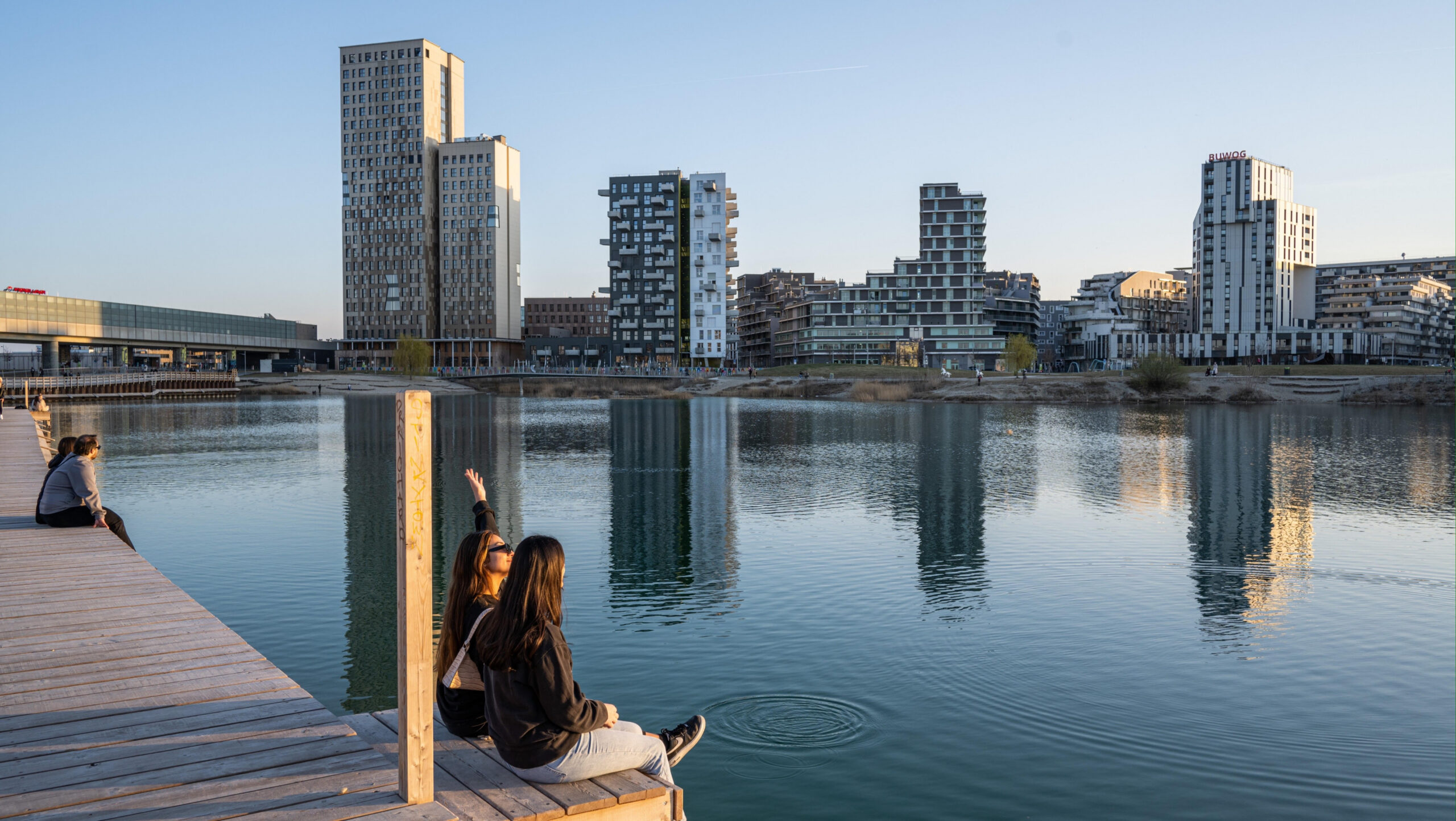
You’re scrolling through Willhaben, that Austrian digital altar of hope and despair, caffeine in hand. A notification pops up: “Price drop on the 50m² Altbau in Ottakring you saved!” You feel a flicker of optimism. Then, just below it, another listing catches your eye. A 73m² apartment in the 22nd district (Donaustadt), not exactly Vienna’s golden postal code, listed for a crisp €529,000.
Seven thousand two hundred and forty-six euros per square meter. For Donaustadt.
You don’t just scroll past. You stare. You laugh. You check if it’s a typo. Maybe they meant €5,290? But no. There it sits, a monument to either outrageous optimism or a fundamental misunderstanding of physics: you can’t defy gravity forever. This is the surreal reality of Austria’s 2024 property market, where public sentiment screams correction, yet private sellers (and some developers) cling to prices from a bygone era of zero-interest madness.
The Great Austrian Standoff: Seller’s Remorse vs. Buyer’s Strike
The data tells a clear story of a market in reset mode. According to a RE/MAX study, overall transaction volume is recovering (+18.3% over 2024), which sounds positive. But dig deeper. The report notes this is from a historic low base and that the price growth forecast for 2026 is a “moderate” +3.4%, roughly tracking inflation. They’re talking about a gentle nudge upwards, not a rocket ship.
Yet, browse listings in Vienna’s outer districts or old industrial towns, and you’ll find asking prices that still assume 2021’s 15% year-on-year leaps are just around the corner.
What’s Fueling This Pricing Stalemate?
The Anchoring Effect: Sellers anchor their price to what their neighbour sold for at the absolute peak. That €500k valuation from two years ago is etched in stone, despite rising interest rates making that same monthly payment now buy €100k less house.
The “Wohnraum wird nicht billiger” (Housing won’t get cheaper) Mantra: Developers like RPHI’s Karl-Maria Pfeffer state it plainly: new builds can’t be realised for under €6,000-7,000 per square meter anymore due to soaring construction costs. This narrative of permanently high floor prices gets misapplied by existing homeowners to their decades-old, unrenovated property.
A Liquidity Crunch in Slow Motion: Many sellers aren’t desperate. They’ll list at a dream price, wait a year, and only then begrudgingly trim 5%. Meanwhile, buyers, empowered by official vs real purchasing power disconnect, are voting with their feet (and their mortgage denials). They simply can’t pay.
The Districts Where Fantasy Lives Rent-Free
This disconnect isn’t uniform. It’s hyper-local and often most jarring in districts undergoing a perceived vs. actual transition. The 22nd district (Donaustadt) example isn’t random. It’s a vast area with pockets of charm and stretches of pure suburban sprawl.
Asking for inner-city (1st district) prices here isn’t just optimistic, it’s a complete detachment from the property investment reality checks across Europe happening elsewhere.
You’ll also see it in parts of the 10th (Favoriten) or the 21st (Floridsdorf), where sellers mistake “up-and-coming” for “already arrived.” They price based on the potential new U-Bahn station in 2035, not the current bus line that comes every 20 minutes.
The perverse outcome? These fantasy listings poison the well. They skew search algorithms, frustrate genuine buyers, and waste everyone’s time, including the real estate agents (Makler) who have to field the incredulous calls. They create a market fog where real, fairly-priced properties get lost in the noise.
The Developer’s Reality: A Brutal New Math
While individual sellers might be in la-la land, the institutional players paint a sobering picture of why prices, at a fundamental level, can’t crash to pre-2020 levels. Pfeffer of RPHI points to the cold hard math: exploding Baukosten (construction costs), geopolitical instability affecting supply chains, and new regulatory costs mean “Neubauwohnungen” (new build apartments) have a massive built-in cost floor. When it costs €6000/m² to build, you can’t sell for €4000/m² and stay in business.
Tier 1 (New Builds & Prime)
Prices are sticky high due to input costs. This tier is propped up by institutional logic, not individual sentiment.
Tier 2 (Existing Stock, Non-Prime)
Here, the asking price is purely a function of seller psychology and liquidity needs. This is where you find the €529k Donaustadt wonders. This is also where the real “deals” will eventually be struck, as reality seeps in.
The RE/MAX study supports this, forecasting the strongest price growth for 2026 will be in the lower price segment and for new rental contracts. Why? Because that’s where pent-up demand from people who need housing meets the limited, less delusional supply.
How to Navigate This Nonsense (Without Losing Your Mind)
- Ignore the Asking Price. Obsess Over the Verkaufspreis (Sale Price). Websites like Immopreis.at or the actual land registry (Grundbuch) data, though lagging, are your bible. What have similar Altbau (old building) apartments in this exact block actually sold for in the last 6 months? That’s your offer price.
- Decode the Listing Duration. On Willhaben or ImmobilienScout24, you can often see how long a listing has been active. Anything over 90 days with multiple price drops is a seller slowly being broken by the market. That’s your target.
- Calculate the Real Monthly Cost. Forget the sticker price. What’s the Kredit (loan) going to cost you monthly at today’s rates? What are the hidden Nebenkosten (incidental costs) like property transfer tax (Grunderwerbsteuer)? Factor in anticipated hidden property costs affecting valuations, like upcoming energy efficiency requirements. If the number makes you sweat, walk away.
- Embrace the Power of “No.” The greatest leverage a buyer has in a stalemate is the willingness to not buy. Renting, especially in cities like Vienna with strong tenant protections, is not a failure. It’s a strategic financial choice that keeps your capital flexible, a concept explored in depth when looking at retirement investment priorities over housing.
Patience is a Financial Weapon
The market is correcting, but like an Austrian bureaucracy, it does so slowly, grudgingly, and with a lot of paperwork. The fantasy listings are the last gasp of a fading era. They are not market signals.
Your job is to separate the signal from the noise. The signal is in the hard data: construction costs, interest rates, and actual sale prices. The noise is that one stubborn seller in Donaustadt who thinks their standard-issue 90s apartment is a Viennese palace.
The standoff will end. Sellers who need to move will meet the market. For everyone else, their apartment will just be a very expensive, very public piece of wishful thinking, a monument to the day they overplayed their hand. And you, armed with data and patience, will be ready to play yours.