Is the Süddeutschland Party Over? Why Real Estate Could Follow Money Westward
Picture the classic German economic map in your head. You probably see the rich, powerhouse south: Bavaria and Baden-Württemberg, humming with auto-industry money. Then, maybe you picture the solid, industrial Ruhrgebiet, or the financial hubs of Frankfurt. That map is being redrawn. Not by politicians, but by a slow, irresistible force: the future of work, demographics, and the painful, expensive process of economic transformation.
The big question for anyone with skin in the real estate game, whether you own a home, rent an apartment, or are investing in Germany, is simple: where is the economic gravity pulling the country’s weight next? Because where jobs and prosperity flow, property values and rent checks eventually follow.
The Southern Powerhouse: A Success Story Anchored in the Past
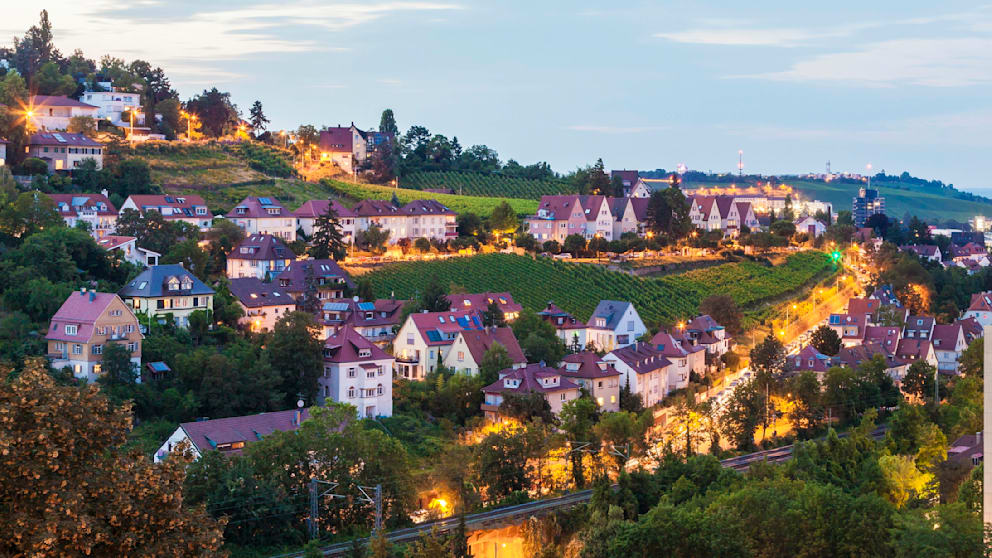
Let’s be clear: Munich and Stuttgart aren’t becoming ghost towns tomorrow. As many observers note, global giants like Amazon, Apple, and Nvidia have piled into Munich. Siemens, a German titan, is headquartered there. The state has a deep-seated culture of social stability, clean streets, and world-class universities that spin out startups. “München brummt” (Munich is booming), as one local confidently put it.
The Big Concern: Heavy reliance on the automobile industry. The internal combustion engine is not going to dominate the 21st century as it did the 20th. Even a successful transition to electric vehicles won’t restore the sector to its former glory.
Critics argue that beyond its flagship industry and high quality of life, southern Germany suffers from surprisingly underdeveloped infrastructure relative to its wealth, fewer massive urban centers compared to the Rhine-Ruhr region, and a geographical position that’s somewhat peripheral to the European core.
The Rhine Axis Argument: Centrality, Capital, and Connections
The counter-argument, gaining traction in economic circles, champions the “Rheinachse” (Rhine Axis). Picture a line running from Frankfurt through the Rhein-Main region, up towards Düsseldorf and the western parts of the Ruhrgebiet. Proponents see a powerful convergence here.
- Frankfurt: Germany’s undisputed financial capital. While cyclical, finance faces no existential technological threat like combustion engines. “Nahe am Geld sitzen” (being close to the money) fosters business creation.
- Centrality: Major European transport hub. Munich is bottlenecked by political resistance to projects like the Brenner Base Tunnel; Frankfurt connects seamlessly to France, Benelux, and Eastern Europe.
- Demographics & Connectivity: The Rhine-Ruhr region is one of Europe’s largest metropolitan areas. Cities like Düsseldorf offer dense urban living and have Belgium and the Netherlands “quasi im Vorgarten” (practically in the front yard).
The IW-Regional-Ranking, which measures the economic future of over 400 German cities and districts, provides a data-driven glimpse into these shifting fortunes, identifying strong regions but also unexpected pockets of potential.
The Real Estate Reckoning: Where Will Values Hold?
This isn’t just academic. It translates directly into your four walls.
So, what’s an average person to do with this information?
Actionable Advice
If you’re buying for the long term
Look beyond the postcard. A charming village in rural Bavaria might be cheaper today, but its economic future is tightly yoked to the automotive sector’s fate. A smaller apartment in a well-connected Rhein-Main city like Mainz or Darmstadt might be a smarter bet on Germany’s economic geography of 2040.
If you’re investing
The era of blanket German real estate growth is over. The next decade will be about picking winners and avoiding traps. The structural economic changes we’re witnessing demand a more nuanced approach than simply waiting for a market crash that may never come.
If you’re inheriting property
Start thinking now. That family home in a region dependent on a single, transitioning industry might be a valuable asset to monetize sooner rather than later, before the “Silver Tsunami” peaks in that specific area.

The Verdict: A Slow-Motion Rebalancing
Germany won’t wake up tomorrow with a new capital. Munich’s wealth and innovation won’t vanish. But the underlying currents are shifting.
The west, specifically the connected, financially savvy, and demographically dense Rhine axis, holds structural advantages for the coming decades. It’s less vulnerable to a single industry’s disruption and better plugged into the European network. The south faces the monumental task of diversifying its world-class economy away from its signature industry.
Key Takeaway: Real estate values won’t move in unison. We’ll see a decoupling. Properties in the winning regions may hold or increase their value based on economic strength, while those in areas left behind by the Strukturwandel (structural change) face a tougher path.
Your move isn’t to panic-sell in Stuttgart or buy blindly in Frankfurt. It’s to look at every property through a new, brutally geographic lens. Ask: What is this town’s economic engine? Is it diversifying or doubling down on the past? How is it connected to the rest of Germany and Europe?
The real estate risk is shifting. Make sure your investments aren’t anchored to the wrong side of the map. For a stark contrast, consider the opportunities emerging in the less-trafficked, more affordable east, where a completely different investment and pricing dynamic is playing out, challenging the entire notion of where value in Germany truly lies.