
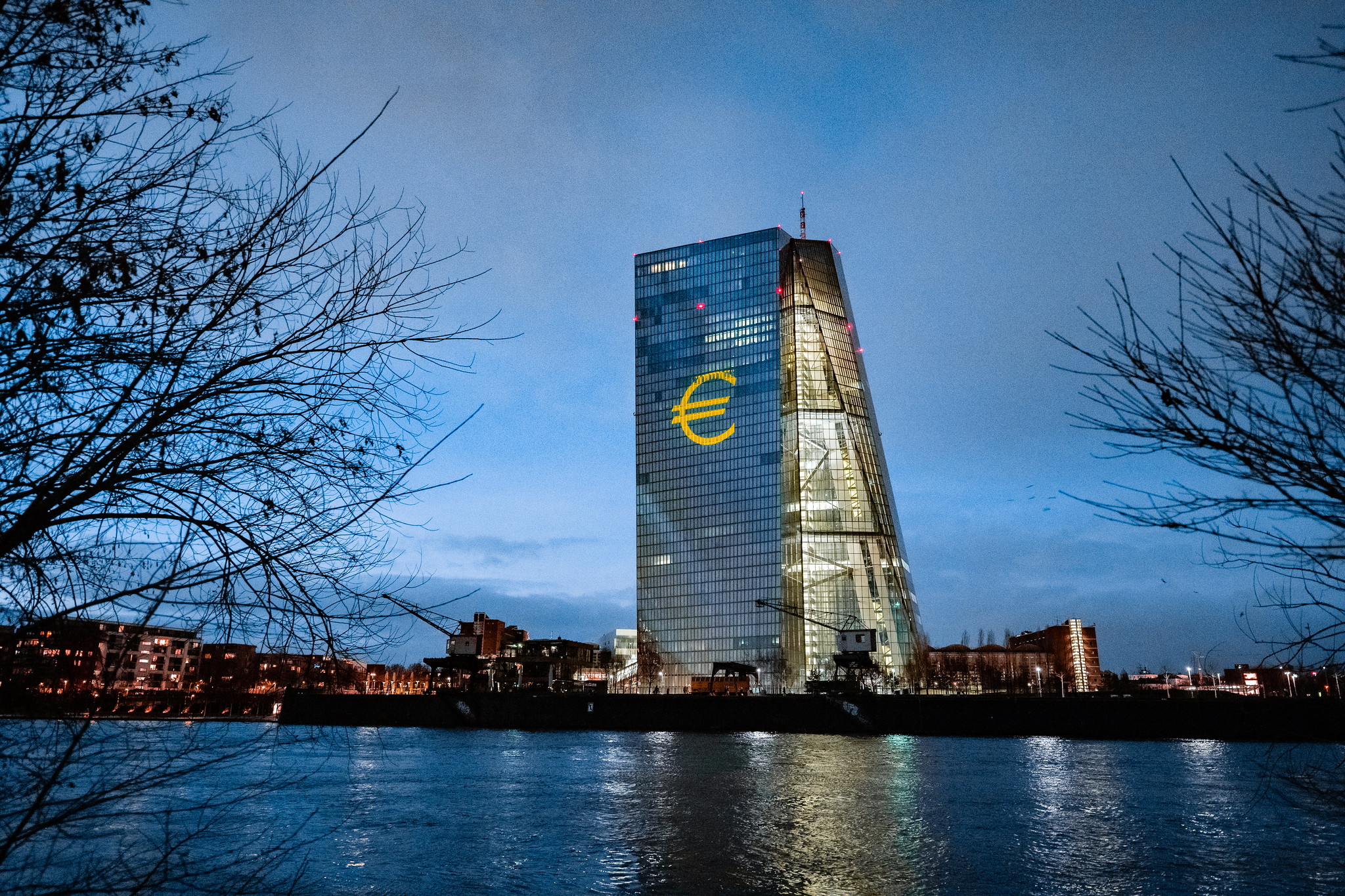
Picture this: You’ve been parking your emergency fund at your local Sparkasse (savings bank) out of sheer inertia. You check your account one lazy Sunday, expecting the usual 0.38% that barely covers a coffee at the Bahnhof (train station). Instead, you spot a headline: the European Central Bank (EZB) has just hiked its key rate to 2.25%. Your pulse quickens. Does this mean your Sparbuch (savings book) is about to become relevant again? Will you finally earn enough interest to afford that second scoop of ice cream?
The short answer? Probably not, unless you’re prepared to pull your money out and chase the rate.
When the EZB moves, it’s supposed to send ripples through the entire banking system, eventually reaching your pocket. But in reality, the pass-through is less of a clean wave and more of a leaky pipe. The ECB just raised the deposit facility rate to 2.25%, a clear signal that the era of free money is officially over. Yet, as you’ll soon find out, the gap between what the central bank dictates and what your bank offers is wider than the price gap between a Döner (Turkish kebab) in Berlin-Mitte versus Neukölln.
So, who actually passed on the rate hike? And who is quietly pocketing the difference? Let’s cut through the German banking bureaucracy.

The Fast Movers: Neobanks Who Actually Care
The clearest winners in this rate hike cycle are the digital-first players. They operate on leaner cost structures and use high savings rates as a marketing tool to lure customers from the sleepy traditional banks.
Trade Republic was one of the first to react, immediately raising its Tagesgeld (daily deposit) rate from 2.0% to the new benchmark of 2.25%. This was highly anticipated by its user base, and they didn’t disappoint. If you have cash sitting uninvested in your Trade Republic account, you’re now getting the full ECB rate. No forms, no waiting, no having to open a second account. That’s the gold standard of rate pass-through.
Then there’s Revolut. According to reports from users, they didn’t just match the hike, they raised their savings rate on the same day the ECB announced the change. They also pay interest daily, which is a nice psychological boost compared to the quarterly trickle from most German banks. For savers who hate waiting, this is a clear differentiator.
Scalable Capital has been a step ahead for a while. They were already offering 2.5% on their Tagesgeld before this most recent ECB decision, effectively pre-empting the market. This is a strong signal: they are competing aggressively for your deposits.
The Surprise Packages: Niche Players Punching Above Their Weight
Not every bank needs a slick app to offer a great rate. Some smaller, niche players are quietly offering exceptional value to those who know where to look.
The Norwegian bank Norwegian offers an interesting hybrid product called the “Sparkonto 31” (Savings Account 31). It’s a mix of Tagesgeld and Festgeld (fixed-term deposit) where you have to give 31 days’ notice before withdrawing. For this slight loss of liquidity, they raised their rate from 2.25% to 2.51%. That’s a full quarter point above the ECB rate. If you have an emergency fund you won’t need to touch for a month, this is a fantastic middle ground.
Ayvens has been a consistent outlier, offering 2.3% for several months already, completely detached from the ECB’s immediate decisions. They seem to be running a permanent high-rate strategy.
The Czech bank J&T Direktbank also deserves a mention. They bumped their rate from 1.75% to 2.0%. While not matching the 2.25% hike, they’ve been a reliable payer on their Festgeld products, with longer-term fixed deposits offering rates that actually outpace current inflation.
The Laggards: Your Local Sparkasse and Volksbank
And now for the part that hurts. The institutions that many expats are automatically defaulted into? They’re barely moving.
The average Tagesgeld rate for existing customers at local Sparkassen (savings banks) is a pathetic 0.38%. Regional Genossenschaftsbanken (cooperative banks) like the Volksbank average 0.44%. Let’s do the math. With €10,000 parked there for a year, you’d earn a princely €38 to €44. The same money in a Chase or Norisbank account at their 4% promotional rates would earn you €400.
The irony? These local banks are currently paying 2.0% to the EZB to park their own excess cash. They’re pocketing the difference, a cool 1.6% margin on your money, as pure profit. It’s a business model, but it’s one that treats loyal savers as revenue sources rather than valued customers.
However, a few Sparkassen have woken up. The Stadtsparkasse Remscheid is now offering a promotional rate of 3.1% for four months. Similar deals have popped up in Hannover and Braunschweig. The catch? You usually have to be a local resident or open a Girokonto (current account), and the rate drops to the pathetic standard rate after the promo period. These are teasers, not transformations.
The 4% Wildcards: Chase and Norisbank
You might be thinking, “But I saw ads for 4%!” Yes, you did. And those rates are real, temporarily.
Chase, the digital arm of J.P. Morgan, launched in Germany with a bang, offering 4% on Tagesgeld for four months. Norisbank (a Deutsche Bank subsidiary) responded within 24 hours with their own 4% offer for six months, though you must open a Girokonto with them.

These are brilliant, short-term strategies. Account churners love them. As a strategy, you can jump from promo to promo, maximizing your interest. Just set a calendar reminder for when the promo ends. Chase drops you to 2.0% after four months. Norisbank drops you to a devastating 0.75%. If you forget, you’ll watch your interest income crash faster than a fallen soufflé.
The Real Trap: Deceptive High-Rate Offers
In this environment of rising rates, you have to be vigilant. Some “too good to be true” offers are designed to confuse rather than reward you.
While not common in Germany yet, some Austrian banks have been pushing Festgeld rates as high as 5.84% that come with hidden conditions or are linked to struggling banks. Beware of misleading high-interest offers like 5.84% Festgeld that often hide risks or conditions. The same principle applies here: if a bank in a neighboring country offers double the market rate, ask yourself why. It’s usually because they desperately need cash, and they’re willing to pay a premium for it, a premium that might come with restrictions on early withdrawal or a higher risk profile.
What This Means For You
The ECB raising rates to 2.25% is a wake-up call. Your money is now worth more, but only if you’re proactive.
Your checklist:
1. Stop being lazy. If you have more than a month’s salary at a Sparkasse earning 0.38%, you are losing money to inflation and to the bank’s profit margin. Move it.
2. Go digital. Open a Trade Republic, Revolut, or Scalable account. They are the most transparent and fast-moving on rates.
3. Chase the promos. Use the 4% offers from Chase and Norisbank. Treat them as a three-to-six-month bonus. Just remember to move your money before the promo ends.
4. Lock in some Festgeld. If you have savings you won’t need for 2-5 years, lock in a rate now. The average 2-year Festgeld is around 2.34%, but you can find higher rates with banks like J&T Direktbank.
The German banking system operates with the same efficiency as a Deutsche Bahn train: usually running on schedule, until you need it to move fast. Right now, it’s moving at a snail’s pace for existing customers. But if you’re willing to switch tracks, you’ll find the express service is actually running. Don’t let the convenience of your local Sparkasse cost you hundreds of euros a year. Your future self, sitting on a beach with a healthy interest payment, will thank you.