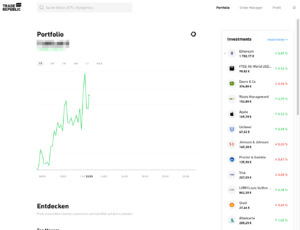
Picture this: You’re on the U-Bahn in Berlin, scrolling through your Trade Republic app. Your portfolio flashes green, €47,000 in ETFs, a few grand in crypto, your emergency fund sitting in that slick 2% interest account. Life feels financially sorted. Then your phone vanishes. Not just the device, but your entire wealth management system, your bank branch, your financial advisor, all of it, gone in a split-second theft. The sinking feeling isn’t just about the hardware, it’s the dawning realization that your entire financial life lives behind a single six-digit PIN.
This is the nightmare scenario keeping savvy German investors awake at night, and it’s precisely why that “free trading” promise comes with hidden security baggage most people never unpack.
The Digital-Only Trap: When “Convenient” Becomes “Vulnerable”
Neobrokers (neo-brokers) have revolutionized German investing. They’ve slashed fees, killed paperwork, and turned the intimidating world of Aktien (stocks) into a thumb-friendly mobile game. But here’s the uncomfortable truth: that convenience creates a single point of failure most traditional bank customers never face.
Your Sparkasse branch might be boring, but it exists. You can walk in. You can demand paper statements. If Sparkasse goes bust, your assets don’t vanish into the digital ether, they’re held by separate custodian entities with physical offices and decades of regulatory history. With Neobrokers, you’re trusting an app, a server farm, and a regulatory framework built for a world that didn’t anticipate “your entire net worth fits on a stolen iPhone.”
The research paints a stark picture. While platforms like Trade Republic, Scalable Capital, and Finanzen.net Zero offer the legally required €100,000 Einlagensicherung (deposit insurance) through their partner banks, that protection has gaps you need to see coming.
Hacking Isn’t Just a Hollywood Plot, It’s Your Tuesday Morning Risk
Let’s address the Reddit elephant in the room: device theft and account hacking. One investor’s confession captures the anxiety perfectly: “My entire money lies in an app that anyone with the right unlock pattern can access immediately. What if my phone gets stolen or my account gets hacked?”
This isn’t paranoid fantasy. German cybersecurity authorities report a steady rise in financial app-targeted malware, and while Neobrokers use standard encryption and two-factor authentication (2FA), your security chain is only as strong as its weakest link, often your own device hygiene.
Here’s what the WiWo comparison data reveals about actual security measures: while some platforms mention “offline wallets” for crypto and 2FA, the implementation varies wildly. Trade Republic uses SMS verification, which is vulnerable to SIM-swapping attacks. Scalable Capital offers authenticator apps, but many users disable them for convenience. The result? A €500 smartphone becomes the master key to your €50,000 portfolio.
The solution some German investors adopt is almost comically low-tech: a dedicated “banking phone.” As one commenter noted, a cheap Galaxy A16 (around €100) with five years of security updates becomes your financial fortress, never used for dodgy apps, never left in a bar, never connecting to airport WiFi. It’s the digital equivalent of keeping your savings in a separate building from your checking account.
The Insolvency Illusion: Why Your Assets Might Not Be As “Separate” As You Think
Now for the scarier scenario: what if the Neobroker itself implodes? Not just a glitch, but a full-blown Wirecard-style collapse?
German law requires Wertpapiere (securities) to be held as Sondervermögen (separate assets), meaning they legally belong to you, not the broker. If Scalable Capital goes bankrupt, your ETF shares shouldn’t be seized to pay their debts. That’s the theory.
In practice, the speed and opacity of digital-only platforms create real risks. Traditional brokers generate physical depot statements mailed to your home. Neobrokers? Everything’s digital. If the platform freezes withdrawals during insolvency proceedings, you might have zero proof of ownership readily available. Your login credentials become worthless. The BaFin (Federal Financial Supervisory Authority) would eventually sort it out, but “eventually” could mean months without access to your funds during a market crash.
The WiWo data shows most German Neobrokers partner with established banks like Baader Bank or Sutor Bank for custody. This is good, these partners are subject to stricter oversight. But it also adds complexity. Your relationship is with the Neobroker, not the custodian. In a crisis, you’re two degrees removed from the entity actually holding your assets.
The Multi-Platform Defense: Don’t Put All Eier in One Digital Korb
The most repeated advice from experienced German investors is brutally simple: split your assets across at least two independent platforms. Not because you expect both to fail simultaneously, but because systemic outages happen. Trading halts occur. Apps crash during high-volume days.
One investor put it bluntly: “Minimum split across two platforms. Not just because of ‘big’ risks, but simply because of possible system/trading disruptions. Principle: Never all eggs in one basket.”
This isn’t just about catastrophic failure. It’s about operational resilience. If Trade Republic’s servers go down on the day you desperately need to sell, having a Scalable Capital account gives you options. If one platform’s 2FA system locks you out, you’re not completely stranded.
But spreading assets creates its own German-specific headache: tax reporting. Each platform generates its own Steuerbescheinigung (tax certificate). Come March, you’re manually consolidating data from multiple sources, praying you don’t trigger a Finanzamt (Tax Office) audit through simple addition errors. The broker tax reporting requirements become exponentially more complex with each additional platform, something Neobroker marketing conveniently glosses over.
Digging Into Custody: The Fine Print That Matters
Here’s where technical depth separates informed investors from app-happy beginners. The WiWo comparison reveals crucial custody details:
- Trade Republic: Uses Baader Bank as custodian. €100,000 statutory Einlagensicherung. Crypto held in “offline wallets” (though what this means operationally remains vague).
- Finanzen.net Zero: Also Baader Bank. Same €100,000 protection. No interest on cash balances, pushing you toward money market funds, which have different risk profiles.
- Scalable Capital: Spreads cash across multiple Treuhandbanken (trust banks) and qualified money market funds. Each bank gets its own €100,000 protection slice. This is actually safer for large balances but requires you to track which bank holds what.
- Smartbroker+: Baader Bank again, with voluntary additional insurance. But that 0.80% annual custody fee for gold ETCs can silently erode returns.
- justTRADE: Sutor Bank in Hamburg. €100,000 statutory plus voluntary insurance. But their 9% overdraft interest rate on settlement accounts is a trap waiting for anyone who accidentally overdraws.
The key insight? “Free” trading often means you’re the product in subtle ways. Those neo-broker revenue models aren’t just about selling your order flow, they’re about keeping your cash in low-interest settlement accounts where they earn the spread. Your “free” trades fund the business, which creates misaligned incentives when it comes to security investments.
The Crypto Complication: Where “Offline” Doesn’t Mean “Safe”
German Neobrokers love offering crypto, but the security model differs radically from traditional securities. While your ETFs are Sondervermögen, crypto regulations remain murky. Trade Republic offers “real” crypto transfers to external wallets, a security feature if you move assets to your own cold storage. Scalable Capital only offers crypto ETPs, which are technically securities and thus safer from a custody perspective but expose you to counterparty risk.
The Handelsblatt comparison notes some platforms use “offline wallets, supplemented by two-factor authentication.” Sounds reassuring, but “offline” in crypto usually means cold storage, physically disconnected hardware. If your Neobroker is actually doing this, great. But if “offline” just means “not currently connected to the trading engine”, you’re exposed to the same hacking risks as any hot wallet.
Actionable Defense: Building Your Digital Fortress
So what’s a German investor to do? Here’s the practical playbook:
1. The Two-Platform Minimum
Split your assets between two Neobrokers with different custodian banks. For example, Trade Republic (Baader Bank) plus justTRADE (Sutor Bank). This insulates you from single-platform failures and gives you negotiating leverage.
2. The Dedicated Device Strategy
That €100 Galaxy phone isn’t paranoia, it’s insurance. Install only your banking apps. Never browse. Never install games. Keep it in your safe at home, not your pocket. Yes, it’s inconvenient. So is losing €50,000 because you downloaded a sketchy APK.
3. Paper Trail Generation
Manually export depot statements quarterly. Save PDFs to an encrypted hard drive. Email them to yourself in a secure archive. If the platform freezes, you have proof of ownership that doesn’t require app access.
4. Understand Your Custody Chain
Log into your Neobroker’s web portal (not just the app) and find the “Depotauszug” (depot statement). It should name the actual custodian bank. Verify that bank’s Einlagensicherung scheme. If you can’t find this information easily, that’s a red flag.
5. Cash Management Discipline
Never keep more than €100,000 in cash at a single Neobroker partner bank. For larger portfolios, spread across multiple custodians or move excess cash to a separate Tagesgeldkonto (instant savings account) at a traditional bank.
6. Security Hygiene Beyond 2FA
Use app-based authenticators, not SMS. Enable biometric locks on your devices. Set up transaction notifications for every trade. And for God’s sake, don’t use the same password you use for Netflix.
The Bigger Picture: Digital Sovereignty in German Finance
This security discussion connects to a larger tension in German financial culture. We’re a nation that still loves cash, still mails physical letters to the Finanzamt, still trusts the Sparkasse on the corner. The Neobroker revolution runs counter to these instincts, and that’s precisely why the security gaps feel so unsettling.
The digital investment platform scrutiny isn’t just about convenience versus safety. It’s about whether Germany’s robust regulatory framework can adapt fast enough to protect investors in a world where your wealth lives on a server in Frankfurt and a thief only needs your thumbprint to access it.
The BaFin is trying. The €100,000 Einlagensicherung is real. The Sondervermögen rules are strong. But regulations move at the speed of bureaucracy while digital threats evolve daily. You’re the last line of defense.
Final Verdict: Use Neobrokers, But Don’t Trust Them
Neobrokers aren’t evil. They’re just tools, powerful, convenient, and potentially dangerous if misunderstood. The security risks aren’t reasons to avoid them entirely, but they are reasons to treat them like the high-performance financial instruments they are.
Keep your core emergency fund at a traditional German bank. Use Neobrokers for your investment portfolio, but split across at least two platforms. Generate your own paper trails. And buy that dedicated banking phone, it costs less than a single trade commission at old-school brokers used to.
Your future self, staring at a locked app while the DAX crashes, will thank you. The German banking system operates with the same efficiency as a Deutsche Bahn train, usually impeccable, until there’s construction on the line. Right now, Neobroker security is still under construction. Plan accordingly.