
Your €60,000 Salary Costs Your Boss €80,000: The 2026 German Employer Contribution Reality Check
The German employment system operates with impressive precision, until you peek behind the curtain. While employees obsess over their Arbeitnehmerbrutto (employee gross salary), the number they negotiate, companies wrestle with the Arbeitgeberbrutto (employer gross), a figure that’s always higher and far more painful. Understanding this delta isn’t just accounting trivia, it’s the secret weapon that transforms how you negotiate, how you value your work, and how you finally understand why German employers can seem stingy even when they want to pay you more.
The Two Gross Salaries Nobody Talks About
Every German paycheck hides a fundamental lie of omission. When you negotiate €4,000 monthly, you’re negotiating your Arbeitnehmerbrutto. But your employer signs a completely different contract, with the German state, for approximately €4,922. That’s not a typo. On a €48,000 annual salary, your boss actually pays around €59,000.
The research data from German finance communities reveals this gap widens dramatically as salaries increase. At €110,000 annually, an employee takes home roughly €63,000 while the employer’s total burden hits €126,000. You read that correctly: €63,000 evaporates in taxes and contributions. This isn’t some abstract policy debate, it’s the mathematical reality that shapes every hiring decision in Germany.
The vertical axis on contribution charts shows the percentage of employer gross consumed by levies, while the horizontal axis tracks the employee gross most people recognize. The white line inside those graphs? That’s the alternative axis, the Arbeitnehmerbrutto, always lagging behind what the company actually spends.
The 2026 Social Security Breakdown: Where Your Money Really Goes
Let’s get specific with a €3,500 monthly salary example, because abstract percentages don’t pay rent. Your employer forks over:
- Rentenversicherung (Pension insurance): 9.3% = €325.50
- Krankenversicherung (Health insurance): 7.3% + half the 2.9% surcharge = €306.25
- Pflegeversicherung (Care insurance): 1.8% = €63.00
- Arbeitslosenversicherung (Unemployment insurance): 1.3% = €45.50
- Insolvenzgeldumlage (Insolvency fund): 0.15% = €5.25
- Berufsgenossenschaft (Accident insurance): ~1.2% = €42.00
Total monthly Lohnnebenkosten: €787.50. Your €3,500 salary just became €4,287.50 in real costs. And we haven’t even touched the U1-U3 Umlagen (statutory levies) that small businesses pay for sickness and maternity coverage, which can add another 1-4% depending on company size.
These aren’t optional line items. They’re legally mandated contributions that make German social security function. But they also explain why a €500 raise costs your employer nearly €625, and why they might hesitate when you ask.

Why High Earners Feel Betrayed by the System
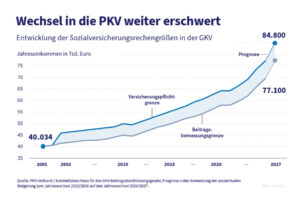
The German social security model caps contributions at certain income thresholds, the Beitragsbemessungsgrenze (contribution assessment ceiling). For 2026, that means once you earn above roughly €5,500 monthly, your pension and unemployment contributions stop increasing. Sounds fair, right?
Wrong. Because while your contributions plateau, your income tax does not. The progressive tax system keeps climbing, and high earners watch helplessly as their marginal rate pushes past 42%. Many international professionals express frustration when they discover that crossing €110,000 means they’re effectively sponsoring the German welfare state to the tune of €50,000+ annually.
The controversial part? The system creates a perverse incentive structure. As one analysis notes, someone earning minimum wage costs their employer €35,000 total but takes home €21,000, a €14,000 gap. At €110,000, that gap explodes to €63,000. The higher you climb, the more you subsidize, yet the benefits remain identical. No wonder many high earners explore private Krankenversicherung (private health insurance) escape routes, though even that requires earning above the Jahresarbeitsentgeltgrenze (annual income threshold) and comes with its own complexities.

How This Knowledge Changes Your Salary Negotiation
Understanding Lohnnebenkosten gives you leverage most employees never access. When negotiating, frame your ask in terms of total cost, not just gross. Instead of demanding “€4,000 monthly”, present it as “€4,800 total employer cost”, a number that already includes their burden. This signals sophistication and makes saying “yes” easier for HR.
More importantly, recognize that German employers face genuine constraints. That 20-26.5% employer contribution rate means every €100 you want costs them €126. When they reject your request, it’s not always greed, it’s often arithmetic. The 2026 social security forecast shows these numbers keep climbing, squeezing budgets further.
Consider alternative compensation. Vermögenswirksame Leistungen (asset-building benefits), Deutschlandticket subsidies, or betriebliche Altersvorsorge (company pension) contributions cost employers less than salary increases while delivering more net value to you. Smart negotiators in Germany always think beyond the gross number.
The Austrian Comparison: Why Germany’s System Feels Especially Painful
If you think Germany’s system is complex, glance across the border. The Austrian social insurance breakdown reveals a similarly heavy burden but with different thresholds and quirks. Austria’s system caps differently, taxes differently, and yet produces the same existential question: why does earning more feel so unrewarding?
The difference? Germany’s Steuerklasse 1 (tax class 1) for single, childless employees, combined with a 2.9% average health insurance surcharge, creates a perfect storm for young professionals. You’re paying maximum social contributions while receiving minimal tax relief. It’s the financial equivalent of being told to run a marathon while carrying a backpack full of stones.
The Real-World Impact: From Six Figures to Sunday Night Dread
Meet the software engineer who jumped from €75,000 to €110,000, only to watch their net increase by €1,200 monthly while their employer’s cost rose by €4,000. That’s not a typo. The progressive tax system and uncapped social contributions at certain levels mean raises deliver diminishing returns. This reality fuels the six-figure salary traps many German professionals face, more money, more stress, barely more disposable income.
The psychological toll matters. When you realize 50% of what you cost your company disappears before it reaches you, motivation suffers. Many international workers report culture shock when they discover their “generous” German salary translates to surprisingly modest living standards, especially in cities like Munich or Frankfurt where housing costs devour net income.
What Actually Works: Strategies for 2026 and Beyond
First, internalize the 1.7x rule: multiply any salary by 1.7 to approximate real employer cost. This mental model helps you understand budget constraints and negotiate realistically.
Second, time your negotiations around the Beitragsbemessungsgrenzen. Asking for a raise that pushes you just over a threshold often delivers poor net benefit. Better to negotiate non-monetary perks or wait for a bigger jump that justifies the tax hit.
Third, understand that Steuerklasse changes everything. Married couples splitting Steuerklasse 3 and Steuerklasse 5 can radically alter net outcomes without changing gross cost to employers. Single employees in Steuerklasse 1 shoulder the heaviest burden, plan accordingly.
Finally, push for transparency. Ask HR for a “Gesamtkostenübersicht” (total cost overview) during offer stages. Professional German companies can generate this instantly, and it reveals exactly how much budget your role consumes. Armed with this data, you can negotiate from a position of informed strength rather than hopeful guessing.
The Bottom Line: Knowledge Is Your Only Defense
The German labor cost system isn’t evil, it’s just opaque. That opacity serves nobody. Employers feel squeezed by invisible levies. Employees feel undervalued despite high gross salaries. And the state watches both sides grow increasingly frustrated.
Your move is simple: stop negotiating in gross. Start thinking in total cost. When you understand that €60,000 costs €80,000, you stop resenting your employer and start demanding smarter compensation structures. You ask for the Deutschlandticket instead of €50 more salary. You push for pension contributions instead of taxable bonuses.
The 2026 contribution rates won’t change. The complexity won’t magically simplify. But your ability to navigate this system? That transforms completely the moment you see the invisible 20-26% that’s been hiding in plain sight all along.