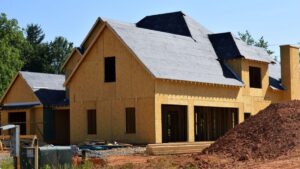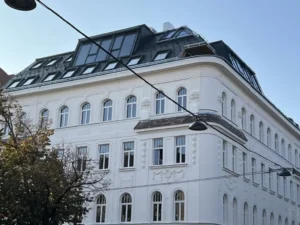

Meet the couple who broke my heart this week. Forty years old, one kid in Volksschule (primary school), net household income of €6,100 monthly (times 14, because Austria loves its double payments). They’ve got €300,000 in equity, ETFs, crypto, gold, the works. And in 18 months, they’re homeless.
Not because they can’t pay rent. Not because they defaulted. But because their landlord in Vienna’s western Speckgürtel (commuter belt) wants the place back, and the rental market has simply ceased to exist. This isn’t a story about bad planning. It’s about Vienna’s housing market performing a disappearing act, leaving families with one option: a mortgage that might ruin them.
The Rental Market Extinction Event
Vienna’s rental vacancy rate hit 1.2% in early 2026. Let that number sink in. That’s not a tight market, that’s a statistical anomaly. For context, anything below 3% is considered a housing crisis. At 1.2%, you’re not finding an apartment, you’re competing in a financial Hunger Games where the prize is a 60-square-meter Altbau (old building) with “vintage” plumbing.
The Vires market report shows net rents for new construction jumping 4-6% year-over-year, hitting €18-22 per square meter. In the Innere Stadt (First District), it’s €28. Meanwhile, regulated Altbau rents sit frozen at €4.14/m² for Category A buildings, great if you can find one, which you can’t. The waiting list for a GemeindeWohnung (municipal apartment) in outer districts stretches beyond five years.
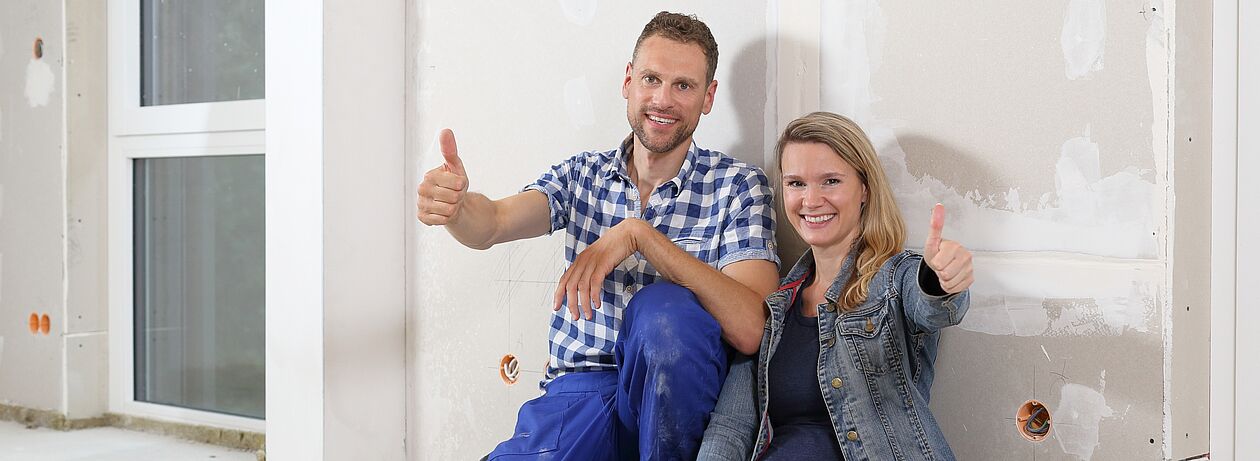
This is how a family with solid income and substantial savings ends up facing forced homeownership. They’ve called 47 listings. They’ve offered six months’ rent upfront. They’ve considered bribery (half-jokingly). The answer is always the same: “Sorry, 200 applications in three days.”
The Mortgage Math That Doesn’t Add Up
Our couple’s math looks like this: €850,000 total project cost (€250k land + €550k construction + €50k “surprises”). They’ve got €300k equity. They need a €550k Wohnkredit (housing loan).
Austrian banks operate under the FMA’s (Finanzmarktaufsicht) iron rules since August 2022: maximum 40% of net income for debt service, 35-year maximum term, and at least 20% equity unless you’re a doctor or inherited property.
Let’s run their numbers. €6,100 x 14 = €85,400 annual net. 40% of monthly net is €2,440. At current rates around 3.9% for 10-year fixed, a €550k loan over 35 years costs roughly €2,500 monthly. They’re €60 over the limit before they’ve paid for electricity or Kindergeld (child benefit).
But here’s the kicker: banks stress-test at 6-8% interest rates. At 7%, that payment jumps to €3,600, nearly 60% of their income. The loan officer will smile, shake their hand, and reject them quietly. Or worse, approve them through an exception clause that locks them into a variable-rate nightmare.
The Hidden Cost Massacre
The Reddit post mentions “sanierungsbedürftige, asbestverseuchte Gruselhäuser ab 450.000 EUR” (renovation-needy, asbestos-contaminated horror houses from €450k). This is Vienna’s dirty secret: the “affordable” housing stock is a financial death trap.
An Altbau in Ottakring or Hernals might list at €450k, but the Gutachter (appraiser) will note the Entkernung (gutting) required. Asbestos removal alone runs €30-50k. A new Heizungsanlage (heating system), because that “wohlig warme Ölheizung” (cozy warm oil heater) is a climate disaster and illegal to install in new builds, sets you back €25k. The Dachstuhl (roof truss) needs €40k. Suddenly your €450k bargain is a €600k money pit that still smells like your great-grandmother’s curtains.

And Austrian banks know this. They’ll finance the purchase price but demand you prove renovation funds upfront. Your €300k equity? Poof. Gone before you’ve chosen kitchen tiles.
Interest Rate Roulette at 3.9%
Current Bauzinsen (construction interest rates) sit at 3.9% for 10-year fixed loans, up from 1.2% two years ago. The Interhyp panel is split: half expect rises due to Middle East conflicts and Hormuz Strait tensions, half predict ECB cuts will bring relief.
For our family, this uncertainty is catastrophic. Fix for 20 years at 4.5% and they’re paying €700 more monthly than current rates. Take a variable loan and a geopolitical shock could send them to 6% within quarters. The Forward-Darlehen (forward loan) they might want doesn’t exist for first-time buyers with borderline ratios.
This is where understanding interest rate shifts affecting savings goals becomes critical. That €300k equity? If it’s in a Tagesgeld (daily allowance account) earning 0.8% after the promotional period, they’re losing purchasing power against 3.9% loan interest daily. Every month they “save” by hunting for rentals, their buying power erodes.
The Genossenschaftswohnungen Lifeline That Isn’t
A commenter suggested GemeindeWohnungen (municipal apartments) as a backup. Smart. Except our family lives in the western Speckgürtel, where GemeindeWohnungen are rarer than honest Makler (real estate agents). Oberösterreich and Niederösterreich have them, but not in these commuter villages.
Even in Vienna proper, the Warteliste (waiting list) for a 3-Zimmer (three-room) flat runs 8-10 years unless you have a Behinderung (disability) priority or Sozialticket (social priority). Our family needs a solution in 18 months, not 18 semesters.
The alternative? Genossenschaftswohnungen (cooperative apartments). But these require Genossenschaftsanteile (cooperative shares) of €30-50k that remain locked, and the monthly fees, while lower than market rent, aren’t much cheaper than a mortgage payment. You’re just trading one form of forced savings for another.
When “Just Move” Isn’t an Option
Here’s where Austrian reality diverges from financial fantasy. The Reddit post mentions “persönliche/familiäre Gründe” binding them to a 10km radius. This isn’t laziness, it’s the Austrian Familiennetzwerk (family network).
Oma (grandma) watches the kid after school. The Schwiegereltern (in-laws) live three streets over. The job is tied to the region’s single large employer. Moving to Tirol where “Häusermarkt ab 600k” might offer more choice means abandoning the support system that makes dual-income parenting possible.
This is the invisible cost column in every Austrian family’s budget: childcare worth €1,200 monthly, provided free by relatives. Subtract that from their income if they move, and the mortgage math fails completely.
The Real Reality Check
Let’s give them the “ordentliche Watschn” (proper slap) they asked for.
Income Risk: One partner gets sick? At €6,100 net with two full-time jobs, there’s no slack. Austrian Krankenstand (sick leave) pays 50% after a month. The Ensuring stable net income for mortgage eligibility link explains how quickly “stable” income evaporates when employers restructure.
Relationship Risk: The bank will force them to apply jointly. If they separate, and 40% of Austrian marriages do, the house must be sold. With transaction costs at 10% (Grunderwerbsteuer, Notar, Makler), they’d need the property to appreciate 15% just to break even. In a stagnant market? Impossible.
Pension Risk: They’ll be 75 when the loan ends. Austrian state pension for their generation? Maybe €1,400 monthly. Still paying €2,500 at age 70? This is how you eat cat food in retirement.
Opportunity Cost: Liquidating ETFs, crypto, and gold at what might be market bottoms to pour into a depreciating house? The Reducing wealth drag to maximize down payment capacity math works in reverse here, they’re voluntarily creating wealth drag by concentrating assets in one illiquid, high-cost basket.
The Math of Desperation
The commenter who said “Mit 250k Eigenmittel kriegst über 35jahre einen Kredit bis über 1 mio Euro” isn’t wrong mathematically. Bank99’s calculator will spit out approval. But that’s the trap: Austrian banks are legally allowed to make exceptions to the 20% equity rule for up to 15% of their loan volume. They’ll sell you the rope to hang yourself, stress-tested at 6% interest, then hope you don’t lose your job.
Our couple’s real monthly number? €2,800 all-in after Nebenkosten (additional costs). That’s 46% of net income. The bank might approve it under the “Ausnahmekontingente” (exception contingents). But one €500 car repair, one Kita (kindergarten) fee increase, one Betriebsrat (works council) meeting that cuts their bonus, and they’re in the red.

What They Should Actually Do
Here’s the unsexy truth: They should beg their landlord for a two-year extension. Offer €200 more monthly. Pay cash for a new kitchen. Whatever it takes. Because the alternative is financial Russian roulette.
If that fails, they should:
1. Audit every euro using a budget audit to free up renovation funds. That €9.99 subscription to something forgotten? Gone. The second car? Sold. Every cent needs to flow to equity.
2. Lock rates for 20 years at today’s 4.2% fixed, not 10-year. The 10-year Zinsbindung (interest rate lock) is a trap that creates Anschlussfinanzierung (follow-up financing) risk when they’re 50 and rates might be 8%.
3. Consider a Bausparvertrag (building savings contract) hybrid. Yes, the rates are higher initially, but it gives them Tilgungsaussetzung (repayment suspension) options if disaster strikes.
4. Buy the worst house in the best street, not the best house they can afford. A €400k ruin in Hietzing beats a €550k turnkey box in Liesing for resale value.
5. Calculate real disposable income using German tax principles that apply to Austria. Their €6,100 net might be €5,400 after real-world deductions.
Vienna’s 60% transaction increase in Q1 2026 isn’t healthy demand, it’s panic buying. Families like our Redditors are grabbing anything because the rental alternative is literal homelessness. This is how bubbles form: not from speculation, but from systemic failure.
The irony? If they wait six months, the data suggests the market might cool. Immo Analytics warns that “Sondereffekte” (special effects) and “rückläufiges Angebot” (declining supply) are distorting the numbers. But they don’t have six months. They have 18 months, and the average property search in Vienna now takes 12 months… if you’re lucky.
The Watschn
Here’s the slap they asked for: You’re not ready, but you might have to do it anyway.
Your equity is sufficient but not comfortable. Your income is borderline. The market is against you. But Vienna’s rental market is a zombie apocalypse, and you’re the survivor who never wanted to learn to shoot.
If you build, do it with eyes open: 40% of income, no safety net, and the knowledge that you’re betting your entire financial future on a single, illiquid asset in a volatile market. Get the 20-year fixed rate. Keep €20k liquid as a Notgroschen (emergency fund) even if it means borrowing more. And pray that neither of you gets sick, fired, or fed up with each other.
Because in Austria’s forced homeownership crisis, the house doesn’t just need to be your home. It needs to be your prison, your pension, and your piggy bank, all at once. And that’s a weight no foundation was ever meant to bear.