The €68k Question: Why Germany’s ‘Top’ Tax Rate Hits the Middle Class
You finally cracked the €75,000 mark. After five years of grinding through German certification courses, navigating office politics at your Mittelstand (medium-sized enterprise) employer, and mastering the art of the humblebrag in team meetings, you’ve arrived. The promotion lands in your mailbox, complete with that sweet new title: Senior Projektmanager (Senior Project Manager). You mentally calculate the net gain, finally, that balcony apartment in Berlin’s Neukölln district might be within reach.
Then your first payslip arrives. The line item for Lohnsteuer (income tax) and Solidaritätszuschlag (solidarity surcharge) devours nearly half your raise. Your net monthly gain? A measly €300. Welcome to the Spitzensteuersatz (top tax rate) trap, where Germany’s definition of “wealth” collides brutally with economic reality.
The Numbers That Sparked a Thousand Rants
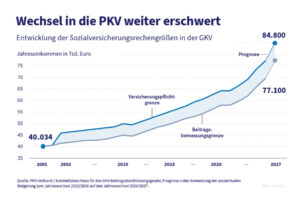
Let’s cut through the confusion. The German Spitzensteuersatz kicks in at €68,480 of zu versteuerndes Einkommen (taxable income) for 2025, rising to €69,879 in 2026. That 42% rate sounds like it should target genuine high-flyers, until you realize the median full-time salary in Germany hovers around €54,000 gross.
Here’s where it gets spicy: after factoring in the Grundfreibetrag (basic tax-free allowance) of €12,348, Werbungskostenpauschale (standard work-related expenses) of €1,230, and other deductions, you hit that threshold with a gross salary of roughly €80,000. Many professionals in Munich, Frankfurt, or Stuttgart cross this line with a few years of experience. Software engineers, project managers, senior nurses, they’re all “Spitzenverdiener” (top earners) now.
The raw math infuriates people. One commenter on a finance forum pointed out that 7% interest on a €200,000 house in 2005 cost the same monthly payment as 3.7% on a €650,000 property today. The tax brackets? They’ve barely budged while property values tripled. This isn’t just cold progression, it’s a fiscal ice age for the middle class.
Kalte Progression: The Silent Salary Killer
Politicians love to debate “kalte Progression” (cold progression), but most workers experience it as the slow realization that their “raise” barely covers inflation. Your salary increases 3%, but the tax brackets shift only 1.5%, congratulations, you’re now paying a higher percentage of your real income to the Finanzamt (Tax Office).
The German Institute for Economic Research proposed raising the Spitzensteuersatz threshold to €90,000. Sounds generous, right? Except that just restores the ratio from two decades ago. In 2005, the threshold sat around €50,000, while houses in southern German villages cost €180,000-€220,000. Today? Those same villages list properties at €650,000-€750,000, yet the tax threshold increased only €18,000.
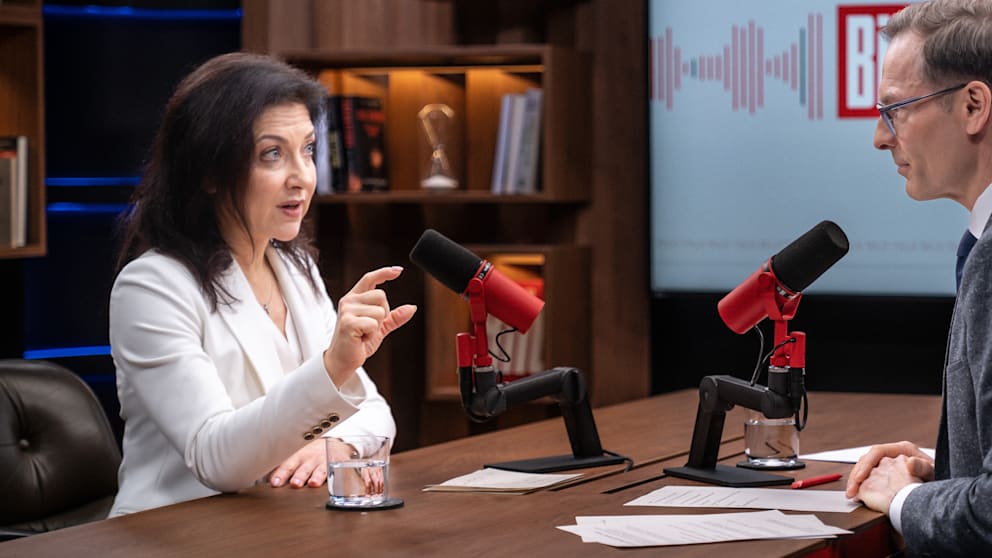
Wirtschaftsministerin Katherina Reiche recently hinted at reform in a BILD interview, acknowledging the pressure. But her focus remains on corporate tax cuts first, because apparently, businesses need relief more than individuals drowning in housing costs. The cognitive dissonance is staggering.
The Housing Crisis Makes Everything Worse
This tax squeeze wouldn’t sting as badly if housing remained affordable. But Germany’s real estate market transformed into a battlefield. That €68,000 salary, roughly €3,500 net monthly, barely qualifies you for a €300,000 mortgage. In Berlin, that buys you a 40-square-meter Altbau (old building) apartment needing €50,000 in renovations. In Munich, it might get you a parking space.
International residents feel this acutely. Many report that their home countries reserve top tax rates for genuinely high incomes, think €150,000+ in the UK or US. Germany’s system, designed in an era when €68,000 meant a villa and two cars, now traps professionals who can barely afford a two-bedroom rental.
The “Rich” Engineer Who Can’t Afford a House
Meet the typical victim: a 34-year-old Ingenieur (engineer) earning €82,000 gross in Stuttgart. After taxes and social contributions, they take home €4,200 monthly. Rent for a 70m² apartment? €1,800. Car payment, insurance, GEZ (broadcasting fee), TK (Techniker Krankenkasse) health insurance premiums, suddenly you’re saving €500 a month. At that rate, accumulating the €80,000 down payment for a modest apartment takes over 13 years.
This engineer pays the 42% marginal rate on every euro above €68,480. But their effective tax rate, the total percentage paid, might be 26%. The difference matters for public debate but feels meaningless when you’re house-poor.
Why the System Isn’t Changing
The political math is brutal. Raising the Spitzensteuersatz threshold costs billions in lost revenue. Who makes up the difference? The Handelsblatt calculated that even raising the threshold to €100,000 and increasing the rate to 49% would net a median earner just €25 more monthly. That’s not a typo, €25.
Meanwhile, the aging voter base protects their interests. As one forum commenter cynically noted, most voters already own their €200,000 houses (purchased decades ago) and fear the taxman, even though their €2,500 pensions won’t be affected. They’re not worried about housing costs because they’re not in the market.
The result? A political stalemate where middle-class professionals pay “rich people” taxes while being priced out of the lifestyles their parents enjoyed on single incomes.
What This Means for Your Financial Planning
If you’re earning €65,000-€85,000 in Germany, you’re in the fiscal twilight zone. Here’s how to survive:
Maximize your Absetzungen (deductions)
That €1,230 Werbungskostenpauschale is just the start. Home office, continuing education, professional memberships, track everything. Many expats leave €2,000-€4,000 in potential refunds on the table annually.
Consider the Ehegattensplitting (spousal income splitting)
Married? The threshold doubles to €136,000. If one partner earns significantly less, combining incomes can slash your tax burden by thousands.
Negotiate differently
A €5,000 raise pushing you deeper into the 42% bracket might net only €2,500. Instead, negotiate for company cars, additional vacation, or employer pension contributions (betriebliche Altersvorsorge), these often provide better value.
Plan your escape route
The Spitzensteuer trap and high tax bracket reality is pushing many professionals to consider freelance status (Freiberufler) or leaving Germany entirely. The math is stark: at €80,000 gross, you might keep more as a freelancer with proper structuring.
The Promotion That Wasn’t
Remember Markus from Bosch? Three years ago, he took a lead auditor position jumping from €65,000 to €78,000. The real net pay impact of six-figure promotions shocked him, his effective hourly rate barely increased due to longer hours and higher taxes. He’s now considering returning to his old role, where life was simpler and the taxman less greedy.
This is Germany’s quiet crisis: a tax system designed for a different economic reality, slowly squeezing the professional middle class until the promise of “Aufstieg” (upward mobility) becomes a cruel joke.
The Bottom Line
Germany’s Spitzensteuersatz doesn’t target the wealthy, it targets anyone who dares to earn above-average wages in a high-cost economy. Until politicians index thresholds to real wage growth and housing costs, you’ll keep seeing those brutal line items on your payslip.
The solution isn’t just raising the threshold. It’s fundamentally rethinking what “middle class” means in a country where €68,000 makes you a “top earner” but can’t buy you a home. Until then, every December payslip will serve as a reminder: in Germany, success comes with a 42% surcharge, and diminishing returns.
Your move: Start treating tax optimization as essential as salary negotiation. Because in this system, the difference between gross and net isn’t just math, it’s the gap between your parents’ lifestyle and your reality.