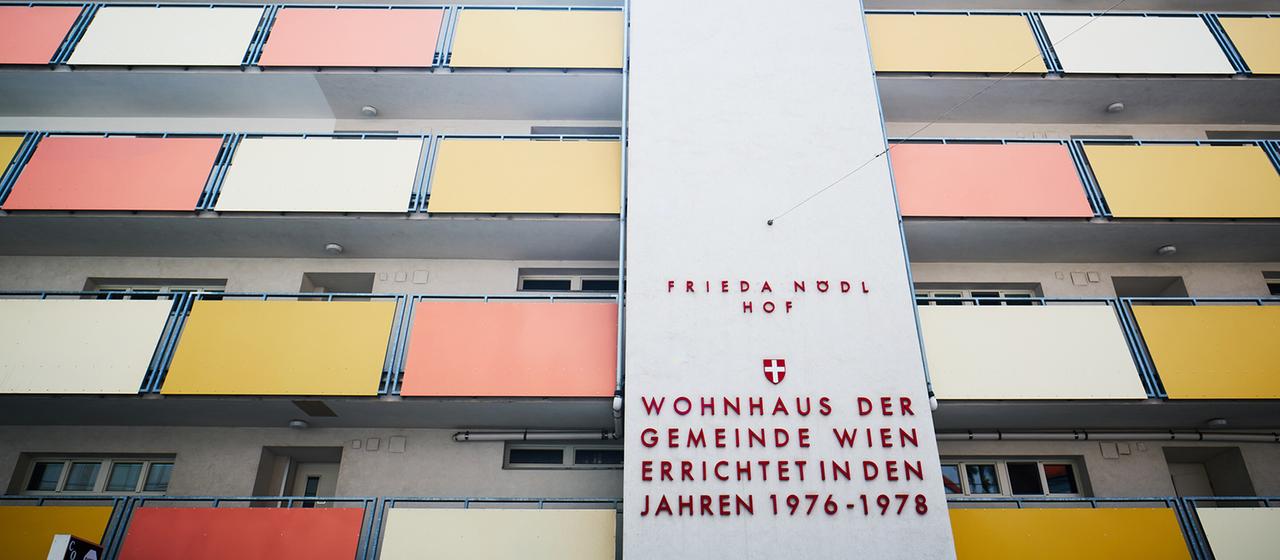
You’re 39, living in a 97m² Genossenschaftswohnung (cooperative apartment) in a good Vienna neighborhood, paying €1,111 in rent. Your household pulls in €6,500, €7,000 net monthly, and you’ve quietly built €366,000 in savings, €122K in ETFs, €213K in Tagesgeld (overnight money), a small Bausparer (building savings contract), and your cooperative share.
Meanwhile, your friends are buying. Apartments for €500K, €800K, mortgage rates of €2,000+, plus Betriebskosten (operating costs) and Rücklagen (reserve funds).
You’ve run the numbers a hundred times. You always arrive at the same conclusion: your current setup is financially superior. But the FOMO is real. Your friends sit debt-free in their properties in 25 years while you still pay Miete (rent).
Is renting actually a financial mistake in Austria, or is the Austrian obsession with Eigentum (property ownership) just a cultural hangover that doesn’t survive contact with modern math?
The answer is more nuanced than either side wants to admit. Let me walk you through the numbers, the psychology, and the Austrian-specific factors that make this decision genuinely different from other countries.
The Case for Renting: Why You’re Not Crazy
Let’s start with the strongest argument for your position, and it’s stronger than you think.
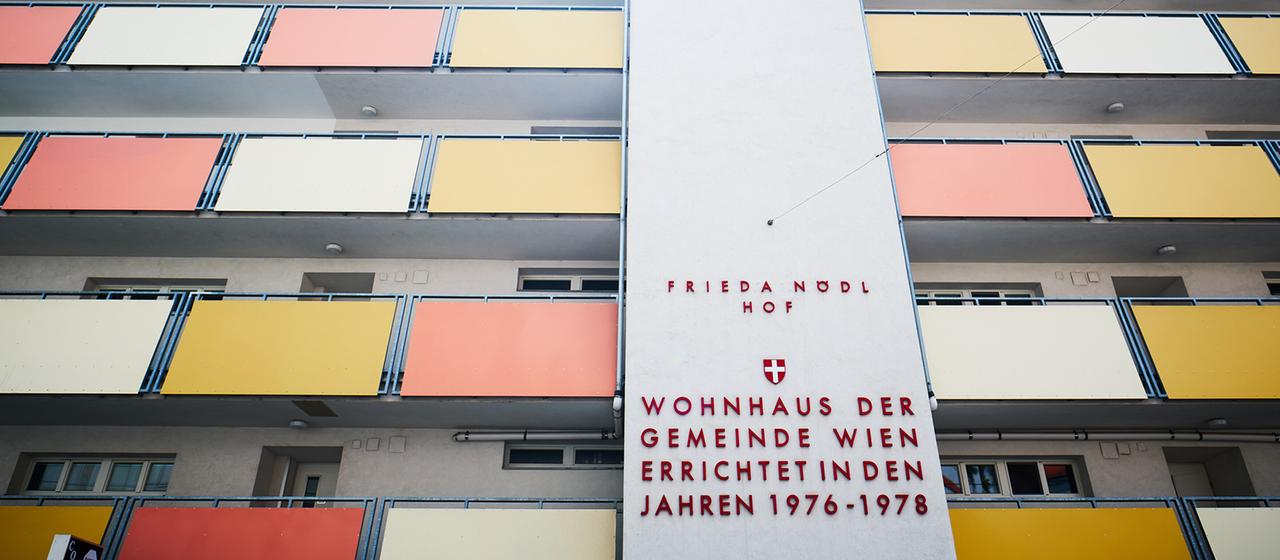
Your Genossenschaftswohnung isn’t just any rental. It’s a cooperative apartment with an unbefristeter Vertrag (unlimited contract) at €11.45/m² in a good location. That’s dramatically below market rate. According to recent tagesschau reporting on Vienna’s housing model, the city’s public housing system, Gemeindebau (municipal housing) plus cooperative apartments, houses about half the population at controlled rates. This isn’t Germany or Switzerland, where renting means paying whatever the market demands.
The people who bought in the last five years? They’re paying €2,000+ monthly in mortgage payments, and their Zinszahlungen (interest payments) are front-loaded. In the early years of a typical Austrian mortgage at current rates, roughly 60, 70% of each payment goes to interest, not equity. Meanwhile, you’re saving the difference, hundreds of euros per month, and investing it.
Over 25 years, the gap compounds. Your €366K, if moved into a diversified portfolio, could grow substantially with the power of compound interest. Your friends’ mortgages will be paid off, yes, but they’ll also have spent thousands on maintenance, repairs, and the opportunity cost of having their wealth locked in a single, illiquid asset in one city.
Many in the Austrian personal finance community have pointed this out, noting that a cheap cooperative apartment combined with disciplined ETF investing often outperforms buying at current Viennese prices. It’s not just the monthly savings, it’s the flexibility. If your job situation changes, if you want to move to Salzburg, if you need to relocate for any reason, you can. Your friends with properties? They’re anchored.
The Austrian Property Reality: Prices That Don’t Make Sense
Now let’s talk about why buying in Austria, specifically Vienna, looks increasingly irrational.
Vienna’s property market has cooled from its 2020, 2022 boom, and the Wiener Bezirksblatt reports that ownership is now “somewhat easier to reach.” But “somewhat easier” doesn’t mean “affordable.” A decent apartment in a central district still costs €500K, €700K. For that, you’re getting the right to live in one building, in one city, with the constant risk of expensive repairs and the stress of Eigentümergemeinschaft (owners’ association) politics.
The construction pipeline tells an even more concerning story. As reported by the Kronen Zeitung, thousands of planned housing units in Vienna won’t be completed this year. Experts argue over whether the problem is too little construction or construction of the wrong type, but either way, the supply shortage will keep prices elevated, or push them higher.
This creates a genuine dilemma. If you wait to buy, you risk prices rising further. But if you buy now, you’re paying historically high prices relative to incomes. The alternative, staying in your subsidized cooperative apartment and investing the difference, looks increasingly attractive.
The Real Mistake Isn’t Renting, It’s Sitting on €213K in Tagesgeld
Here’s the uncomfortable truth that might sting: the biggest financial error visible in this scenario isn’t renting. It’s parking €213K in a Tagesgeldkonto (overnight savings account) yielding maybe 2, 3% while inflation eats away at purchasing power.
That money should be working. For someone with your income, stability, and long investment horizon, keeping over half your liquid wealth in cash is a massive opportunity cost. Over a 25-year timeframe, the difference between 3% annual returns and 7% annual returns on €200K is approximately €600,000.
You mentioned wanting to gradually shift into ETFs, the comments on your situation say moving €200K into a global MSCI World fund would be a stronger move. Many would agree. The hesitation is understandable, nobody wants to dump their life savings into markets at what feels like a peak. But if you don’t have immediate plans for that money, inflation is a more predictable enemy than market volatility.
The strongest argument for renting isn’t just the cheaper monthly cost, it’s that renting frees up capital to invest in productive assets. When you buy a property, you convert €200K+ of flexible capital into an illiquid asset that requires years (if ever) to sell. When you rent, that capital stays invested and productive. This is exactly the renting vs. owning as a wealth-building strategy in high-cost markets that makes renting the rational choice in expensive cities.
The Emotional Case for Ownership: What the Math Misses
But here’s where I have to play devil’s advocate with your rational brain.
A Gallup survey commissioned by Raiffeisen Immobilien found that 69% of Austrians over 40 want to spend their retirement in their own property. And 69% of people can’t all be wrong about their psychological needs, even if they’re wrong about the math.
Property ownership in Austria isn’t just an investment, it’s a psychological anchor. Having a paid-off home means the state can’t touch you. You don’t depend on the whims of a landlord, on rent increases, on a terminated lease at age 75. This security is worth real money, even if it doesn’t show up in spreadsheet calculations.
There are also Austrian-specific financial benefits to ownership. Your own home is protected in most social security calculations, a selbst bewohntes Haus up to 140m² or Eigentumswohnung up to 130m² can be shielded from asset requirements in social benefit assessments, per current Schonvermögen rules. If your wealth ever needs to last through a catastrophic scenario, property ownership offers legal protections that liquid assets don’t.
And there’s the inheritance question. Many Austrians want to pass something tangible to their children. A property is a clear, understandable transfer of wealth. An ETF portfolio, while financially superior, feels less substantial as a legacy.
This reflects the broader cultural and financial myths around homeownership in German-speaking countries that treat property as the ultimate symbol of financial success, even when the numbers suggest otherwise.
The Middle Path: You Don’t Have to Choose
Here’s what the commenters on your situation suggested, and I think it’s the most balanced approach for someone in your position.
You don’t have to either buy a family-sized apartment you don’t want or remain completely uninvested in property. Consider a smaller investment property: a 35, 50m² apartment near a university, financed with a mix of your savings and a manageable mortgage.
The economics work differently for an investment property than for owner-occupied housing. You’re not paying for emotional value, you’re buying a cash-flowing asset. Current Austrian property experts suggest that rental apartments in good locations remain attractive long-term investments, especially with the backdrop of rising rents and limited construction. The Vienna market continues to attract international investors precisely because the fundamentals favor landlords.
Your Genossenschaftswohnung (cooperative apartment) stays your home. The investment property is purely financial. When your daughter turns 18, you have options: sell, gift, or continue renting. You’ve hedged your bets without sacrificing your current lifestyle.
This isn’t about giving in to property FOMO, it’s about diversification. Real estate behaves differently from stocks and bonds. Adding a small property position to your portfolio provides inflation protection and potential income without the massive concentration risk of owning your primary residence at top-of-market prices.
What to Actually Do Right Now
Let me give you concrete steps, not just abstract theory.
First, move that Tagesgeld money into productive investments. Not all at once if that terrifies you, but on a schedule, monthly tranches into your ETF portfolio over the next 6, 12 months. Keep 3, 6 months of expenses as cash, move the rest into income-generating assets.
Second, stop comparing yourself to your friends. Their apparent financial success, the debt-free property, the secure retirement, may not survive contact with reality. They’re also paying massive opportunity costs: the money in a property generates no income, requires ongoing maintenance, and can’t be repositioned if opportunity knocks. The Austrian savings paradox shows how well-intentioned financial decisions can backfire when the system isn’t designed for them.
Third, if you want property exposure, do it strategically. Look for something small, affordable, and rentable. You don’t need to buy your dream home, you need to diversify your portfolio. The challenges and risks of entering Austria’s property market early are well documented, but a small investment property with strong rental demand avoids most of those traps.
Fourth, investigate the affordability question honestly. Can you realistically afford the property you’d want near Vienna on your income? If the honest answer is “not without stretching”, then stretching isn’t the right move.
The Verdict: Renting Isn’t Your Problem
Here’s the conclusion I keep landing on. Your instinct to resist buying a €600K apartment that would stretch your finances is sound. The Austrian market, with its high prices and restricted supply, doesn’t always reward buyers, especially those buying at the top of their budget with maximum leverage.
But your discomfort isn’t about renting per se. It’s about not feeling like you have enough control over your financial future. And that’s a legitimate concern that requires a solution. The solution isn’t necessarily a mortgage, it’s a comprehensive strategy that includes productive investments, reasonable liquidity, and possibly a small property position as diversification.
The person who rents a €1,100 cooperative apartment while building a diversified €500K+ portfolio is not making a mistake. The person who pays €2,200 monthly on a mortgage while their net worth consists solely of an illiquid apartment with high maintenance costs, that’s the strategy that needs scrutiny.
The Austrian state has built its housing system around subsidized rentals. You’re benefiting from that system. The system is working as designed. And if you invest the savings rather than watching them erode in a Tagesgeldkonto, you’re building a retirement that doesn’t depend on owning the roof over your head.
That’s not a mistake. That’s a choice, and a defensible one.