
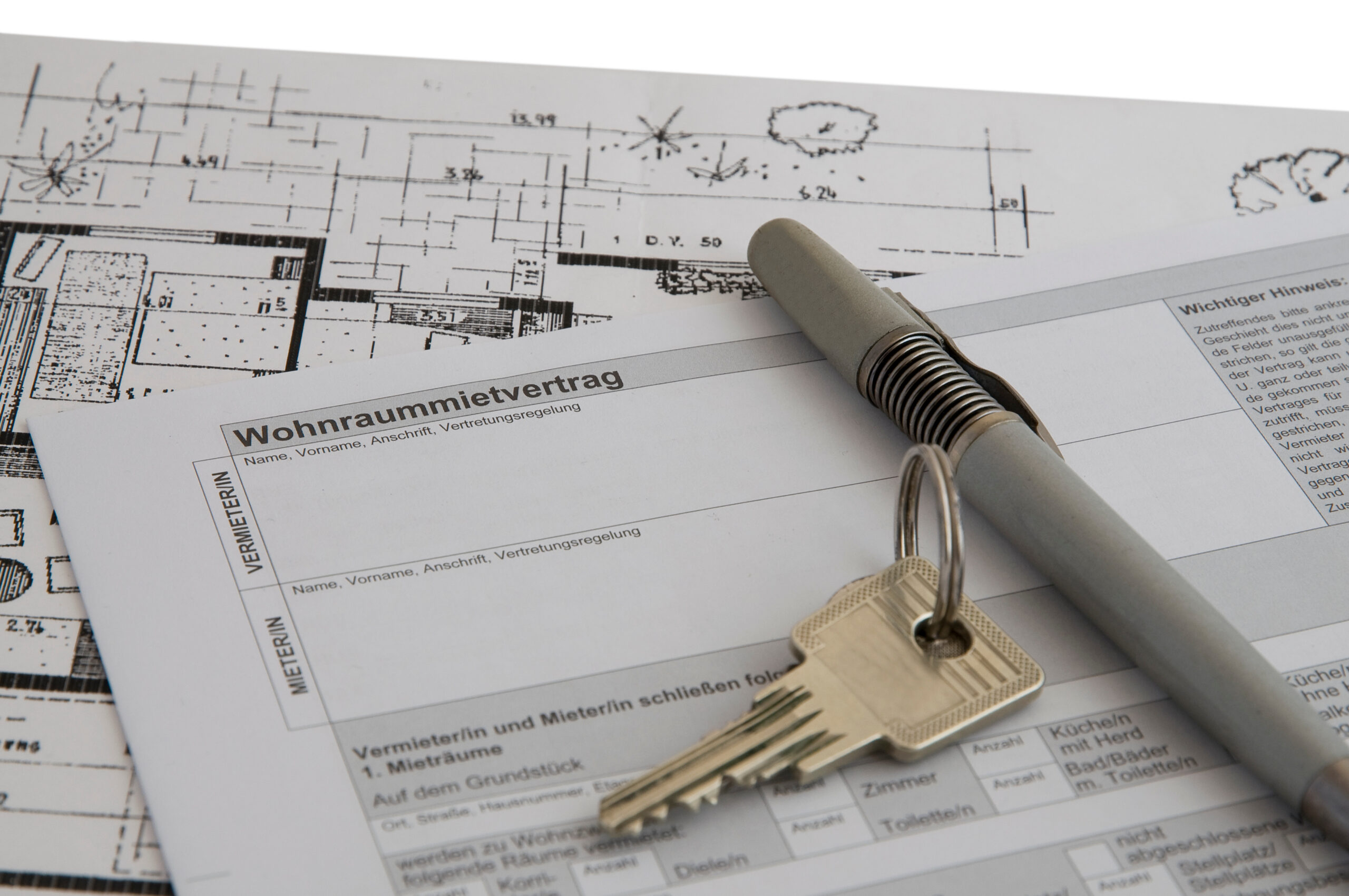
You’ve finally found it. The Altbau (pre-war building) apartment with the high ceilings you’ve been dreaming of, the one that gets afternoon light in the kitchen and has that slightly crooked but charming door frame. You sign the paperwork, buy the IKEA furniture that fits those exact dimensions, paint the walls in a color you’ll never see again, and start building a life.
Then you look at the contract again. Befristet (fixed-term). Five years, maybe three. And the thought hits you: Is it worth unpacking the boxes at all?
The Austrian rental market is quietly shifting beneath everyone’s feet, and the psychological fallout is only starting to surface. As indefinite leases become rare relics on the private market, tenants are being forced into a mental state I’ve started calling “decorative nihilism”, spending time and money on homes they’ll likely have to abandon.
The Vanishing Indefinite Lease
Walk through Vienna’s rental listings today and you’ll notice something striking: unbefristete Mietverträge (indefinite rental contracts) have become about as rare as a punctual Austrian train during a strike. They exist, technically, but finding one feels like spotting a unicorn grazing in the Stadtpark.
One tenant searching Vienna’s market recently put it plainly: the scarcity of indefinite leases has them considering a fixed-term apartment despite hating the uncertainty. And that’s the trap, when the alternative is perpetual searching, people settle for precarity because it’s at least concrete.
The psychological burden of housing insecurity in Austria doesn’t just affect homeowners worrying about interest rates. Renters on fixed terms face their own quiet crisis of planning paralysis.
What the 2026 Changes Actually Mean
Here’s where it gets legally interesting. Since January 1, 2026, the 5. Mietrechtliche Inflationslinderungsgesetz (5th Rent Inflation Relief Act) has fundamentally changed the game. The minimum fixed-term duration for most rental contracts is now five years when the landlord is a business operator. Three years still applies for private landlords who don’t classify as entrepreneurs.
The new rules introduced in 2026 extend the minimum lease duration, theoretically offering tenants more security. But for contracts signed before 2026, the old three-year rule still applies, creating a confusing patchwork where your neighbor in the same building might have entirely different security than you.
Here’s the kicker: if a contract is fixed for too short a period, it’s not invalid. Instead, it’s automatically converted into an indefinite contract. That’s a legal detail that could save some tenants, but most people don’t know about it.
The “Landlord’s Perspective” Nobody Wants to Hear
Before we villainize property owners, let’s look at why this is happening. A landlord who rented indefinitely found themselves eating inflation costs with no real adjustment mechanism. The Kaution (security deposit) belongs to the tenant and earns no value protection, so it loses purchasing power annually.
One landlord described the nightmare scenario: winning an eviction lawsuit and still losing €30,000 in costs because the tenant simply had no assets to recover. No physical customer service headache compares to the Austrian rental market’s Kafkaesque eviction process.
So landlords became risk-averse. They shortened contracts to maintain control, indexed rents to inflation, and protected themselves from being locked into losing financial positions. It’s rational. It’s also creating a generation of tenants who view their homes as temporary staging areas.
Five Years Is a Blink of an Eye (Until You’re 35)
Here’s what the math says about time perception and rental contracts: when you’re 20, five years is a quarter of your entire life, an eternity. When you’re 35, it’s a blink. When you’re 45 with school-age kids, it’s a nightmare.
One perspective that keeps echoing through tenant discussions captures this perfectly: “When you’re young and mobile, fixed-term feels fine because you expect to improve your situation anyway. But when children arrive, apartment hunting becomes a financial drain, and moving becomes a logistical nightmare.”
The thought of your Mietvertrag (rental contract) expiring in 12 months isn’t just annoying, it’s a barrier to family planning. Recent discussions among Austrian tenants reveal people delaying children because they don’t know where they’ll be living when the baby arrives.
The Furniture Optimization Problem
Here’s a question that reveals the true cost of rental precarity: how do you furnish a home you might have to leave?
Someone who treats their apartment as a long-term project might invest months making it perfect, custom shelving, built-in lighting, curtains that actually fit the period-appropriate windows. But on a three-to-five-year timeline, that investment becomes irrational.
The result is a strange new aesthetic: tenants living with mismatched temporary solutions, not because they lack taste, but because they’re rationally allocating resources. Why buy the perfect sofa that might not fit through the next building’s door? Why invest in custom wardrobes when the next Altbau might have completely different proportions?
Some tenants describe moving every five years as “unnecessarily expensive.” The economics are brutal: selling furniture at a loss, rebuying for new layouts, replacing appliances that don’t fit. The psychological drag of this cycle is real, but the financial one is measurable.
The Precariousness Trap: When Your Home Is a Liability
You’re always keeping your apartment in “rentable condition”, always mentally prepared to leave. That’s a strange way to live. The deepest cost of fixed-term living isn’t just inconvenience, it’s the erosion of home as a concept.
People describe maintaining their apartments differently when they know they’re temporary: they don’t seal drafty windows, don’t fix squeaky doors, don’t invest in small quality-of-life improvements. Who spends time and money making a place permanently comfortable when they’re just a temporary resident?
This has consequences beyond aesthetics. The Austrian mortgage decisions under financial pressure look different when homeownership becomes not just a financial choice, but an emotional escape hatch from rental insecurity.
The Landlord’s Ironically Rational Trap
Here’s the most bitter irony: the fixed-term system creates exactly the behavior landlords fear. When tenants know they’re leaving in three years, they stop caring about the property. They’re just passing through, and it shows, both in how they maintain the space and how they approach repairs as a negotiation rather than a responsibility.
One commenter made this point directly: if you rent a house for only three years, you treat it like a rental. But an indefinite lease might inspire the kind of genuine care that extends the property’s life. Landlord caution becomes a self-fulfilling prophecy: the more protective the system, the less responsible the tenants become.
This is the paradox of Austrian housing. The system’s quest for security, landlords protecting themselves from bad tenants, actively creates the conditions for tenant disengagement.
The Health Cost Nobody Budgets For
Stress isn’t in the budget. But it should be. The constant “what if” calculation, What happens when the contract ends?, adds a low-level anxiety that’s hard to quantify but present in every aspect of life.
Planning a career change? Will you have to move to a new city? What about a partner’s job, a child’s school district, the neighborhood community you’ve built relationships within? The longer you live in a place, the more anchored your life becomes. A fixed-term contract undermines all of that.
Studies suggest that the Prussian-style efficiency of Austrian bureaucracy actually amplifies the stress of moving. Every relocation requires a Meldezettel (registration form) update, new appointments, new utility setups, new school registrations. In Austria, moving isn’t just logistics, it’s an administrative marathon, and renting financial trade-offs of housing and transportation in rural Austria creates even more friction.
What You Can Actually Do
Living as a tenant in Austria doesn’t mean you’re powerless, even in a fixed-term contract. Here’s the cheat sheet:
Know your rights. In the Vollanwendungsbereich (full application area) of the Mietrechtsgesetz (MRG) (Tenancy Law), you have mandatory termination rights after one year with a three-month notice period. Your contract’s fixed term isn’t the prison it appears to be.
Check if you’re a victim of a short-term trap. If your fixed term is shorter than legally required under the 2026 rules, your contract might automatically be considered indefinite. Get it checked by the MieterHilfe (Tenant Support) in Vienna, it’s free.
Negotiate renewal terms early. Landlords prefer keeping good tenants to marketing a property, and a 12-month advance notice signals to them that you’re willing to stay, you just need security theater before investing more in the space.
Plan your furniture strategy like a portfolio, not a home. Buy modular pieces that work in various configurations, focus on items that will fit any future space, and accept that some things will need replacing. Parisian tenants have done this for decades with their temporary-chic aesthetic.
Calculate the total cost. Moving every five years isn’t just the €500 transport cost. It’s the furniture losses, the new household items, the double rents during overlaps, and the productivity crater of your admin time. If these costs approach 10% of your annual rent, fixed-term is the most expensive option you’re considering.
The Real Question
The deeper issue facing Austrian tenants isn’t just legal or financial, it’s existential. At what point does a fixed-term rental stop being “a home” and become “a temporary place to live”?
The answer shapes everything: how you decorate, how you vote, how you plan your family, how much you save for a potential down payment, whether you [buy furniture that fits your current apartment or your hypothetical future one].
Austria’s housing market is at a crossroads. The landlords who dominate the private market overwhelmingly prefer fixed-term contracts because they offer financial and administrative control. But that preference is creating a class of permanently unsettled citizens who can’t put down roots.
Something’s got to give. Whether it’s a stronger legal push toward indefinite leases, rent indexation mechanisms that make landlords comfortable, or a cultural shift toward accepting renters as long-term community members, the current system is costing Austrians more than they calculate on any Verwendungsnachweis (proof of payments).
The Bottom Line
If you’re signing a befristeter Mietvertrag (fixed-term rental contract) today, you’re not just accepting paperwork. You’re accepting a particular relationship with your home: conditional, temporary, slightly defensive. That might be the right choice for your situation. But go into it with eyes open.
Understand that you’re likely to move. Plan for it financially and emotionally. And recognize that the center you keep in your chest, that bit of yourself you reserve for permanence, is part of the price Austria’s rental market is extracting from you.
The question is no longer whether you can afford the rent. It’s whether you can afford the uncertainty that comes with it. And for an increasing number of Austrians, the answer is getting harder to swallow.