
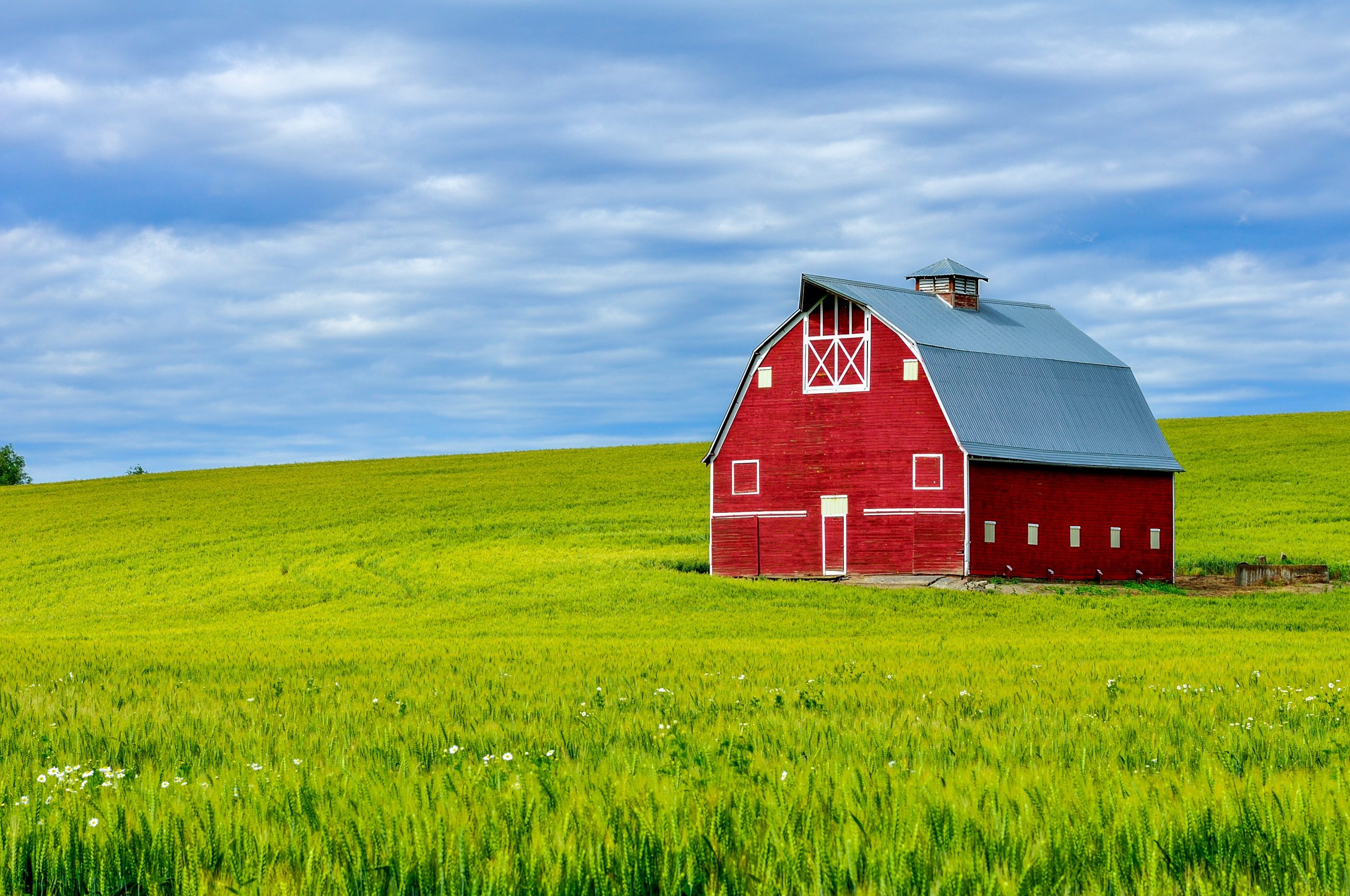
Picture this: a neighbor, retired, no farming heirs, fields sitting idle, approaches you with an offer. Five hectares of Weideland (pasture land) for €100,000. The current tenant pays you €1,500, 2,000 a year in Pacht (lease income). Your neighbor shows you a chart: the same kind of land sold for €0.65 per square meter in 2006. Today, it fetches €1.50, 2.10. Land only goes up, right?
This is the exact scenario that recently had people on German finance forums doing math that would make an actuary blush. The poster calculated a total return of 5.8, 7.7% annually over 20 years by combining rental income with projected appreciation. Sounds decent. But is that math real, or is it the financial equivalent of counting your chickens before the cows come home?
Let’s dig into what agricultural land investment in Germany actually looks like, the numbers, the taxes, the risks, and whether your €100,000 belongs in soil or in a simple low-cost ETF instead.
The €100,000 Question: What’s Your Real Yield?
Let’s start with the basics. You’re putting €100,000 into grassland that generates €1,500, 2,000 annually. That’s a gross rental yield of 1.5, 2%.
Before you compare that to your Tagesgeldkonto (day money account), remember: this isn’t a savings account. You’re buying an asset that historically appreciates. The bull case goes like this: if land went from €0.65/m² in 2006 to €2.00/m² today, that’s roughly a 6% annualized appreciation rate. Add the 1.5, 2% lease yield, and you’re looking at a total return of 7.5, 8% annually. Not bad.
But here’s where the math starts to wobble. As one sharp observer pointed out in the discussion, extrapolating the last 20 years forward assumes that €2.00/m² becomes €6.00/m² in another two decades. That’s not an investment thesis, that’s a prayer with a spreadsheet attached.
Comparing today’s prices to 2006 is also misleading. Germany has undergone a massive agricultural shift since then. The renewable energy boom, especially biogas subsidies under the Erneuerbare-Energien-Gesetz (Renewable Energy Sources Act), drove land prices to artificial highs. Now that those golden days are fading, prices in regions like Bavaria have plateaued. Buying at the peak of a subsidy-driven bubble isn’t smart, it’s just timing.
The Dirty Secret About Land Sales: Who’s Selling and Why
When someone approaches you with a land deal, your first question shouldn’t be “what’s the yield?” It should be “why me?”
In the original forum case, the seller was an elderly neighbor with no farming successor. That’s actually a Yellow Flag. Not red, but definitely caution colored. Here’s why: when a farmer can’t pass land to the next generation, they’re often stuck. The land needs a tenant, the tenant needs a contract, and the owner needs to understand Grundsteuer (property tax), upkeep obligations, and potential environmental restrictions.
Land is rarely a passive investment. Whatever you buy, Ackerland (cropland), Grünland (grassland), or Forst (forest), comes with obligations. With forest land, you’re responsible for maintaining fire breaks and pest control. With pasture, you need to ensure the tenant isn’t degrading the soil. And if your tenant quits? You’re now a property manager searching for someone to lease your field while it sits idle, generating exactly €0.
The prevailing sentiment among experienced agricultural investors is blunt: the return is low, and you’re speculating on appreciation that isn’t guaranteed. Worse, you have to ask why you’re being offered the deal in the first place. If it were a genuinely great investment, it would have been snapped up by the local agricultural community long before it reached you.
The Tax Trap Nobody Mentions
Here’s where the math gets genuinely uncomfortable. That 1.5, 2% Pachtzins (lease interest)? You have to pay income tax on it. Depending on your personal Einkommensteuersatz (income tax rate), you could be handing 30, 45% of your rental income straight to the Finanzamt (Tax Office).
The forum poster’s optimistic calculation assumed they’d pay the 25% Abgeltungssteuer (withholding tax) that applies to investment income. Wrong. Rental income from land is taxed at your personal rate, which for most salary earners in Germany is significantly higher.
And when you eventually sell? The appreciation is generally tax-free after a 10-year Spekulationsfrist (speculation period) if the land is held as private property. But if you’ve bought it as part of a business, as the original poster had planned, purchasing through their Betriebsvermögen (business assets), the entire sale could be subject to tax, potentially getting caught in the “gewerblicher Grundstückshandel” (commercial real estate trading) rules if you’re not careful.
There’s also the small matter of Grundsteuer A. As one commenter wryly noted: “It’s dumb if municipalities go bankrupt and have to raise property tax.” That’s not as far-fetched as it sounds. German municipalities are feeling the squeeze, and agricultural land is a target for higher property taxes.
Are You Buying for the Yield or the Option Value?
Let’s be honest about what agricultural land actually is in Germany right now. It’s not a yield investment. At 1.5, 2%, you could match or beat that with a German government bond. It’s not even a yield investment with upside, we’ve established that appreciation is speculative.
What land is is an option. A bet that something changes the value proposition:
- The land gets rezoned for development (Bauernwartung or Bauerwartungsland)
- A solar or wind farm can be installed (though the renewable energy boom has cooled considerably)
- The land becomes valuable for compensation areas (Ausgleichsflächen) for construction projects, some tenants pay over €500/ha for these, well above standard grazing rates for grassland
This is where the professional agricultural brokers come in. Firms like Francksen Wirtschaftskontor, which specializes in agricultural property in eastern Germany, structure deals around exactly this value proposition. They match investors with land that has “Kauf mit Verpachten” (purchase with leasing) arrangements and highlight pacht yields, though many of their listings emphasize strategic potential rather than pure income returns.
A 13-hectare grassland parcel in Brandenburg’s Havelland region, listed at just €111,000, was marketed as a “low investment with lucrative lease yield.” That’s roughly €8,500 per hectare, which implies a significantly higher yield than our €20,000-per-hectare example. This tells you that land prices vary enormously by region, and the “return” is entirely dependent on what you pay.
Better Alternatives You Haven’t Considered
Before you sign anything, let’s compare returns properly.
The ETF alternative: A simple global equity index fund has historically returned 6, 8% annually. In recent years, the German DAX and global markets have delivered double-digit returns. You can buy it with 100% liquidity, no property tax, no tenant management, and no appreciation guesswork. The recent wave of ultra-low-cost ETFs has only made this easier.
The Bundesschatz (German federal bond) alternative: If you’re terrified of volatility, breaking your Bundesschatz early for higher yields reveals how close risk-free returns have come to agricultural land yields, without the management burden.
The spot-the-deal alternative: If you’re specifically interested in land, you need to buy at a compelling price. The forum poster’s €100,000 for 5 hectares breaks down to €2/m². In regions like Lower Saxony, farmland is being purchased with long-term leasing structures through agricultural brokers, and prices vary wildly. In parts of Bavaria and BaWü, even grassland prices run €5, 8/m². The range tells you there’s no single “right” price, just a price that makes the math work for your situation.
The broker listings for eastern German agricultural land are worth studying. These investors aren’t buying individual plots from retiring neighbors, they’re buying 13, 30 hectare parcels with soil quality ratings of at least 40 Bodenpunkte (soil quality points) and long-term leaseback arrangements already in place. That’s institutional thinking, not opportunistic buying.
The Honest Verdict
Land is not a bad investment. It’s an illiquid investment with low current yields and speculative appreciation. It’s an inflation hedge in the sense that land is finite, but so are patents, and you wouldn’t buy a pharma company based on “they’re not making any more drugs.”
The people who make money in German agricultural land are:
- Farmers who buy adjacent parcels to consolidate their operations, because the land generates professional agricultural income, not just lease yields
- Institutional investors who buy large-scale parcels in eastern Germany with soil quality ratings and long-term leaseback contracts already structured, the scaling play of real estate if you will
- Strategic buyers who see potential for rezoning, renewable energy, or compensation area deals, who treat land as an option, not a bond
The €100,000 Weideland (pasture land) offered to you by a retiring neighbor? That’s the retail investor’s version of agricultural investing, and the pricing rarely works in your favor.
If you’re serious about land in Germany, do your due diligence: check the Bodenrichtwerte (official land value maps) for the region, research actual Pachtvertrag (lease contract) rates, understand the hidden risks in any passive investment product, and don’t take a neighbor’s chart as gospel. If you can negotiate the price down meaningfully, say from €100,000 to €70,000 as one forum commenter suggested, the numbers start to breathe.
Otherwise, there’s a reason people say “buy land, they’re not making any more of it.” They’re right. They’re also making less and less money from it every year.