The DINK Strategy: How €250k Becomes €400k Real Fast
Here’s where it gets spicy: that €250,000 house needed another €100,000 in renovations. And even that €100k was a rough estimate. Many international residents diving into German homeownership discover this brutal truth, the purchase price is just the opening bid. The real financial marathon hasn’t even started.
The Math That Hurts: When €250k Becomes €400k
Let’s break down what actually happened. The couple bought an EFH (single-family house) with 120 square meters directly on a lake. The property itself cost €250,000. Renovation budget: €100,000. But here’s what the initial calculation probably missed.
First, the obligatory purchase costs in Germany. The Grunderwerbsteuer (property transfer tax) alone eats 3.5% to 6.5% depending on your Bundesland (federal state). In Saxony, where this lake house likely sits, that’s 3.5%. On €250,000, that’s €8,750 gone before you even get the keys.
Then Notar- und Gerichtskosten (notary and court fees) add another 1.5-2%, let’s call it €4,000. If a Makler (real estate agent) was involved, the Maklerprovision (commission) can hit up to 7.14% of the purchase price, though since 2020 it’s typically split between buyer and seller. Even at 3.57% each, that’s €8,925.
So before renovation even begins, you’re already €21,675 in the hole. Your €250k house is now a €271,675 house. And we haven’t talked about moving costs, new furniture, or that urgent roof repair you discovered when the first autumn storm hit.
Why DINKs Have a Secret Weapon
Here’s where being a DINK household actually matters financially. With two full-time incomes and no childcare costs, this couple has something most German families don’t: flexibility. They can take risks on a property that needs work. They can absorb the shock of a €5,000 boiler replacement without triggering a family crisis.
But, and this is crucial, that flexibility only works if you treat it as a strategic advantage, not an excuse for sloppy budgeting. Many dual-income couples fall into the trap of thinking “we earn enough, we’ll figure it out.” That’s how €100k renovations become €150k disasters.
The couple in our case study works roughly 80% remote. That means they can live in rural eastern Germany where property prices are sane, while earning city salaries. This geographic arbitrage is the real secret sauce. They’re not competing for overpriced Berlin apartments. They’re buying where locals still think €250k is a lot of money.
Renovation Budgeting: From Wishful Thinking to Reality
The €100,000 renovation estimate sounds precise. It’s not. Online Sanierungsrechner (renovation calculators) from KfW, Interhyp, or Effi can give you a ballpark figure in 10 minutes, but they work with regional averages. Your 1970s lake house with “charming character” will have surprises.
Smart renovators follow a simple rule: whatever the calculator says, add 15-20% for reality. If the Sanierungsrechner spits out €100,000, you budget €120,000. Why? Because behind that “charming” wood paneling, you’ll find mold. That “vintage” electrical wiring isn’t up to modern standards. The heating system that “worked fine” during the summer viewing will die spectacularly in January.
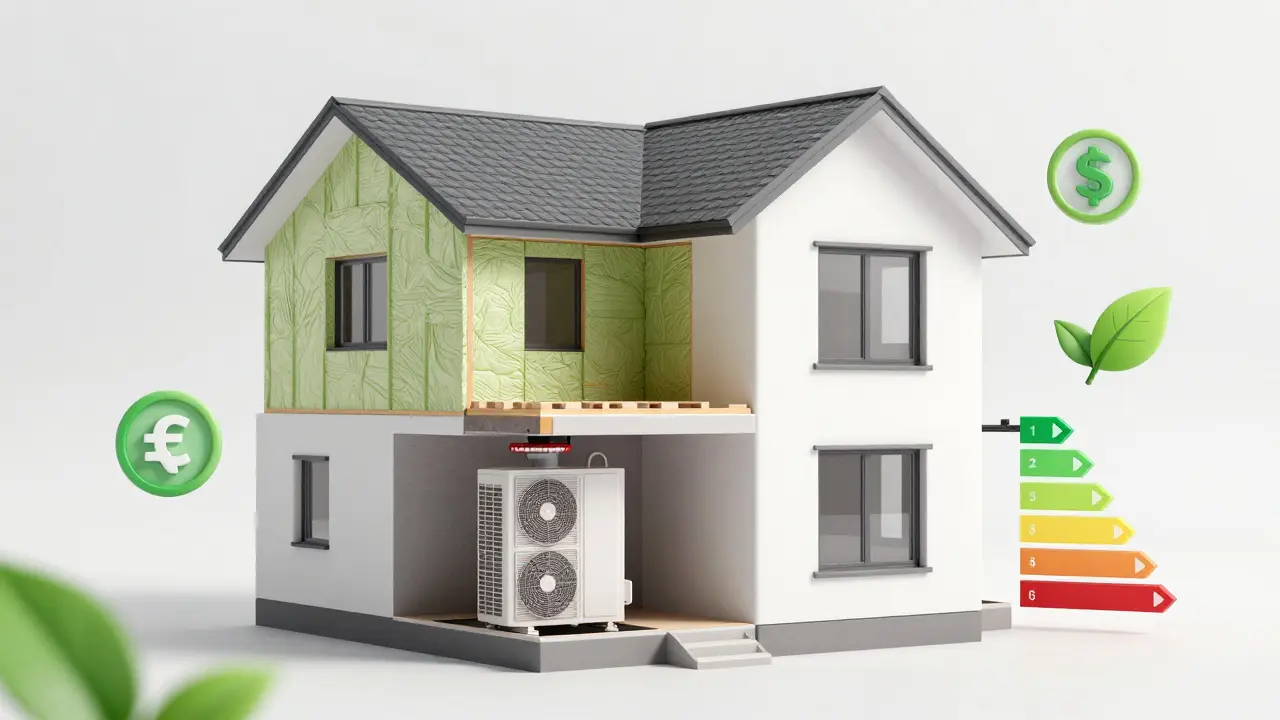
Professional energy consultation is non-negotiable. A certified Energieberater (energy consultant) creates an individual Sanierungsfahrplan (renovation roadmap) that unlocks maximum KfW Förderung (subsidies). These subsidies can cover 20-40% of your renovation costs for energy-efficient upgrades. Skip this step and you’re leaving free money on the table.
The Hidden Landmines That Blow Up Budgets
Remember that €100k renovation? Let’s see where it actually goes:
- Heating system replacement: €15,000-30,000 for a modern system. Old oil heating? Mandatory replacement in many German states.
- Window renovation: €10,000-15,000 for a house this size. Those lake views don’t insulate themselves.
- Roof insulation: €8,000-12,000. Essential for energy efficiency and avoiding mold.
- Electrical rewiring: €5,000-10,000. Your 1970s wiring wasn’t designed for home offices and EV charging.
- Bathroom modernization: €8,000-15,000. That “retro” bathroom has plumbing older than TikTok.
Suddenly €100,000 looks optimistic. And we haven’t touched the kitchen, floors, or that weird smell in the basement that turns out to be a cracked foundation.
This is where avoiding tenanted property pitfalls becomes relevant. A vacant property lets you renovate efficiently. A tenanted one? You’re playing by someone else’s timeline and budget constraints.
Structuring the Financing: The DINK Advantage in Action
Our couple’s real genius isn’t in picking a lakeside property, it’s in how they structure the money. With two stable incomes, they can play games that single-income families can’t.
First, they likely used their combined income to secure a larger Kreditrahmen (credit line) than either could alone. German banks love dual-income households for mortgages. Second, they can make Sondertilgungen (extra repayments) whenever bonuses come in. Third, if one partner loses their job, the other can cover the mortgage while they regroup.
But here’s the spicy part: they could be doing more. That Minijob (mini-job) the 37-year-old keeps at his old employer? That’s €520 tax-free monthly income. Over a year, that’s €6,240 that could accelerate mortgage payoff or fund renovations. Many DINKs leave this money on the table, spending it on lifestyle inflation instead of financial acceleration.
The real question is: are they treating that extra income as “fun money” or as a strategic wealth-building tool? Based on their disciplined lifestyle, growing vegetables, cooking at home, using old kayaks instead of buying a new speedboat, I’d bet they’re deploying it strategically.
The Controversial Truth: Is This Actually a Good Investment?
Here’s where I get opinionated. That €350,000 total investment (purchase + renovation) in rural eastern Germany isn’t going to appreciate like a Berlin property. The Oberlausitz or Mecklenburg-Vorpommern won’t see the price explosions that hit Munich or Hamburg.
But that’s missing the point. This couple isn’t playing the appreciation game. They’re playing the lifestyle arbitrage game. They want to live by a lake, work remotely, and paddle old kayaks. Financially, they could be building equity in a property that costs less than a Berlin parking space.
The controversial take? For DINKs, this beats renting in a major city. Their monthly mortgage payment might be €1,200. In Berlin, they’d pay €1,800 for a comparable rental. Over 10 years, that’s €72,000 in “saved” rent, plus whatever equity they’ve built. Even if the property value stays flat, they’re ahead.
This challenges the long-term housing market trends narrative. Not everyone needs their property to triple in value. Some just need it to be a cost-effective place to live while they build wealth elsewhere.
When the Strategy Fails: The DINK Divorce Risk
Let’s address the elephant in the room. DINK finances work brilliantly until they don’t. If this couple splits, that €350k property becomes a €350k problem. One partner can’t afford to buy the other out. Selling a renovated rural property can take years.
This is why smart DINK homebuyers structure ownership carefully. They might buy as “Gesamthandsgemeinschaft” (joint ownership) with clear exit clauses. Or they keep finances partially separate, maintaining individual savings accounts for personal financial independence.
The €100,000 renovation budget also creates tension. Who decides where the money goes? The partner who wants the designer kitchen vs. the one who prioritizes solar panels? These conversations destroy relationships if you don’t have them early.
The Verdict: Should You Copy This Strategy?
If you’re a DINK household in Germany, this case study offers a blueprint, but not a guarantee. The key lessons:
- Budget 15% extra for purchase costs, not 10%. German bureaucracy is expensive.
- Add 20% to every renovation estimate. Your house is older and crankier than you think.
- Get professional energy consultation before you buy. The KfW Förderung can make or break your budget.
- Use dual income strategically, not just for a bigger mortgage. One income should cover essentials, the second accelerates wealth building.
- Geographic arbitrage is your superpower. Earn city money, spend rural prices.
The spicy truth? This strategy works because they’re not trying to get rich from real estate. They’re using real estate as a tool for a specific lifestyle while building wealth through dual incomes and disciplined spending. That’s the opposite of the “property ladder” narrative pushed by German banks and Makler.
If you’re sitting on cash in your Tagesgeld (daily money account) waiting for the perfect time to buy, you’re already losing. Inflationary cash savings risks are real, and property, even with renovation costs, can be a hedge.
But, and this is crucial, don’t confuse a lifestyle purchase with an investment. That lakeside house might never be worth €500,000. If you’re okay with that because you got to live your dream, great. If you need it to fund your retirement, you’re gambling.
The DINK strategy isn’t about buying property. It’s about having the financial flexibility to make unconventional choices that align with your actual life, not some German dream of Eigenheim (homeownership) at any cost.