
You’re scrolling through Reddit, and every other post mentions someone earning 120k, 150k, or 200k CHF a year. They’re talking about maxing out their Säule 3a (Third Pillar pension), buying property in Zurich, and jetting off to Thailand twice a year. Meanwhile, you’re sitting there with your 65k salary, wondering if you’re doing life wrong.
Here’s the thing you need to hear: you’re not.
65,000 CHF a year in Switzerland isn’t poverty. But it also isn’t comfortable if you live in the wrong place or don’t manage your finances like a hawk. It’s a salary that exists in a frustrating no-man’s-land, above official poverty lines, below what feels like a decent standard of living in major cities.
Let me break down the arithmetic, the psychology, and what you can actually do about it.
The Official Numbers Don’t Match Your Gut
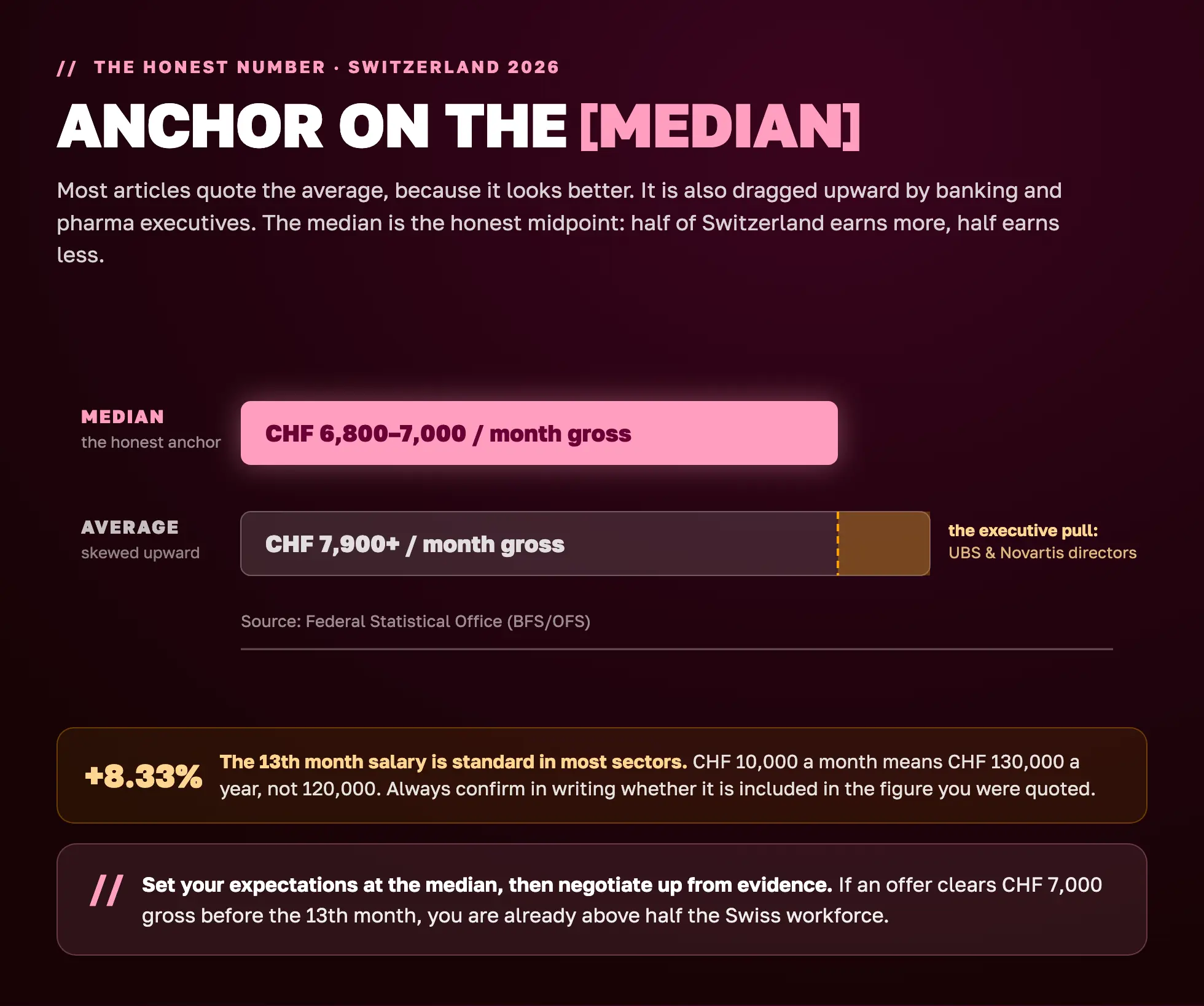
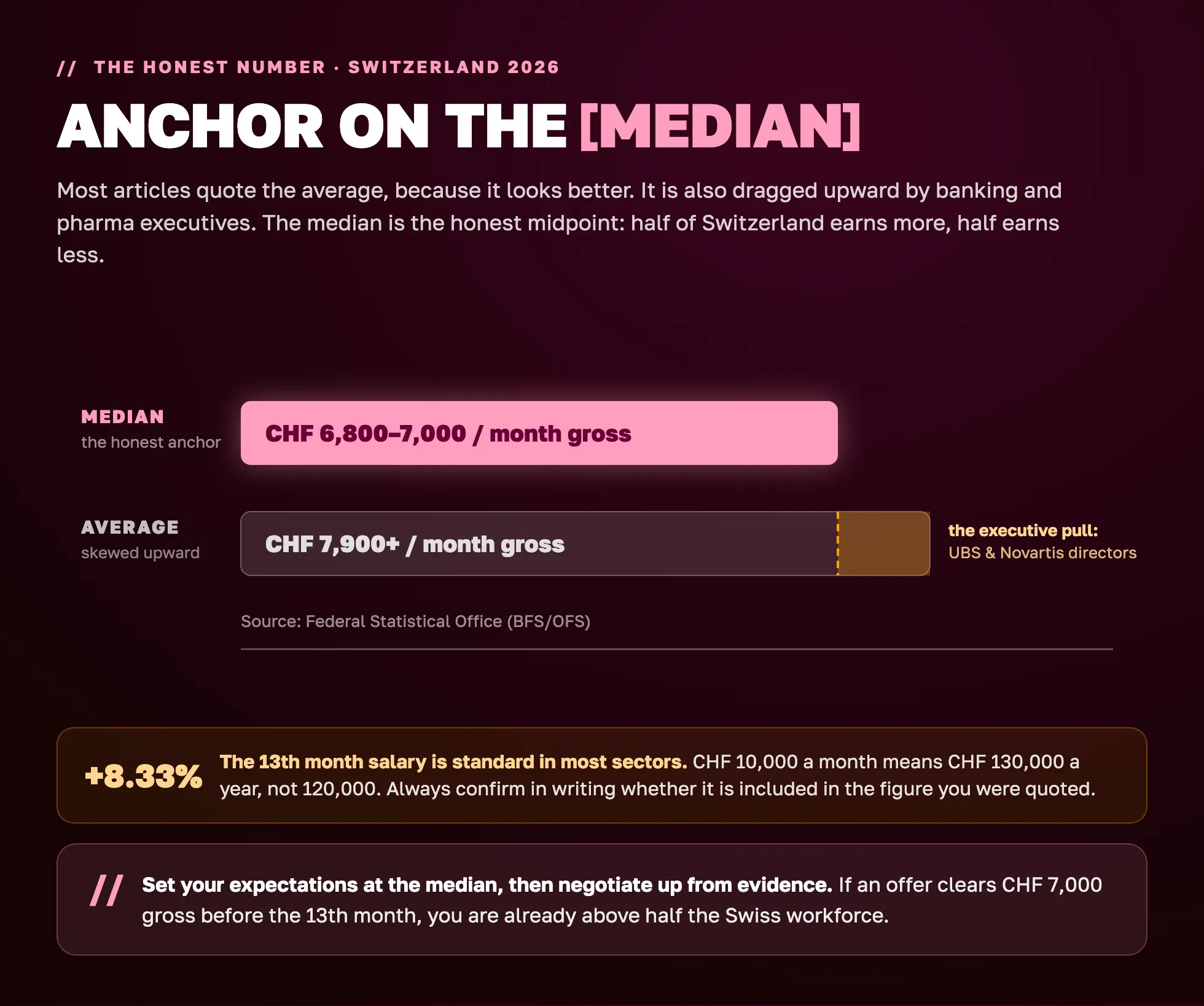
The Swiss Federal Statistical Office (BFS/OFS) puts the median gross monthly salary at about CHF 7,024. That works out to roughly 84,000 CHF a year. So at 65k, you’re about 23% below the median.
But here’s where it gets interesting, and where most online discussions miss the point entirely.
The median figure of 84k includes the entire working population. That means it includes people with 20+ years of experience, senior managers, and professionals in their peak earning years. For the age bracket 20-29, the median is roughly 64k. For 30-39, it’s still below that general median.
If you’re in your 30s working in Vaud with a biomedical analysis diploma, as one Reddit user described in a painfully honest post, 65k aligns almost perfectly with your peer group. The issue isn’t that you’re underpaid, it’s that the tech bros on Reddit creating the noise are in a completely different universe.
What 65k Actually Looks Like After Deductions
Let’s run the real numbers. Say you earn 5,000 CHF gross per month (65k / 13 months, since the 13th salary is standard in most sectors). Here’s what happens next:
- AHV/IV/EO (Old Age/Survivors/Disability Insurance + Compensation for loss of earnings): -5.3% = -265 CHF
- ALV (Unemployment Insurance): -1.1% = -55 CHF
- BVG/LPP (Occupational Pension, 2nd pillar): roughly -3 to 5% depending on age = -150 to -250 CHF
- Income tax (Vaud, single, no kids): approximately 10-15% effective rate = -500 to -750 CHF
Your net take-home: roughly 3,700 to 4,000 CHF per month.
Now subtract the costs that nobody warns you about before moving here:
| Expense | Monthly Cost |
|---|---|
| Rent (1-bedroom in Lausanne/Vaud area) | CHF 1,400 – 1,800 |
| Krankenkasse/Assurance maladie (Health Insurance) | CHF 350 – 450 |
| Groceries | CHF 400 – 600 |
| Transport (zone-based pass + Halbtax/demi-tarif) | CHF 100 – 200 |
| Internet + phone | CHF 60 – 100 |
| Nebenkosten/Charges (utilities) | CHF 150 – 250 |
| Remaining for everything else | CHF 600 – 1,200 |
That remaining chunk has to cover clothing, any social life, hobbies, unexpected medical bills (remember, dental isn’t covered), and, if you’re lucky, some savings.
Suddenly the “restrictions” that Reddit poster mentioned make a lot of sense.
The Geography Tax: Why Your Canton Matters More Than Your Career
Here’s where this gets practical. A 65k salary in the wrong canton feels like drowning. In the right one, it feels like treading water, which isn’t great, but at least your head is above the surface.
In rural cantons like Appenzell, Uri, or parts of Jura, a one-bedroom apartment can cost CHF 900 to 1,200. In Vaud or Geneva, the same apartment runs CHF 1,600 to 2,400. On identical net income, the person in rural Switzerland ends up with 500-1,000 CHF more per month.
The same logic applies to the cost of living differences that affect family budgets. What seems manageable for a single person can become tight quickly when partners or children enter the picture.
The “50% Earn Less Than 70k” Reality Check
One of the most level-headed comments on that Reddit thread pointed out something crucial: “Don’t read Reddit comments, it’s like everyone in Switzerland is earning half a million a year with no experience and no diploma. The reality is probably 50% of the people earn less than 70k.”
And they’re right. But there’s a subtle problem here.
That 50% figure includes part-time workers. In Switzerland, roughly 38% of the population works part-time. When you convert their salaries to full-time equivalents, the median jumps. The full-time median is around 85k.
So the honest truth is: if you’re working full-time in your 30s in Vaud at 65k, you’re below what the market would pay for your experience level, not by a catastrophic margin, but enough that you should probably be looking around.
The Salary Trap Most People Don’t See
Here’s the part that stings: staying loyal to one employer is the fastest way to fall behind.
Internal raises in Switzerland rarely exceed 2-5% annually. Meanwhile, switching employers can net you 15-25% jumps. One commenter mentioned a friend moving from one large organisation to another in the same city, taking their salary from 70k to 100k in a single move.
This pattern is brutal for people who value stability. You tell yourself the annual raise will eventually catch up. It won’t. Not in this market.
The financial stress that even high-saving Swiss families experience often traces back to the same root: income that doesn’t keep pace with the escalating cost structure of urban Switzerland.
What “Poor” Actually Means in Switzerland
Let’s ground this in official definitions. Caritas Switzerland defines the poverty line as roughly 2,388 CHF per month for a single person and 4,159 CHF for a family of four. Below those thresholds, you qualify for Sozialhilfe (social assistance).
At 65k gross, you’re nowhere near that line. But here’s the catch: the Swiss social system creates a weird gap. People just above the poverty line often can’t access benefits but also can’t build any financial cushion. They’re what economists call “working poor”, employed, above the official threshold, but one broken washing machine away from financial stress.
Stefan Gribi from Caritas notes that roughly 1.5 million people in Switzerland live near the poverty line or below it. Many of them look perfectly normal, they’re not visibly struggling. That invisibility creates the myth that “if you’re poor in Switzerland, it’s your fault.”
The Path Forward: What You Actually Do
If you’re on 65k, here’s your real-world playbook:
- Check if you’re underpaid for your role. Use the Salarium tool from the federal government to benchmark your salary against people in your exact profession, canton, and experience level. If you’re in the bottom quartile, start updating your CV.
- Consider moving cantons. Not everyone can pick up and leave, but if you’re in Geneva or Zurich and working remotely, relocating to a lower-cost canton could free up 500-800 CHF per month. That’s the difference between surviving and having actual breathing room.
- Switch jobs. I know it’s uncomfortable. But the data is clear: Swiss salary comparisons across roles and cantons show that job hopping in your 30s yields the biggest gains. Stay for culture and growth. Stay for a pension that vests. Don’t stay because you’re afraid to interview.
- Negotiate your 13th month. Make sure any offer you receive includes the 13th salary. Many employers quote an annual figure and then you discover it’s 12 months. At 65k, that’s a 5,000 CHF difference.
- Attack your fixed costs. Health insurance premiums can vary by hundreds of francs per year between providers in the same canton. Use Priminfo to switch during November. Your Krankenkasse (health insurance) is your biggest lever for savings outside of rent.
The Honest Take
65k isn’t poverty in Switzerland. It’s the salary equivalent of living in a city where most people drive BMWs and you’re driving a reliable 10-year-old Toyota. Gets you where you need to go, nobody’s laughing at you, but you feel the difference every time you look at the people around you.
The real problem isn’t the number itself. It’s the gap between that salary and the lifestyle expectations of the Swiss cities you probably live in. The 6 CHF coffee. The 25 CHF lunch. The 200 CHF night out that somehow becomes 300 CHF before you notice.
You’re not poor. You’re just in a system designed to make you feel like it.
And if you’re that Reddit user in Vaud, wondering if you’re doing something wrong: you’re not. The Swiss system doesn’t reward loyalty, doesn’t adjust salaries for inflation quickly enough, and creates an invisible class of people earning “enough” on paper while feeling squeezed every month.
The solution isn’t to earn more overnight. It’s to understand the real trade-offs between Swiss income and purchasing power, and then make one or two moves that compound over time. Switch that job. Move to a cheaper canton. Change your health insurance.
And for the love of everything, stop comparing yourself to the people posting their 180k salaries on Reddit. Half of them are probably exaggerating anyway.