
Imagine this: you’re at a dinner party in Zurich. The conversation drifts from hiking trails to the price of Bratwurst at the local market. Then someone casually asks, “So, how much do you keep in your bank account?”
Silence. Fork clinks. Someone changes the subject to the weather.
Swiss people don’t talk about money, that’s practically a national sport. But when a thread popped up asking 35-to-45-year-olds exactly that question, something unexpected happened: people actually answered. A 38-year-old admitted to CHF 50,000 in liquid savings. A 41-year-old father of two confessed he lives paycheck to paycheck after Kita (daycare) costs ate his savings. Another Zurich resident revealed a net worth of CHF 450,000 with almost nothing in cash.
The range is wild. And it raises the question everyone’s too polite to ask out loud: how much cash should you really have sitting in your bank account? Not in your 3a (Swiss pension plan), not in stocks. Just liquid, spendable cash.
Let’s dig into what the Swiss actually do, and what the experts say you should do instead.
The “Rule” That Keeps Changing
You’ve probably heard the classic advice: keep three to six months of salary in an emergency fund. It’s the financial equivalent of “eat your vegetables”, sound, boring, and universally repeated.
But here’s the thing: experts are quietly walking that back.
According to financial experts quoted in a recent cash.ch analysis, the old “three to six months of salary” rule is now considered outdated. The new thinking? Your Notgroschen (emergency fund) should be based on your expenses, not your income. Spend less, need less. It’s that simple, and that complicated.
Clara Creitz, founder of the financial advisory startup Finelles, suggests asking yourself a few honest questions before investing anything: How much comes in each month? How much goes out? Are you debt-free (mortgage excluded)? Have you paid into your Säule 3a (Third Pillar pension)? And crucially, do you have an “iron reserve” sitting in a savings account?
Ralf Beyeler, finance expert at Moneyland, puts it even more bluntly: “If you don’t have an emergency fund yet, or if it’s still too small, investing in securities doesn’t make sense.”
That’s a direct rebuke to the finance-bro culture that says every spare franc should be in an ETF. You know the type, the guy from the viral SRF interview who sells ETFs and flashes a grin that says “I’ve never missed a payment in my life.” He’s not wrong about long-term investing. He’s wrong about skipping the foundation.
What Real People in Switzerland Actually Keep
The Reddit thread tells a story that’s far more interesting than any rule of thumb.
One commenter, 41 and married with two kids in Zurich, wrote: “I live paycheck by paycheck. It started when the kids went to Kita.” He’s not alone. Another calculated the damage: CHF 5,600 per month for two kids in daycare over three years. That’s roughly CHF 200,000. The replies range from sympathy to dark jokes about naming their children “Mercedes” and “Royce” because that’s what they cost.
Meanwhile, a 34-year-old in Zurich reported a net worth of CHF 450,000, with CHF 384,000 in stocks and only CHF 98.56 in his post-finance account. That’s not a typo. Ninety-eight francs and fifty-six centimes. This person is technically wealthy and one unexpected invoice away from selling shares at a loss.
The contrast is striking. Some Swiss households have massive equity locked in investments but zero liquidity. Others have nothing left after the monthly bills. And then there’s the original poster: CHF 50,000 in cash at age 38, wondering if that’s enough.
So what’s the “right” number?
The Notgroschen Formula That Actually Works
Forget the 3-6 month salary rule. Here’s a more practical approach that financial planners in Switzerland are increasingly recommending:
Step 1: Calculate your monthly fixed costs. Rent, health insurance (Krankenkasse/assurance maladie), groceries, Kita, transportation, phone, internet. Don’t include discretionary spending, just the non-negotiables.
Step 2: Multiply by 3. That’s your minimum emergency fund. If your fixed costs are CHF 4,000 per month, keep at least CHF 12,000 liquid.
Step 3: Adjust for your situation. Families need more than singles. If you own property (Hypothek/mortgage), add a buffer for unexpected repairs, a new boiler doesn’t wait for a market upswing. If you’re self-employed or work in a volatile industry, push it to 6 months.
Step 4: Park it somewhere accessible. Experts recommend a Tagesgeldkonto (savings account) that you can access anytime. It won’t earn much interest, but that’s not the point. The point is that it’s there when your roof leaks or your car dies or you lose your job.
One Swiss financial expert I came across also recommends keeping a small amount of physical cash at home. The German consumer advice center Verbraucherzentrale suggests a “buffer of two to three months’ salaries” on a call-money account. And if you’re wondering how much cash to keep in your wallet or at home, the common recommendation is somewhere between CHF 500 and 1,000, enough to cover a few days of expenses if the electronic payment systems go down.
The Zurich Trap: Why Even High Earners Feel Broke
Here’s where it gets spicy. Zurich is one of the most expensive cities in the world, but it pays well. You’d think the math would work out. Yet the thread is full of high-income earners who feel like they’re drowning.
The culprit isn’t lifestyle inflation, it’s structural costs. Kita alone can devour one full salary. Health insurance premiums keep climbing. Rent in Zurich for a family apartment can hit CHF 2,500+ per month. Add in the 3rd pillar contributions, mandatory BVG (occupational pension), and taxes that arrive with the punctuality of an SBB train, and suddenly that six-figure salary doesn’t stretch as far as you’d think.
The 41-year-old living paycheck to paycheck isn’t bad with money. He’s paying for children in a system designed for dual-income households where both parents work full-time. The math just doesn’t work otherwise.
And when you’re in that position, the idea of building a Notgroschen feels like a luxury. The original poster’s CHF 50,000 seems aspirational, not realistic.
Why Cash Sitting Idle Isn’t Actually Free
But let me play devil’s advocate for a moment, because there’s a real tension here.
That CHF 50,000 in the bank? It’s losing value every year. Swiss inflation has been modest, but it’s still positive. At 2% inflation, CHF 50,000 loses about CHF 1,000 of purchasing power annually. Over a decade, that’s significant.
That’s why the finance-bros push ETFs so hard. And they’re not entirely wrong, leaving six figures in a savings account earning 0.5% interest is a form of financial self-sabotage. It’s why the investing later in life conversation is so relevant for people in their late 40s who suddenly realize their cash hasn’t been working for them.
So where’s the balance?
Here’s my take: Keep 3 month of fixed costs in cash. That’s your emergency floor. Anything above that should be working, either in a Säule 3a (Third Pillar), ETFs, or a mix. The opportunity cost of holding too much cash is real.
If you’re wondering how to start investing without bleeding money on fees, you might want to look at avoiding high-fee asset management, many Swiss banks charge management fees that quietly eat 1-2% of your portfolio annually.
The Honest Answer: There Is No Magic Number
So how much should you keep in your bank account? The honest answer is: enough that you’d survive 3 months without income, but not so much that your money is rotting.
For a single person with low expenses in Lausanne, that might be CHF 10,000. For a family of four in Zurich with Kita fees, that’s more like CHF 25,000, 30,000. And for someone with zero expenses? Fine, you win.
But the deeper lesson from that Reddit thread isn’t about the number, it’s about the conversation. The fact that hundreds of people jumped into a thread about bank account balances shows how much we want to talk about money. We just don’t know how.
So let’s start. What’s in your bank account? And more importantly, does it match your life, your expenses, and your peace of mind?
If your cash reserves are making you anxious either way, too little to feel safe, or too much to feel smart, you’re holding the wrong amount. Adjust the dial until you can sleep at night, and then let the rest of your money get to work.
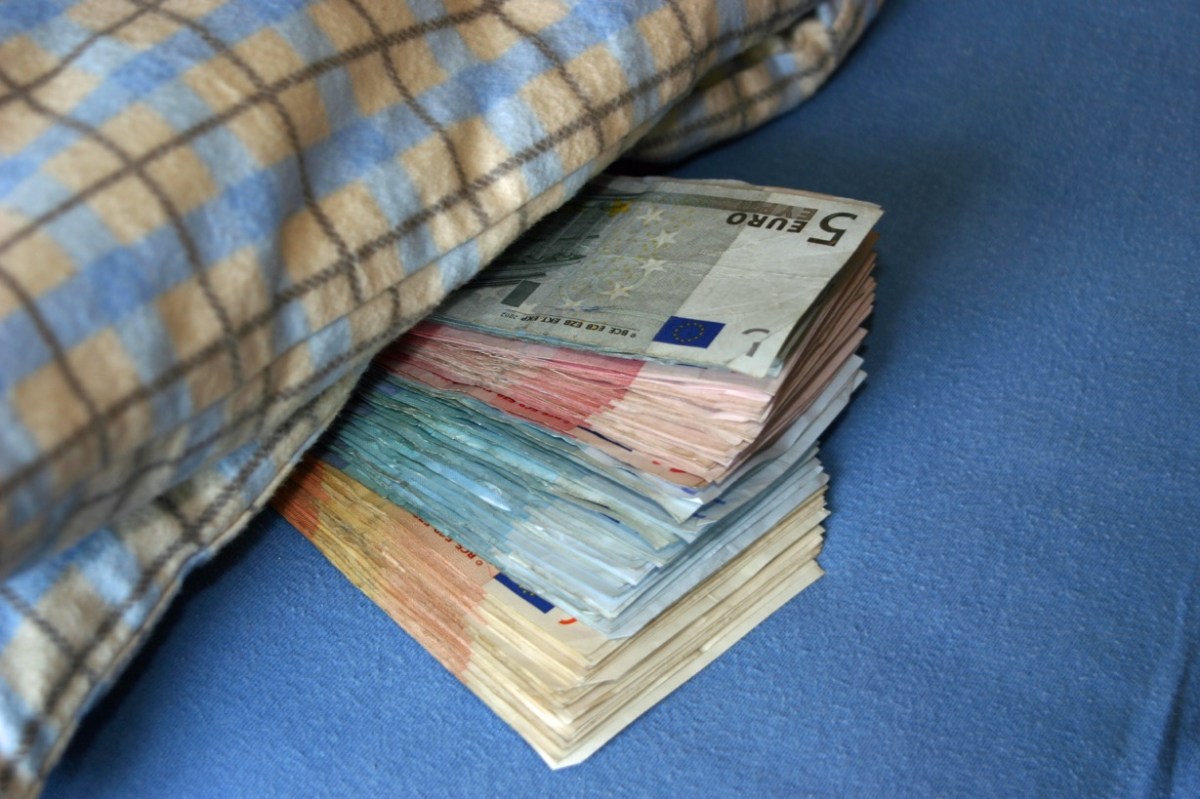
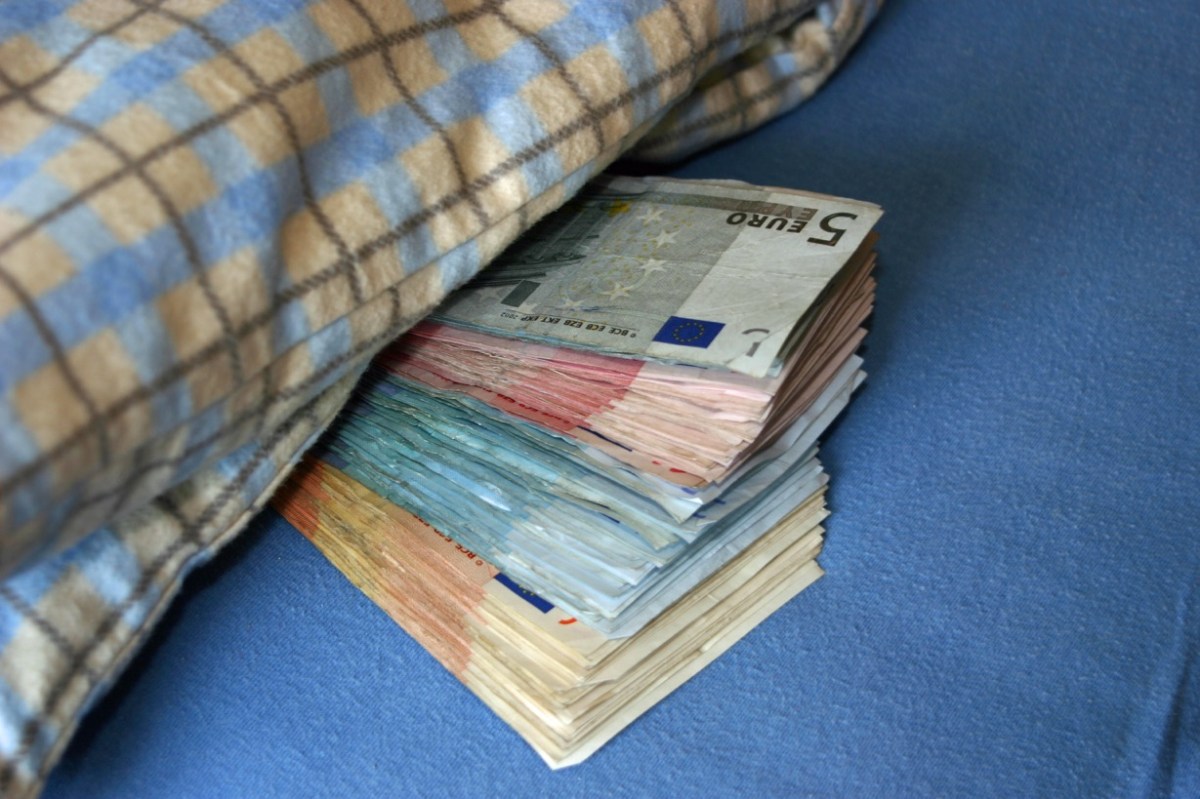
Cover image: Geldscheine schauen unter einer Bettdecke hervor (banknotes peeking out from under a blanket)