Neon, Yuh & Revolut: Convenient Swiss Investing or a Costly Trap?
You’re sitting on a comfortable stack of cash. Maybe it’s CHF 50,000. Maybe it’s more. You’ve already got a solid position in a global ETF, and the thought of opening yet another account at yet another Swiss bank makes you want to schedule a nap. Then you remember: you’ve already got Neon installed. Or Yuh. Or Revolut. And they all have shiny little “Invest” buttons.
Tempting, right? Just a few taps and your money’s working. No paperwork, no appointment with a Berater (advisor) who tries to sell you an expensive fund, no waiting for a letter that takes nine business days to arrive. Just frictionless, modern, app-based investing.
But here’s the question nobody at the fintech marketing department wants you to ask: Are these neo-brokers actually good for long-term investing, or are they just convenient for everything except building real wealth?
Let’s dig into the messy middle.
The Allure: Why Your Thumb Is Already Twitching
I get it. The apps are beautiful. The onboarding takes seven minutes. You can start investing with CHF 10, which feels more like buying a coffee than building a portfolio.
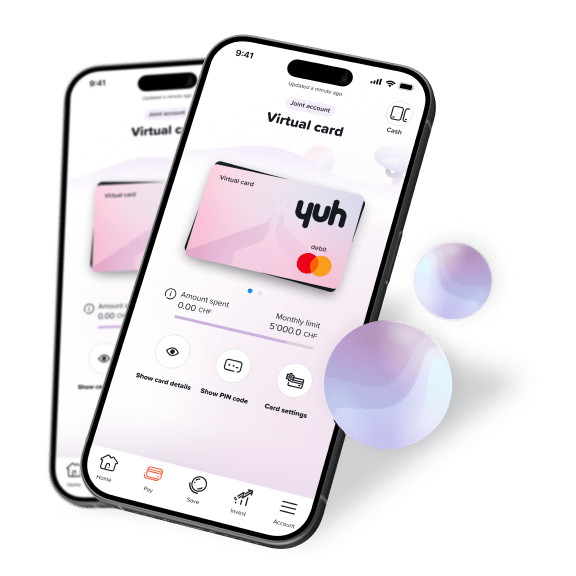
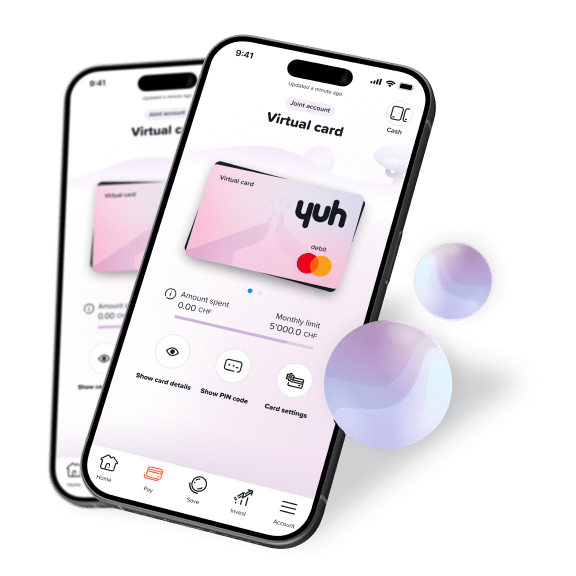
Yuh, for instance, advertises ETF savings plans with “no trading fees” and lets you start with as little as CHF 10. Neon offers similar low-friction access. Revolut made its name on cheap FX and crypto, and now wants to manage your whole financial life. The pitch writes itself: invest while you get on with your life.
Many international residents I’ve talked to describe the same journey: they download these apps for the free account and the slick card, see the invest tab, and figure, “Why not? It’s all in one place.” That’s exactly what the neo-brokers are counting on.
The Ugly Truth: Fees That Hide in Plain Sight
Here’s where the honeymoon ends.
The Swiss online broker price structures are notoriously complex. Some charge flat fees, others charge percentages, and some charge both depending on how you trade. A comparison of Swiss brokerage costs reveals something important: a CHF 9 flat fee isn’t automatically cheap. If you’re investing CHF 100, you’ve just paid 9% in fees. Suddenly that “cheap” trade isn’t so cheap anymore.
The same logic applies to neo-brokers, just with different mechanics.
Yuh’s Fee Breakdown
Let’s look at Yuh specifically. The fee structure seems great on the surface: 0.25% to 0.5% for securities, 1% for crypto, and a 0.5% all-in fee for the Säule 3a (Third Pillar pension plan). If you set up a monthly ETF savings plan, you might pay around 0.1% per transaction. That sounds almost negligible.
The Fine Print
But read the fine print. One long-time Yuh user flagged a critical detail that many miss: the currency conversion fee. When you buy US-listed ETFs with Swiss francs (CHF), you’re paying at least 1.6% in combined fees. And if you’re investing small amounts, under CHF 200, the percentage can balloon past 5%. That’s not “small amounts add up to serious growth.” That’s small amounts adding up to a broker’s bonus.
The uncomfortable math: if you invest CHF 300 monthly in a US-listed ETF through Yuh, you’re paying roughly 1.6% in conversion fees alone. Over 20 years, that compounds into thousands of francs that could have stayed in your portfolio. Suddenly the free account isn’t free at all.
Not a Complete Brokerage
Multiple Swiss investing communities have reached the same conclusion, and I share it: Neon and Yuh are not complete brokerages. They’re excellent entry points for beginners who want a few core products. But they’re toy stores compared to full-scale platforms like Saxo or Swissquote.
What does that mean in practice?
Limited Product Selection
Yuh offers around 500 investment products. That sounds like a lot until you compare it to Saxo’s thousands of ETFs, stocks, and bonds. You won’t find every Swiss index fund you might want. No SPICHA (a UBS-listed Swiss index ETF), no CHSPI (the total Swiss market ETF), nothing exotic. You get a curated shelf, not a supermarket.
No Proper Tax Reporting
In Switzerland, you’re responsible for declaring your securities and dividends in your annual Steuererklärung (tax return). Some neo-brokers provide limited or no tax reporting, leaving you to reconstruct your transaction history manually. That’s a headache you don’t need in late March when the tax deadline looms.
Limited Account Features
Want to transfer securities to another broker? Good luck. Several Yuh users report that transferring assets out is either impossible or requires significant hoops. One investor described it bluntly: “Can’t transfer and 1% once sell.” That’s a lock-in mechanism disguised as simplicity.
Execution Only at Specific Times
Some neo-brokers batch orders and execute them only between 16:00 and 18:00 on trading days. No market orders, no immediate execution, no control over your entry price. If you’re building a long-term position, this matters less, but it’s still a significant limitation compared to real brokers.
The Revolut Problem
Revolut deserves special mention because it’s a different beast entirely. It’s not a Swiss bank. It’s a Lithuanian fintech with a Swiss license for certain activities. When you invest through Revolut, you’re dealing with a UK-based entity routing through various European partners.
The core issue: Revolut’s entire business model is monetizing your friction. Travel money? Sure, 0% FX up to a limit, then fees. Crypto trading? Spreads are hidden in the price. Stock investing? A fraction of the product range compared to dedicated brokers.
Many investors I know use Revolut for travel, then wisely keep their long-term investments elsewhere. It’s the financial equivalent of using a Swiss army knife for a wine bottle, it’ll work in a pinch, but you’d rather have a proper corkscrew.
The Hidden Revenue Model: You Are the Product
Here’s what the neo-brokers don’t advertise. Yuh, as a joint venture between Swissquote and PostFinance, doesn’t make money on the account. The analysis of Yuh’s business model makes this explicit: the free account is “the door opener, the securities account is the business.” Crypto costs 1%, securities cost 0.25, 0.5%, the Säule 3a costs 0.5% all-in.
This is the hidden cost structure of neo-brokers that rarely gets attention. They’re not charities. They’re not even “free” in any meaningful sense. They’re using the familiar economics of freemium apps: hook you with free checking, monetize you through investing.
And that’s exactly why the free account will likely get more expensive features over time, or the investing fees will creep upward once you’re locked in. There’s no such thing as a free lunch in Swiss banking. The Swiss banking system operates with the same reliability as an SBB train, usually impeccable, until construction slows the line.
Switzerland Bias: The SMI Fallacy
A common strategy among Swiss investors is to add some home bias, investing in the SMI (Swiss Market Index) or a Swiss equity ETF to hedge against currency risk and support the local economy. It’s a legitimate instinct.
But here’s what the Swiss investing community keeps pointing out: the SMI has a high correlation with global markets. During drawdowns, both crash similarly, but the SMI recovers much more slowly. You’re not buying safety with the SMI. You’re buying a less diversified version of what you already own.
If you want a Swiss index ETF, the recommendation from experienced investors is SPICHA (UBS Swiss Total Market Index) or CHSPI (iShares Swiss Total Market), both with similar performance and holdings. But you’ll typically need a full brokerage to buy these efficiently, neo-brokers often don’t carry them or add conversion pricing that eats your returns.
When Neo-Brokers Actually Make Sense
Let me be fair. Neo-brokers aren’t useless. They serve specific purposes well:
- Beginners: If you’re 22 and want to invest CHF 50 per month in a single ETF, Yuh or Neon is better than doing nothing. Starting small beats not starting.
- Small amounts: If your savings plan is under CHF 200 monthly, the flat fees at traditional brokers make neo-brokers competitive despite conversion costs.
- Pillar 3a: Yuh’s Säule 3a (Third Pillar) offering at 0.5% all-in fee is competitive with many Swiss pension providers.
- Holding cash: Their multi-currency accounts are genuinely useful for international residents who regularly handle different currencies.
But note what just happened. I described the useful cases, and every single one is either “starting out” or “holding cash.” That’s not a coincidence. These platforms are designed for your financial childhood, not your wealth-building adulthood.
The Better Path: What Actually Works
If you’re serious about long-term investing in Switzerland, the experienced consensus is clear: use a real broker.
Interactive Brokers
Interactive Brokers (IB) is the favorite for globally diversified investors. It accepts Swiss residents, offers access to every global market, has modest fees, and provides solid tax documentation. If you’re holding VT (Vanguard Total World Stock ETF) or similar, IB is the standard choice.
Saxo Bank
Saxo Bank has gained popularity, especially for Swiss investors who want home bias. One investor described using Saxo’s autoinvest feature to incrementally buy CHSPI without any fees. It’s available in English, has a professional trading interface, and is regulated in Switzerland.
Swissquote
Swissquote is the biggest Swiss provider, adequate for most needs, though often criticized for relatively high fees. Its Yuh subsidiary is Swissquote’s answer to the budget market, a way to capture customers that the main brand would scare off with its pricing.
The math is compelling. Compare the fee structures of full-service Swiss brokers with neo-brokers over a 10-year horizon, and the difference can reach five figures for serious investors. That’s real money. That’s a new car, or several years of Skipper’s season passes.
The Transition Strategy: Smart vs. Practical
Here’s my honest recommendation, balancing the “optimal” with the “actually going to do it.”
Under CHF 20,000 or CHF 300/month
Use a neo-broker if you must. But set a reminder to reevaluate in two years. You’re paying modest fees for massive convenience, and that trade-off makes sense at this stage.
CHF 20,000–100,000 or CHF 500–1,000/month
Open an account with Interactive Brokers or Saxo. Transfer your portfolio gradually. Yes, it’s an hour of paperwork. Yes, the interfaces are less pretty. No, you won’t get cute push notifications. But you’ll save thousands in fees over the next decade.
Over CHF 100,000
Stop reading this post and open a full brokerage account today. The fee difference at this level is already costing you more than any Swiss coffee order you’ll ever make.
And if you’re 49 and just starting to invest? Don’t panic, it’s not too late, but you need to fix a few things first. The best time to start was yesterday. The second-best time is with the right broker.
The Bottom Line
Neo-brokers in Switzerland are a classic case of “free” actually meaning “we’ll get you later.” The convenience is real, the product is slick, and the onboarding is delightful. But when you zoom out to the decade timescale that matters for real investing, the fees and limitations compound into meaningful damage.
Use Neon for your daily banking if you want free payments and a decent card. Use Yuh for its free joint account and competitive Pillar 3a. Use Revolut for travel money and sending cash to friends abroad.
But when it comes to building your long-term wealth, invest through a proper brokerage. Your future self, reviewing a portfolio that’s 1.5% larger thanks to lower fees, will silently thank you. That’s the version of you that’s actually rich enough to enjoy retirement without checking the Swiss tax rates on withdrawals every spring.
The app-colored glasses come off, and suddenly the Swiss investment landscape looks a lot more traditional, and a lot more profitable for those who know where to look.