Let me paint you a picture that might feel uncomfortably familiar.
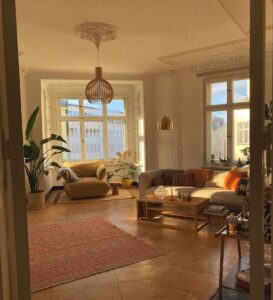
You’re 34. You’ve just signed the paperwork for a charming 3.5-room apartment in Zurich-Oerlikon. The Notar (notary) shakes your hand, the Champagner (champagne) glasses clink, and your parents beam with pride. You’ve done it. You’re a Swiss homeowner.
Fast forward 22 months. Your dream company in Geneva, the one that would slash your commute from 45 minutes to 10, the one with the flexible 80% work model you’ve been craving, just offered you the role. There’s one catch: you’d need to move. Or commute three hours each way. Or rent out your beloved Eigentumswohnung (condo) and deal with tenant laws while paying two mortgages.
Suddenly, that stability you bought feels a lot like a cage.
Here’s the uncomfortable truth nobody puts on the real estate agent’s brochure: home ownership in Switzerland often trades long-term flexibility for a fixed address. And for a generation of professionals who value career pivots, part-time transitions, and location freedom, that’s not a fair deal, it’s a trap.
The Swiss Moving Reality Check
Let me hit you with some actual data. A recent Newhome survey found that Swiss residents move an average of 4.9 times in their lives. That’s roughly once every 12-15 years of adulthood. Doesn’t sound like much? Consider this: buying property was the decisive reason for moving for 33% of respondents.
Here’s what that means in plain language: for one in three Swiss, the purchase itself triggered the move, and after that, the wheels lock. The survey also revealed that renters, ironically, show less motivation to move. Why? Because many are already in flexible rental arrangements that let them adjust without selling costs, notary fees, or the emotional drag of listing your home.
So while the Swiss average is 4.9 moves, property owners often find their moving days are behind them, not because they found “the one”, but because selling a home is a bureaucratic marathon.
The Hidden Cost of the Eigenheim
I want to dig into the economics because this is where the illusion really takes root. In Switzerland, the homeownership rate is famously low, around 36% of households own their residence, one of the lowest in Europe. We love renting. And the system is set up to reward that choice.
Think about what buying actually costs you beyond the obvious:
- Hypothek (mortgage) payments that often rival or exceed the local Mietzins (rent) for similar properties in prime locations
- Nebenkosten (ancillary costs) that renters partially avoid, maintenance, heating systems, building insurance, and the ever-present “not now” fund for when the roof inevitably needs replacing
- Opportunity cost of your Eigenkapital (equity): that 20% down payment in a Swiss property could have been compounding in a Säule 3a (third pillar pension) account or a diversified ETF portfolio
Now, here’s where it gets interesting. You know what happens when you need flexibility? The bank doesn’t care. Your mortgage stays due every month regardless of whether you’ve decided to reduce your Pensum (workload percentage) to 80% so you can spend more time with your kids or finally start that consulting side gig.
There’s a reason the phrase “Betongold” (concrete gold) exists, property feels safe because it’s physical, immutable, present. But that immutability cuts both ways.
When Life Changes, Property Doesn’t
Let me tell you about a pattern I’ve seen echoed by many international residents and Swiss locals who regret their purchases, and no, this isn’t a rare phenomenon.
One persistent sentiment stands out: buyers who locked in their home right before a major life shift. The scenarios play out with depressing regularity:
- Divorce or separation: You bought together, you pay together, you sell at an emotionally and financially unfavorable moment. Even a “quality” breakup often results in a forced sale during a soft market.
- Career reversals: The tech sector wobbles, your startup folds, or you face a health issue that reduces your earning capacity. Your mortgage remains. Your ability to pivot, relocate, or take a lower-paying-but-better-fit role shrinks dramatically.
- Pensum reduction dreams: Want to work 60%? Lovely, just figure out how to cover a 2,500 CHF monthly mortgage plus upkeep on a reduced salary.
I recall a story that captures this perfectly: a couple who bought their dream house, then both hit career changes that cut their combined income by nearly 30%. They lasted three years before selling, losing money on transaction costs and, more importantly, losing sleep for 36 straight months. Their ultimate regret wasn’t the property’s market performance. It was the lost financial agility.
And here’s a kicker: Swiss property doesn’t always appreciate the way the stories suggest. Long-term analysis shows periods of minimal growth, and sellers who exit during unfavorable conditions, think 2008 or localized downturns, can eat transaction costs that eat years of “equity gains.”
The Rent Trap That Isn’t Actually a Trap
We’ve been sold a cultural story that renting is “throwing money away.” I’d argue it’s paying for flexibility, and in Switzerland, flexibility carries a premium.
Let me walk through the math (simplified, but honest):
- Rent: 2,000 CHF/month for a 3.5-room in a mid-size city
- Buy: 700,000 CHF property, 20% down (140,000 CHF)
- Mortgage costs: ~1.8% interest on 560,000 CHF = ~840 CHF/month
- Nebenkosten: 300 CHF/month
- Maintenance reserve: 200-400 CHF/month (trust me, it’s not optional)
So you’re paying roughly the same monthly outflow. But the renter keeps their 140,000 CHF liquid. That’s not nothing, that’s the foundation of financial independence without feeling trapped by fixed costs like mortgages. A person renting can adjust their housing costs with a three-month notice period. A homeowner “adjusts” by selling, and praying the market cooperates.
Now, before the real estate defenders sharpen their pitchforks: yes, property can appreciate. Yes, there are tax advantages in some cantons for Eigentum (ownership). And if you’re buying a primary residence you plan to die in, the flexibility argument matters less.
But for professionals under 50, the demographic increasingly prioritizing career shifts, Sabbaticals, and part-time transitions, real estate is often the enemy of optionality.
The Emotional Weight of Wohneigentum
We can’t ignore the non-financial dimension. Owning a home in Switzerland carries cultural weight. It signals success to family, friends, and possibly yourself. The SchweizerBauer (Swiss Farmer) image of sturdy independence, the pride of hosting summer BBQs on your own terrace, it’s intoxicating.
But what does that pride cost you emotionally when life goes sideways? Let’s be honest: the ability to say “I’m moving to Lausanne for a better role next month” or “I’m dropping to 70% to raise my daughter” is a privilege that property owners simply don’t have.
There’s a reason the FIRE community in Switzerland skews toward renting and investing. Those 1,400 CHF in non-recoverable monthly costs some renters complain about are actually the price of freedom services. You’re paying for the right to walk away with three months’ notice.
How to Own Without Losing Yourself
I’m not saying homeownership is wrong. I’m saying it’s a trade, and you should know what you’re giving up.
If you’re considering buying in Switzerland, run these truth-tests first:
1. Can You Afford Life on 80% of Your Current Income?
Stress-test your budget with your mortgage, not your current salary. If the numbers don’t work on a reduced Pensum (workload), you’re buying more risk than stability.
2. Will This Property Still Fit in 7 Years?
Think about relationship status, potential children (or their flight from the nest), aging parents, and your dream career trajectory. If you’re unsure, you’re not ready.
3. Do You Have Other Assets Working For You?
Owning property shouldn’t be your only investment. If your entire net worth is in your Hypothek (mortgage equity), you’re over-concentrated. Consider the option of ditching the rental property dream for more liquid, higher-performance ETFs.
4. Is Your Job Truly Stable?
In Switzerland’s tight but volatile market, industries shift. Pharma is strong today, AI startups are hungry tomorrow. If your industry faces structural change, flexibility is your hedge.
5. Do You Actually Want to Maintain a Building?
Yard work, replacing boilers, repainting facades, dealing with tenants if you ever rent it out, this isn’t passive income, it’s a part-time job.
Renting Is Not a Retirement Sin
Let me leave you with a thought that might feel heretical: renting forever is a legitimate financial strategy in Switzerland. The statistical reality is that the Swiss move about five times in their lives, and for the modern professional, each move might represent a career opportunity, a relationship evolution, or a lifestyle upgrade.
Instead of buying because society expects it, invest your down payment. A diversified portfolio of global equities historically outperforms residential real estate over long horizons, and yes, the data backs this up. The catch? It requires discipline, patience, and a tolerance for volatility. But it also grants you the ultimate luxury: the ability to change your mind.
That’s the real illusion of stability. It was never in the walls of a house. It’s in your capacity to adapt, pivot, and walk away when you need to.
So before you sign that mortgage, ask yourself: are you buying a home, or are you buying handcuffs? In Switzerland, with its strong renter protections and efficient markets, the choice is genuinely yours.
And honestly? Sometimes the bravest move is not buying, it’s holding onto the freedom to become whoever you’re meant to be next.
Are you wrestling with the buy-or-rent decision? Your situation isn’t unique, and your caution is justified. Run the numbers, stress-test your flexibility, and make the choice your future self will thank you for.