You’re browsing the German finance forums around your second coffee of the morning, and you see it: 0.07% TER. The crowd is losing its collective mind. The legendary “heiliger Gral” (holy grail) – the Vanguard FTSE All-World – has just been dethroned by its own creator. Or has it?
Vanguard’s new FTSE Global All-Cap UCITS ETF dropped with a fee so low it rivals US-level pricing. At 0.07% total expense ratio, this thing is cheaper than most people’s morning Brötchen (bread roll) habit. But as with any German bureaucratic miracle, the devil is in the detail you haven’t checked yet.
Let me save you from making a decision based purely on fee-shock excitement. Because when the German ETF community starts debating TER versus tracking difference, you know things are about to get interesting.
The Great Fee Slash: What Actually Changed
Here’s the headline that sent shockwaves through the Finanzen (Finance) community: Vanguard announced a new UCITS ETF tracking the FTSE Global All-Cap Index with a TER of just 0.07%. That’s down from the 0.14% they just reduced the classic FTSE All-World to, and a fraction of the 0.22% many comparable ESG-screened funds charge.
The new fund covers approximately 99% of the investable global market, including large, mid, and small-cap companies across developed and emerging markets. For reference, its US counterpart – the Vanguard Total World Stock ETF (VT) – charges 0.06% and has been the gold standard for American passive investors for years.
What makes this interesting for us in Germany is that we’ve historically paid a “Europe tax” on ETF fees. Products that cost 0.03% in New York somehow land at 0.20% in Frankfurt. This launch signals that Vanguard is serious about closing that gap.
But before you liquidate your entire Vanguard’s all-cap ETF strategy and cost considerations and rush into this new fund, let me pour some cold water on the hype.
The Tracking Difference Trap
This is where most investors trip up, and where the German forums are absolutely right to be skeptical.
A low TER (Total Expense Ratio) is like a restaurant advertising “0€ delivery fee” – it sounds great, but you might end up paying more through the quality of the ingredients. For ETFs, the real cost is the Tracking Difference (TD) – the gap between what the index returns and what your ETF actually delivers.
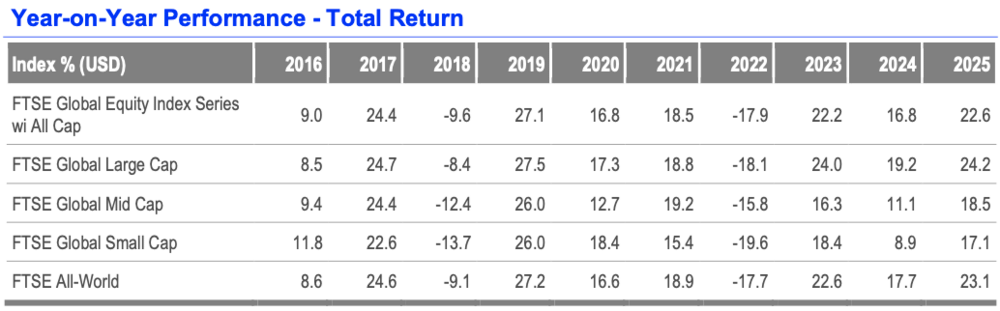
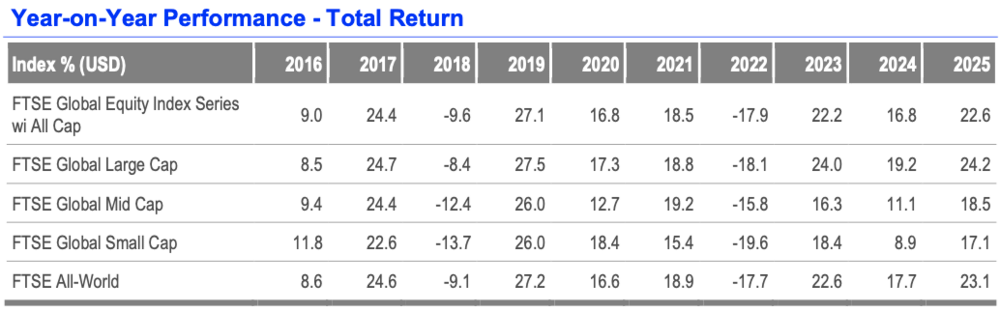
Consider this sobering data point from the recent investor discussions: Over the past 10 years, the FTSE Global All Cap Index returned +209.79%, while the simpler FTSE All-World returned +217.11%. Yes, you read that right. The “broader” index with more holdings actually underperformed by nearly 7.5 percentage points.
Now, past performance is not future returns – every German ETF brochure reminds us of this. But the mechanism matters: the All Cap Index includes small-cap companies, which add complexity and often higher transaction costs. The fund manager has to sample from a much larger universe of stocks, and that sampling can introduce tracking errors. More positions don’t automatically mean better returns, especially when those smaller companies come with higher bid-ask spreads and lower liquidity.
One experienced investor on the Finanztip forum put it bluntly: “The TER is irrelevant. The tracking difference is what matters, and you won’t know that reliably for years.” He’s not wrong.
Key Concept: Tracking Difference
The tracking difference measures how well an ETF follows its underlying index after all costs. A low TER doesn’t guarantee a low tracking difference, especially for new funds with small asset bases.
What About the Small-Cap Premium?
Here’s where things get philosophically interesting for German ETF-Sparplan (ETF savings plan) enthusiasts.
The academic case for small-cap investing is strong. Research by Fama and French has shown that small-cap value stocks have historically delivered a premium over large caps. But actually capturing that premium through an index fund is harder than it looks.
The FTSE Global All Cap Index includes roughly 9,000 stocks compared to the All-World’s 3,600. That’s a lot of small companies in rural Japan, obscure Brazilian industrials, and tiny European manufacturers. Do you really want exposure to all of them?
Some investors argue for a more targeted approach: combine the FTSE All-World with a dedicated small-cap value ETF from a provider like Avantis or Dimensional. This gives you control over your small-cap exposure rather than taking whatever the index throws at you.
One thread participant made a compelling point: “The combination of value and small cap is particularly well-researched. Wouldn’t an All-World plus a small-cap value ETF be superior to just buying everything?”
The counterargument, of course, is that you’re now making active bets. The beauty of the All-Cap approach is that it removes all judgment. You own everything, in proportion to its market value, and you never have to decide what “value” means or which small caps are worth owning.
The Liquidity Problem Nobody Talks About
Liquidity Risk Warning
New ETFs can have wide bid-ask spreads that eat into returns. A fund below €500 million in assets may have spreads of 0.5% or more, erasing any fee advantage for years.
Here’s a practical consideration that gets lost in the fee debate: new ETFs are illiquid.
A brand-new ETF, no matter how prestigious the issuer, starts with zero assets under management. Market makers need time to build inventory, understand the product, and quote tight spreads. In the early months, you could easily lose 0.5% to 1% on the bid-ask spread alone – completely wiping out any TER advantage for years.
Experienced investors on the forums advise waiting for the fund to reach at least €500 million to €1 billion in assets before committing serious money. Some even suggest a 5-year waiting period to ensure the tracking difference is stable and the fund has proven its operational chops.
If you’re building a long-term portfolio for your Altersvorsorge (retirement provision), you have decades ahead of you. Waiting six months for the spread to normalize isn’t going to derail your plan.
The Competitive Landscape: Who’s Next?
Vanguard’s move has already triggered speculation about a price war among ETF providers in Germany.
Xtrackers
Already offers an FTSE All-World ETF at 0.07% TER.
Invesco
Has been aggressive with pricing globally.
DWS
Recently undercut Vanguard significantly on their FTSE All-World offering.
The competitive fee landscape for global ETFs in Germany is shifting rapidly. What was unthinkable two years ago – 0.07% for a globally diversified equity ETF – is now becoming the standard.
For investors, this is fantastic news. But it also means that chasing the absolute cheapest TER might lead you to switch funds every six months, incurring transaction costs and tax implications that far outweigh any fee savings.
The Verdict: Should You Switch?
Here’s my honest take, after spending way too many evenings in German finance forums:
Starting from Zero?
The FTSE Global All-Cap at 0.07% is an excellent choice. Wait for €500M+ fund size, confirm the spread, then set up your Sparplan.
If you’re starting from zero and building a new ETF-Sparplan, the Vanguard FTSE Global All-Cap at 0.07% is an excellent choice. Wait for the fund to reach a reasonable size (say €500M+), confirm the spread is reasonable, and then set up your monthly savings plan. The broad diversification and rock-bottom fees make it a strong foundation.
If you’re already invested in the classic FTSE All-World (A1JX52 or A2PKXG), do not switch. The transaction costs, potential tax events from selling, and the uncertainty of a new fund’s tracking difference mean you’re likely better off staying put. The difference between 0.14% and 0.07% on a €50,000 portfolio is about €35 per year. That’s a nice dinner, not a life-changing sum.
If you’re an Austrian investor, be particularly careful. The tax implications for Austrian investors in global ETFs can be tricky with new funds, and you don’t want to be the test subject for a newly launched product’s tax reporting.
The Bottom Line
The German ETF community has a new darling, and for good reason. The FTSE Global All-Cap at 0.07% TER is a technical achievement that brings European investors closer to US-level pricing. But remember what the wise forum members keep repeating: TER is not the only number that matters.
Watch the tracking difference. Watch the spread. Watch the fund size. And for heaven’s sake, don’t sell your existing holdings just because something shinier appeared.
The best investment strategy is the one you stick with for 20 years, not the one you switch to every time Vanguard updates their prospectus.