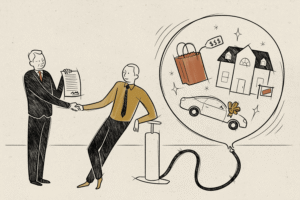

Meet the 34-year-old with the math that doesn’t add up.
He works at the airport. Takes home about €2,800 net every month. Splits a €700 rent with his girlfriend, so his share is a ridiculously low €350. On paper, this guy should be swimming in cash. He’s in the sweet spot, young enough to ride the compound interest wave, old enough to have a stable job, and living in a rent situation that would make a Berlin WG member weep with jealousy.
But at the end of every month, he’s got maybe €300 left.
He’s one of the most honest posts I’ve seen in a long time, and it cuts to the quick of a reality nobody wants to talk about: You can earn a genuinely good salary in Germany and still be broke. Not because the system is rigged (though it often is), but because the drain comes from inside the house.
The €3,388-Per-Year Tax That’s Voluntary
Let’s start with the obvious culprit: that pack-a-day habit.
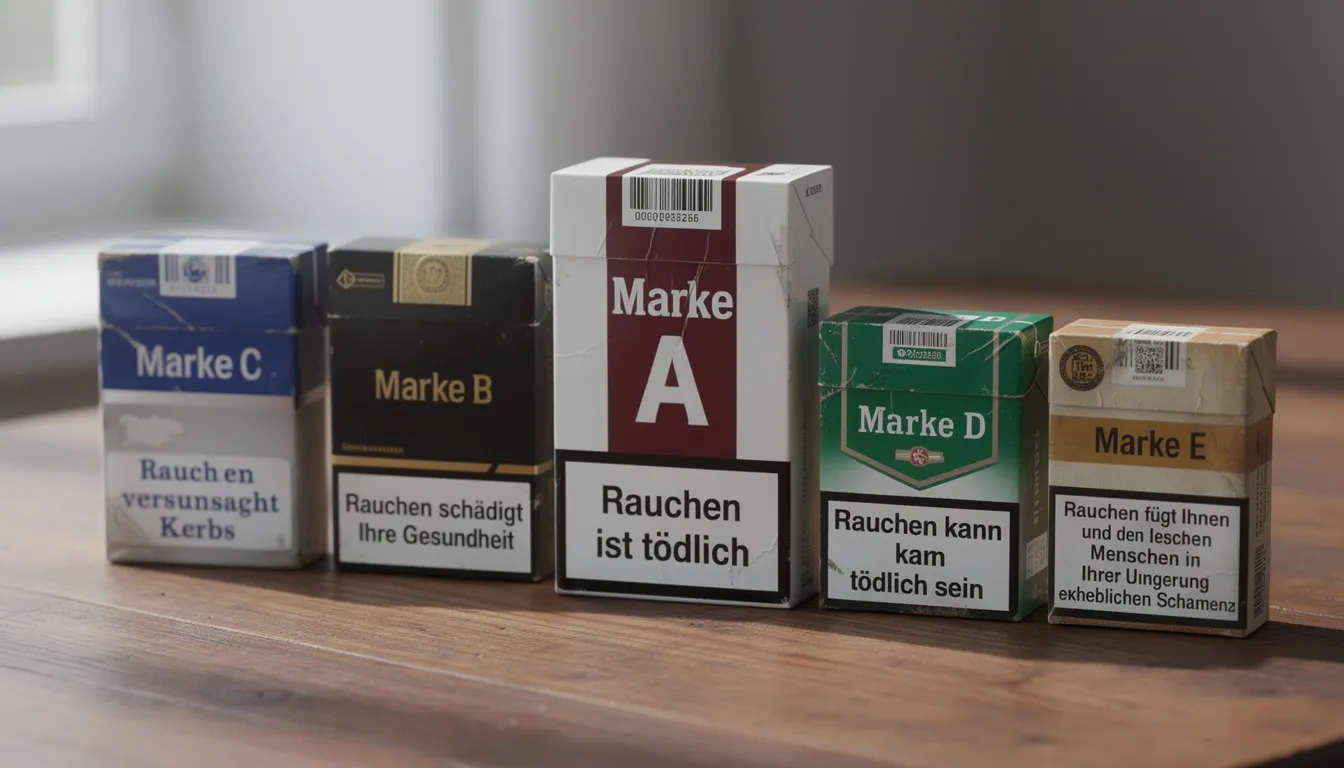
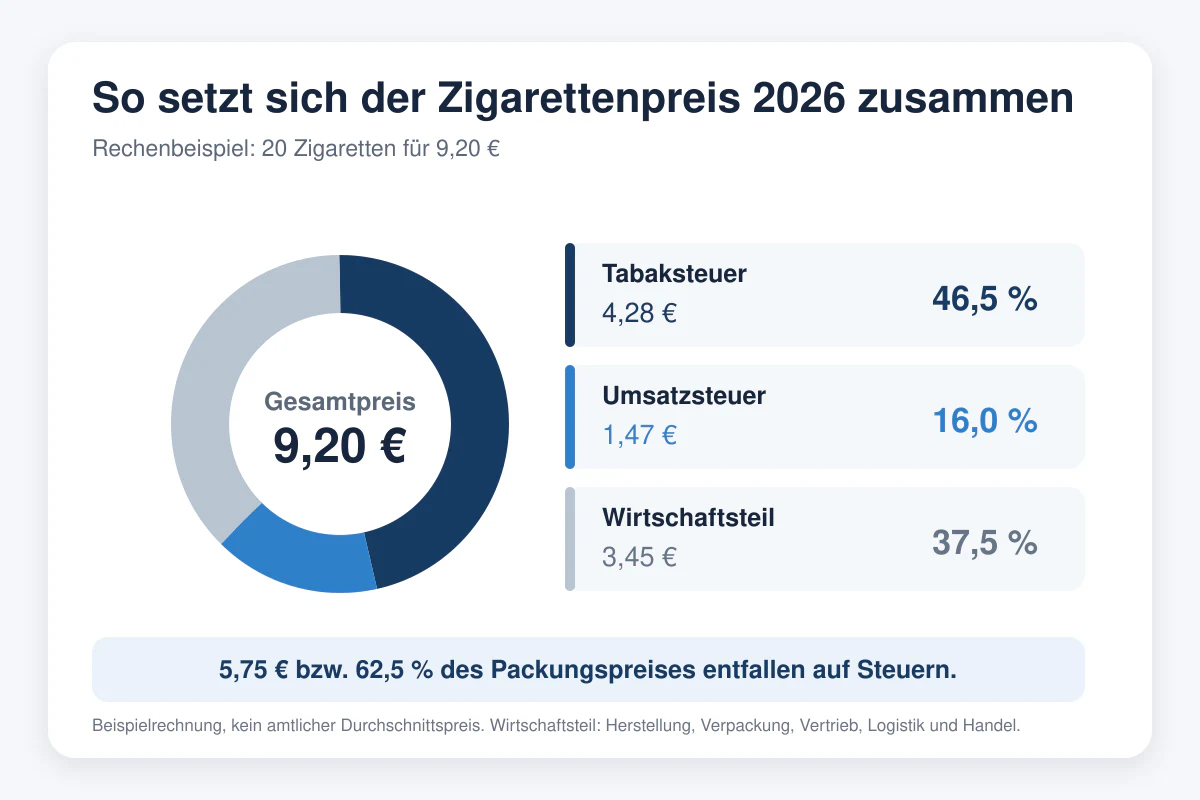
In 2026, the average price for a 20-pack of cigarettes in Germany has settled at around €9.20. That’s not a random number. According to the latest data, the Tabaksteuer (tobacco tax) alone accounts for €4.28 of that price, with another €1.47 going to the Umsatzsteuer (sales tax). Nearly 62.5% of every pack is straight-up government revenue.
A pack a day, 365 days a year, at €9.20? That’s €3,358 annually.
Now, our airport worker said he spends about €500-600 a month on smoking and gambling combined. At current prices, smoking alone chews up roughly €280 per month. That’s the price of a small car payment vanished into ash and tax stamps.
And here’s the kicker: those prices are only going up. The German government has already legislated a stair-step tax increase through 2030. By then, a standard 20-pack could cost €11.78 to €12.00. Marken zigaretten (brand cigarettes) like Marlboro might hit €13 to €14 per pack.
Do the math on that. A pack-a-day habit at €14? That’s over €5,100 a year. Just for the habit. Not the lighter, not the ashtray, not the hourly trip outside in the rain.
The Casino Tax Nobody Talks About
The second leak in this guy’s financial ship is the gambling. He admitted to “regularly” losing money at the casino, Lotto (lottery), and similar games. He estimated €500-600 total per month on both smoking and gambling. If we split that down the middle, it’s roughly €250-300 a month on gambling alone.
That’s not a hobby. That’s a second rent payment.
The brutal honesty in his post is what makes it so relatable: “Sometimes you win, mostly you lose. But I keep going. Because what else is there?”
This is the dangerous logic of lifestyle inflation when you feel like you’re running on a hamster wheel. When property prices seem unreachable and retirement feels like a myth, the instinct isn’t to save harder, it’s to say “f*ck it” and spin the wheel.
Psychologists call this the “why bother” effect. When you perceive your future financial situation as hopeless (no inheritance, no chance at property, distrust of state pensions), the brain rewires itself to maximize present pleasure. Each cigarette and each slot pull becomes a vote against a future you don’t believe in.
The Real Opportunity Cost Nobody Counts
This is where the numbers get genuinely painful.
Our guy is 34 years old. He has roughly 33 years until the standard German retirement age. If he redirected just €500 per month (half of what he burns on habits) into a standard ETF-Sparplan (ETF savings plan) with a conservative 6% annual return, he wouldn’t just have money. He’d have about €600,000 by age 67.
That’s not a theoretical “rich guy number.” That’s literally the compounded difference between choosing a pack of Camels today versus a position in the MSCI World.
But the numbers get even more absurd when you zoom out. His net household income with his girlfriend is roughly €5,600. Their total rent is €700. That’s a housing cost ratio of about 12.5%, something most Germans would kill for. With that kind of leverage, they could be dumping €2,000 per month into investments while still living very comfortably.
Instead, he’s living paycheck to paycheck because of the intersection of two addictions and a heavy dose of nihilism about the future.

The Three Unspoken Enemies
Beyond the obvious smoking and gambling, the story reveals three deeper problems that are eating his high income.
The “I’ll Never Own Anything” Trap
He explicitly says: “A property of my own? Probably never going to happen.” This is a self-fulfilling prophecy. Yes, German property prices are obscene in major cities. But with a €5,600 household income and €350 personal rent, he’s actually in an excellent position to save for a deposit. The belief that it’s impossible is the very thing making it impossible.
Small Daily Leaks
He mentioned “Red Bull every day, eating out often, a generally wasteful lifestyle.” These “little things” are the silent killers of financial progress. A €2.50 Dosen Red Bull (Red Bull can) every workday is €55 a month. Eating out three times a week versus cooking could be €200-300 easily. The aggregate of small decisions is what creates wealth, not one big windfall.
The Scarcity Mindset
His most revealing line: “If I don’t spend my money, I get bored.” This is the core psychological barrier. When you haven’t built a life with purpose beyond consumption and escape, saving feels like deprivation. The solution isn’t a budget app, it’s finding meaning that doesn’t cost €9.20 per twenty minutes.
What Actually Works (German Edition)
If you or someone you know is in this exact spot, here’s the uncomfortable truth: no tip, hack, or budget template will fix this. The underlying issues are addiction and purpose. But there are practical, German-specific paths forward.
Get Professional Help for the Addictions First
Germany has a robust system of Suchtberatung (addiction counseling) that is either free or very low cost. The AOK (health insurance) and TK (health insurance) offer programs specifically for smoking cessation. Many clinics also offer gambling addiction counseling. This isn’t weakness, it’s using the system you pay into.
Use the German System Against Itself
Set up a Dauerauftrag (standing order) that moves money to a separate savings account on payday. If the money isn’t in your checking account, you can’t spend it on cigarettes or Lotto. Make the choice once, not every day.
Reframe the Math
That €9.20 pack? After the 2027 tax increase, it could be €10+. After 2030, potentially €12-14. Smoking isn’t getting cheaper. The German government has made its policy clear: it will tax smokers until they stop. Treat it like a declining business and wind it down.
Find a Replacement for the Dopamine
The reason people gamble and smoke is because they’re boring. That’s harsh, but true. The brain craves stimulation. The solution is to find a hobby that provides genuine challenge and growth. Many gyms (including the one he already goes to) offer boxing courses. Learning an instrument. Building something. Anything that provides real progress rather than fake dopamine.
The Brutal Bottom Line
This 34-year-old airport worker is sitting on potential that most Germans would envy: high dual income, absurdly low rent, and 30+ years of compound interest ahead of him. But he’s turning it into ash and lottery tickets because he’s convinced the game is rigged against him.
The irony? He’s right that the system is unfair. Inheritances matter. Property prices are stupid. The pension system is shaky. But those are exactly the reasons to stop burning his own money. When the system doesn’t care about you, the only rational response is to care about yourself twice as hard.
If you want to understand how your income truly stacks up in Germany and why feelings of “not enough” are so common, check out how income perception affects financial behavior in Germany.
And if you need a dose of reality about what it actually takes to build wealth on a German salary, read about the long-term math of saving and investing despite a high income.
The first step isn’t a budget. It’s admitting that the problem isn’t the salary. It’s the hands holding the money.