
You’re 39, pulling in €85,000 brutto, raising two kids alone in Germany, and you’ve done everything right. You’ve built a six-figure depot, maxed out your Riester-Rente (Riester pension) contributions, and avoided the property trap because who can scrape together 20% down payment when half your income vanishes into Steuern (taxes) and Sozialversicherungen (social security contributions)? Then you run the numbers on a Pflegeheim (nursing home) stay and realize your entire retirement strategy is a house of cards.
This isn’t some doomer fantasy. This is the middle-class trap that’s breaking the spirits of disciplined German savers right now.
The Math That Devours Your Life’s Work
Let’s get brutally specific. The average Pflegeheimplatz costs €3,245 per month in the first year, according to current Verband der Ersatzkassen data. That’s the Eigenanteil (personal contribution) after your Pflegeversicherung (long-term care insurance) coughs up its laughably insufficient contribution. For someone with Pflegegrad (care level) 2, the insurance covers €805 monthly. The remaining €1,825 in pure care costs, plus €1,358 for room and board, lands squarely on you.
Your €100,000 depot? That covers approximately 30 months. Two and a half years. After four decades of work.
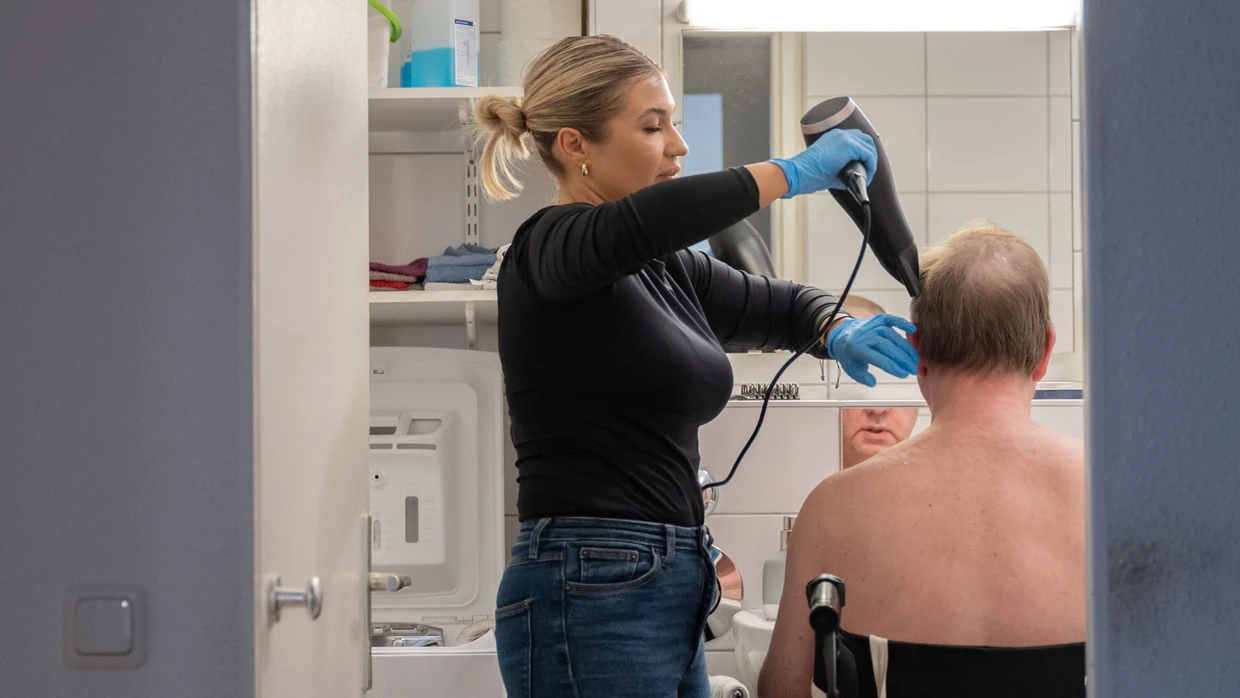
The FAZ explains that only €10,000 in Schonvermögen (protected assets) remains untouched for singles, €20,000 for couples. Everything else must be liquidated before the Sozialamt (social welfare office) steps in. Your ETFs, your savings, that Bausparvertrag (building savings contract) you religiously fed for 15 years? All fair game.
One Reddit user captured the existential dread perfectly: “Sorge ich vor und erreiche irgendeine Art von Vermögen, dann wird es im Pflegefall komplett dafür drauf gehen… Sorge ich nicht vor und verballer mein Geld… bekomme ich das selbe Heim voll bezahlt vom Staat.”
He’s not wrong. The system creates a perverse incentive where saving becomes a penalty.
The Tax Burden That Makes Saving Feel Like Swimming Upstream
Before we even get to the Pflegeheim nightmare, you’re fighting Germany’s tax structure that treats middle-class professionals like high rollers. That €85,000 salary? You’re already in the Spitzensteuer (top tax rate) zone, with marginal rates approaching 42% plus Solidaritätszuschlag (solidarity surcharge).
The OECD data shows Germany’s net replacement rate hovers around 53%, meaning your retirement income will be less than half your final salary. Meanwhile, demographic collapse means the 2:1 ratio of workers to retirees will keep shrinking. You’re paying record-high contributions today for a system that guarantees you poverty-level returns tomorrow.
And here’s the kicker: while you’re being squeezed on taxes, inflation is devouring what little purchasing power remains. That €100,000 depot might look impressive on paper, but it’s not keeping pace with the cost of care, which rises 5-7% annually.
Why FIRE in Germany Is a Fantasy for the Privileged
The Financial Independence, Retire Early movement has infected German millennials, but the reality check is brutal. As one commenter noted: “Für die Mittelschicht ist r/Fire ein Luftschloss” (a castle in the sky). With 27 years of work left at age 40, even saving 10% of a €50,000 net income yields only €416 monthly. At a 3% return, you’re looking at maybe €150,000 by retirement, enough for four years in a mediocre Pflegeheim.
The math doesn’t work because the system is designed for continuous contribution, not early exit. Your Betriebsrente (company pension) vests slowly. Your gesetzliche Rente (state pension) penalizes early retirement. And the new Altersvorsorgedepot (retirement savings account) launching in 2027, while promising up to €540 in annual subsidies, still can’t outrun the care cost inflation monster.
The Protected Assets That Aren’t Actually Protected
You might think your selbstgenutzte Immobilie (owner-occupied property) is safe. Think again. While it can be protected under §90 SGB XII, the conditions are Kafkaesque. The property must be “angemessen” (appropriate), meaning under 250m² for a row house, and you must have a spouse or relative living there who intends to remain after your death. If you’re single? That apartment you bought to avoid rent increases becomes just another asset to liquidate.
Even your Riester-Rente, theoretically protected, gets scrutinized. The Sozialamt can argue it’s “verwertbar” (realizable) if you’ve passed the payout phase. The €10,000 Schonvermögen sounds generous until you realize it covers everything: cash, stocks, that gold bar you bought as a hedge. It’s a rounding error against €40,000 annual care costs.
The Political Wind Is Already Shifting
Germany’s “Mega-Rentenreform” commission is debating changes that could make this worse. The Generationenkapital (generational capital) fund and Frühstart-Rente for children born after 2020 suggest the state knows the current system is unsustainable. But these are band-aids on a hemorrhaging wound.
International comparisons show Germany’s 53% replacement rate lags far behind Austria’s 86% or the Netherlands’ 80%+. The political solution? Talk of raising the retirement age beyond 67 and mandatory private provisions, more burdens on a middle class already stretched thinner than Lebkuchen dough.
So What Do You Actually Do?
Here’s the unvarnished truth: saving is still worth it, but not for the reasons you’ve been told.
First
Treat your savings as Flexibilitätskapital (flexibility capital), not retirement income. It buys you options: the ability to modify your home for aging in place, to afford private Pflegezusatzversicherung (long-term care supplement insurance) before health issues make you uninsurable, or to fund a move to a cheaper region.
Second
Front-load your kids’ wealth. The Reddit user had it right, funding his children’s depots with their Kindergeld (child benefit) builds generational wealth that can’t be clawed back. Schenkungen (gifts) to children are protected after 10 years, so start early.
Third
Prioritize Berufsunfähigkeitsversicherung (occupational disability insurance) over pure retirement savings. A disability at 45 is far more likely than a 10-year Pflegeheim stay, and it protects your earning capacity when you need it most.
Fourth
Stop treating your home as a retirement asset. In Germany’s system, it’s a liability until it’s protected by a complex web of occupancy rights and testamentary restrictions. Renting and investing the difference often beats owning, especially when you factor in Grundsteuer (property tax) and maintenance.
Finally
Accept that Germany’s social contract has changed. The generation that retired at 63 with 70% net replacement is gone. You’re navigating a system where the state will take your assets but call it “self-provision.” Your savings aren’t for a yacht, they’re for avoiding the worst care home in your Kreis (district).
The middle-class trap isn’t that saving is pointless. It’s that saving naively is financial suicide. You need to optimize for the German reality: high taxes, means-tested benefits, and care costs that devour capital. This means aggressive tax optimization, strategic asset protection, and treating the Sozialsystem (social system) as an opponent to be gamed, not a partner to be trusted.
Your €100,000 depot isn’t a retirement fund. It’s the entry fee to a rigged game where the house always wins. Play accordingly.