
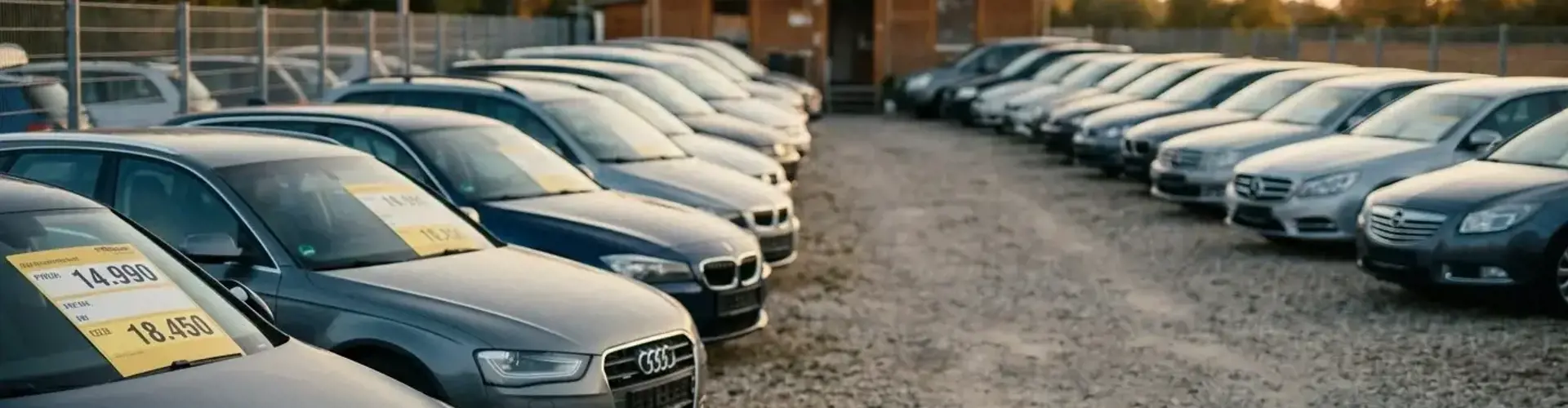
The Great Auto Price Swindle: Why Buying a Car in Germany Has Become Financially Absurd
You bought a runabout six years ago for roughly €8,000, drove it for another 50,000 kilometers, and now you could sell it for the exact same money. Welcome to Germany in 2026, where basic mobility has mutated into a financial circus act. A 36-year-old commuter recently vented his frustration after discovering that the compact car he rejected in 2019, a Fiesta with decent equipment, then priced near €8,200, had just been resold for €7,900. Meanwhile, his own aging Ibiza has stubbornly refused to depreciate. This is not a win. It is a symptom of a market that has lost its grip on reality.
The Ibiza That Refused to Die
Let us be clear about what happened here. Six years ago, you could walk onto a lot and pick up a sensible Kleinwagen (small car) with tolerable mileage for the kind of money that did not require a financing calculator and three glasses of wine. Today, that same money buys you a metal box with 210,000 kilometers on the odometer and a lingering smell of desperation. Everything else demands a bank loan that would make your Lohnsteuer (income tax) accountant weep.
Take the Mazda 3. In 2019, critics mocked its €22,990 list price as borderline offensive. Fast forward to now, and the base trim somehow commands around €30,000. Where did that 30% jump come from? Fairy dust? Corporate greed? Try both. The Mitsubishi Space Star, once a €5,000 nobody, now hovers near €10,000. These are not luxury vehicles. These are appliances with wheels, priced like entry-level status symbols.
The COVID Hangover That Never Ended
The pandemic supply chain crunch is the obvious culprit, but the explanation is only half honest. Between 2020 and 2023, Neuwagen (new car) prices rose roughly 25%, while Gebrauchtwagen (used car) prices surged about 40%. Components were scarce, factories idled, and shipping containers cost more than the parts inside them. But once the supply chains untangled themselves, prices did not retreat. Manufacturers discovered that consumers had adjusted to the pain, so they kept the sticker shock firmly in place. Profit-taking dressed up as market normalization.
If your salary had jumped 25% in the same window, maybe the math would sting less. It did not. These income and affordability pressures behind car price inflation have pushed a vehicle that was once a standard middle-class purchase into territory that feels genuinely predatory. A car is no longer a pragmatic decision. It is a lifestyle tax that most people cannot comfortably afford.
The Data Does Not Lie
The DAT-Report 2026 puts the average used car transaction price in Germany at €18,310. That is down a microscopic 1.6% from the previous year, hardly the crash buyers were hoping for. Meanwhile, the AUTO1 Group Price Index, which tracks real dealer auction data rather than fantasy Inseratspreise (advertised prices), sat at 139.3 points in March 2026. Nearly 18% below the July 2022 peak, sure, but trending upward again by 2.0% year-to-date. The market is not collapsing to rescue your wallet. It is stabilizing at a permanently inflated altitude.
For the first time since records began, the freier Handel (independent dealers) overtook the Markenhandel (brand/authorized dealers) in market share, 38% versus 36%. Official dealerships are pricing themselves out of reach, shoving ordinary buyers into the independent market where warranties are thinner and transparency is optional. If that sounds like a market under severe stress, that is because it is.
The Electric Car Trap
Maybe you believe an E-Auto (electric car) is the clever escape hatch. Reconsider. The used EV market is a slaughterhouse. Over 36 months, electric vehicles lose between 35% and 50% of their value. A Tesla Model 3, depending on the variant, can hemorrhage 40% to 46% of its purchase price thanks to aggressive new-car discounts, the expiration of state subsidies, and the elephant in the room: Akku-SoH (State of Health of the battery), which remains a terrifying unknown for private buyers. You are not buying sustainable mobility. You are buying a rapidly depreciating battery pack on wheels.
Leasing returns are flooding the market with young EVs, but the oversupply is not creating bargains. It is merely destroying residual values while dealers try to protect their margins. You absorb all the depreciation and inherit all the technology risk.
Diesel’s Zombie Resurrection
Here is a genuine surprise. Politicians have done everything short of holding funerals to kill the Diesel. Yet KBA data shows new diesel registrations collapsing from 17.2% in 2024 to just 13.8% in 2025. Fewer new diesels entering the pipeline mean the used market is starved of supply, which props up prices for well-maintained Euro-6 models that still make sense for high-mileage drivers and caravan haulers.
The catch? Older Euro-5 and Euro-4 diesels are effectively banned from Umweltzonen (Environmental Zones), and the biennial HU (Hauptuntersuchung/Main Inspection), administered by your friendly local TÜV (Technical Inspection Association), can easily swallow another €1,000 in repairs to keep your aging oil-burner legally on the road. It is a high-wire act between functionality and fiscal madness.
The Opportunity Cost Nobody Wants to Calculate
Let us get uncomfortable. That €20,000 you are eyeing for a five-year-old compact? Park it in a passive ETF-Sparplan (ETF savings plan) for a decade, and historical averages suggest it could grow into something approaching €35,000. Instead, it becomes a depreciating asset that demands insurance, Kfz-Steuer (motor vehicle tax), maintenance, and parking fees just for the privilege of sitting in traffic on the A100.
Germany is already magnificent at making life expensive. Eroding purchasing power from stagnant relief measures means your Brutto (gross salary) stretches thinner every single month. Committing to car payments in this climate is volunteering for a pay cut. The vehicle was once a tool of freedom. Now it is a liability dressed in alloy wheels.
How to Survive the Madness
If you currently own a car, the strategy is brutally simple: drive it until the chassis separates from the engine block. The market is not rewarding an upgrade, it is punishing the attempt. If you absolutely must buy, timing matters. Historical patterns show that Q4, especially November and December, is the only window when Händler (dealers) actually negotiate seriously, dropping prices 3% to 7% to clear inventory before the year turns.
Do your homework. Those glowing Inseratspreise (advertised prices) on major platforms routinely sit 5% to 12% above actual transaction values, according to market analysis by Fahrzeugschein. Ignore the sticker. Check auction data. Negotiate with the confidence of someone who knows the real number.
And ask yourself the hard question: do you actually need to own a car? Between Deutsche Bahn (German Railway), car-sharing fleets, and a sturdy Fahrrad (bicycle), many urban residents could abandon personal vehicle ownership entirely and save a fortune without sacrificing mobility.
The Bottom Line
The German car market has undergone a swindle of historic proportions. A 36-year-old with a solid income should not have to trawl listings for vehicles with 210,000 kilometers just to stay within budget. A Mazda 3 in base trim should not cost €30,000. And nobody should celebrate the fact that their old Ibiza held its value, because the only reason it did is that everything else became unaffordable.
Buying a car in Germany in 2026 is no longer a rational economic choice for most citizens. It is a capitulation to a rigged system. Unless you are buying a 911, inheriting a Dienstwagen (company car), or legally printing money, your smartest financial move is to stay out of the showroom. Keep your keys. Lock the doors. Drive until the wheels fall off.