
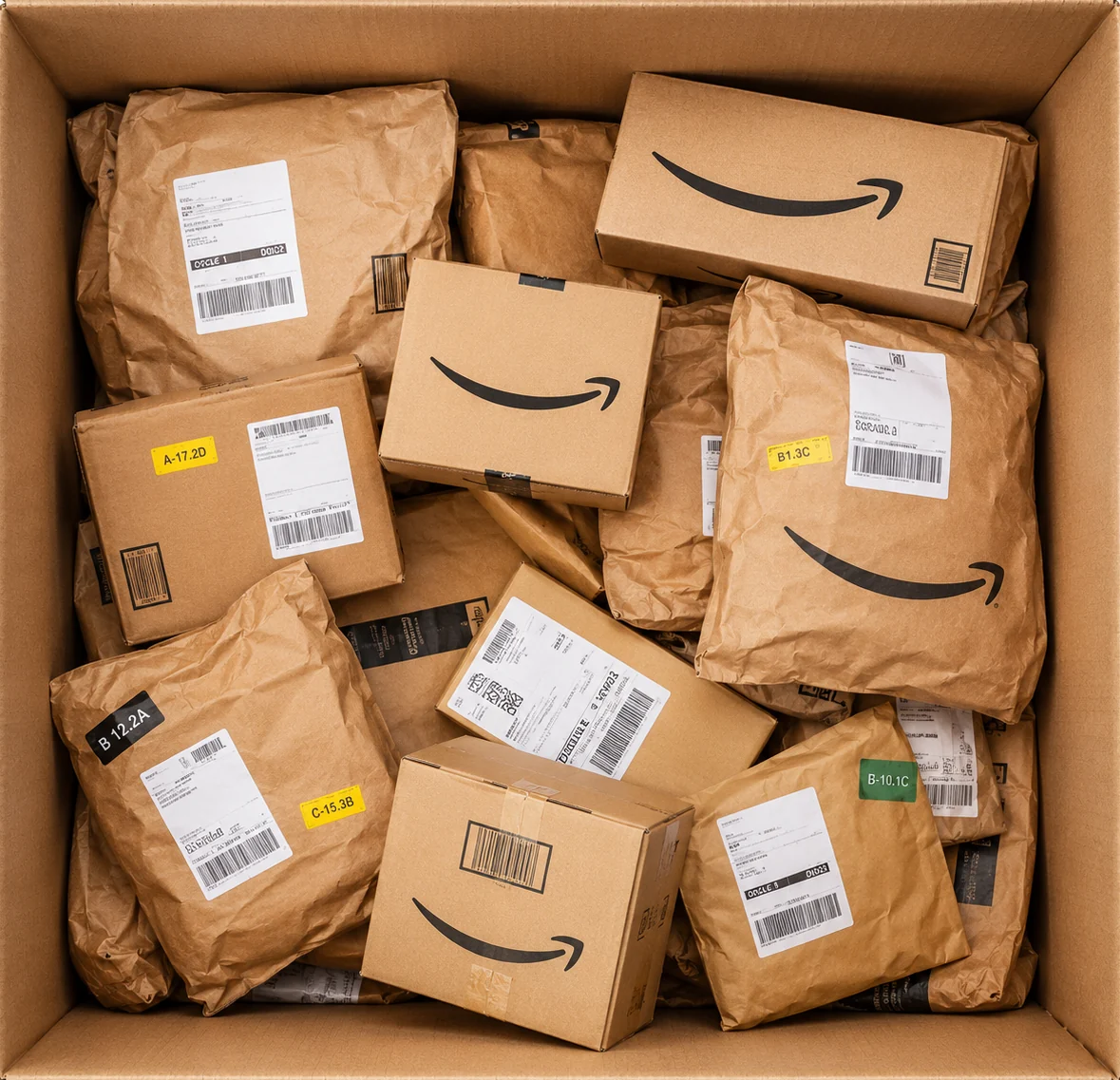
You’re staring at your Amazon cart. You’ve got a jacket you’re 80% sure about, running shoes you’re 90% sure about, and a book you’re 100% sure about. Before the package tax, you’d order all three, keep what works, and return what doesn’t. Simple math: better than making two separate orders.
Now there’s a €2.40 charge standing between you and that perfectly reasonable shopping strategy.
But here’s where it gets weird. With Amazon’s new policy, if you return that jacket and those shoes but keep the book, you eat the €2.40. Return everything, and Amazon refunds the tax entirely.
The Austrian package tax (Paketsteuer) doesn’t just discourage online shopping. It actively encourages full returns over partial ones. That’s not a bug in the system. That’s how the law was written.
The Tax Nobody Asked For
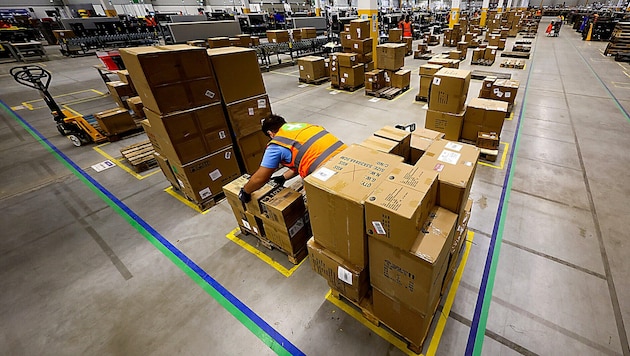
Let’s back up. October 1, 2026. Austria’s new Paketsteuergesetz (Package Tax Law) kicks in. Online retailers generating over €100 million in Austrian revenue must pay €2 per package or per order, their choice, which they can pass directly to consumers. With VAT, that’s €2.40 at checkout.
Sixteen major players are affected. Amazon, Temu, Zalando, Otto, Ikea, Apple, MediaMarkt, Shein, AliExpress, the usual suspects. The government expects €280 million annually to help fund the VAT cut on basic groceries. Your Butter and Semmel (bread roll) get cheaper at Billa, but your online orders get pricier. The trade-off is… something.
The Return Policy Paradox
Here’s where the design starts falling apart.
According to the official guidelines, once a package has been successfully delivered, the tax liability is locked in. Return the items? Tax stays. The rationale? Delivery happened. The state got its money.
This means Amazon, Otto, and Zalando have to decide on their own customer service policies. Amazon’s approach: refund the €2.40 only if you return the entire order. Keep even one item, and the fee sticks.
Let me translate what that does to rational consumer behavior:
Scenario A
Your order has 5 items. One doesn’t fit. You return the one, keep the rest. You pay €2.40 in tax that technically covered delivery of all 5 items.
Scenario B
Same order. Three don’t fit. But wait, you’ve already accepted paying €2.40. What’s one more return? Actually, why not return all 5? If you return everything, Amazon eats the tax.
Here’s the kicker, many online communities are reporting that the prevailing sentiment is one of confusion. Customers genuinely don’t understand why partial returns penalize them but full returns don’t. The logic is backwards: the tax was meant to discourage returns and packaging waste, yet it’s making returns more likely.
Otto and Zalando have slightly different policies, full returns must be “timely”, but the core flaw remains.
Who Actually Pays?
The tax is nominally on the retailers. In practice, ORF’s reporting confirms that all affected companies are passing the cost directly to consumers. Amazon displays it as a separate line item at checkout. The government collects its revenue, the customer foots the bill.
Small and medium businesses are caught in the crossfire. Around 4,000 Austrian companies selling through these platforms see their products become comparatively more expensive, their portion of the cart triggers the fee, even though they never crossed the €100 million threshold themselves. The platform fiction (Plattformfiktion) rule means Amazon is liable for the tax, but sellers feel the competitive pressure.
Meanwhile, Austria’s own Post-owned marketplace shöpping sits safely below the threshold, marketing itself as “package-tax-free.” Zero sum game: some Austrian retailers benefit, while others, particularly those selling across borders, are squeezed.
The Environmental Irony
The stated goal was to discourage excessive packaging and delivery waste. The actual incentive structure does the opposite for returns.
Under this system, a customer who would normally keep four out of five items now has a financial reason to return everything and reorder the four they actually wanted. That’s two deliveries instead of one, double the carbon footprint, and double the logistics cost.
The tax was designed as a Lenkungsabgabe (steering tax), a fee intended to guide behavior. But what exactly is it steering consumers toward? Let’s run through the options:
- Fewer orders? No, the fee is flat per order, so consolidating items into one order keeps costs identical.
- Fewer returns? No, it makes returns MORE attractive when you’re on the fence.
- Local shopping? Maybe, but that’s a blunt instrument affecting only 16 retailers.
- More packages? Arguably yes, the full-return-then-reorder loophole literally creates more delivery volume.
One commenter captured it well: “It’s a tax that makes returning everything more attractive than keeping one item. What exactly is the policy goal here?”
What the Math Actually Looks Like
A Krone report highlighted cases where the €2.40 exceeds the product’s value entirely. A €1.50 phone case now costs €3.90 delivered. If you buy three €0.50 items, the tax is 160% of the product cost. These are edge cases, sure, but they highlight the flat-fee problem: the tax disproportionately punishes low-value purchases.
A family ordering diapers, toilet paper, and toothpaste, essential household goods that many Austrian families rely on, pays the same €2.40 as someone ordering a €2,000 laptop. The tax isn’t progressive or even proportional. It’s a fixed cost on a specific behavior: having a package delivered.
The Bigger Picture: Austrian Tax Design at Its Finest
This whole saga joins a long line of Austrian tax policies that look reasonable on paper but create perverse incentives in practice. Sound familiar? It’s the same pattern as tax-saving insurance products that devour your deposits through fees, or salary restructuring schemes that simplify HR paperwork while cutting your take-home pay.
The design flaw here is particularly visible because we can all see it in our own shopping baskets. When consumers start noticing that policies reward waste over preservation, Austrian consumer psychology around taxes and spending starts to shift. Nobody likes feeling like a sucker for keeping something they’re only mildly unsure about.
The law’s supporters argue the revenue offsets consumer relief from VAT reductions on basic foods. But that relief is invisible at the till, you’re not celebrating your €0.18 cheaper butter when you see €2.40 added to your Amazon order.
Practical Takeaways: How to Navigate This Mess
Let’s be realistic about what you can do:
Don’t game the system. Returning everything just to reorder the items you want creates more waste, more emissions, and more work for delivery workers. Small recurring costs shape consumer behavior in Austria, but they shouldn’t push you into environmentally destructive habits.
Check the return policy before ordering. Amazon’s policy is clear: full returns only. Otto and Zalando have their own rules. Know them before you commit.
Consolidate orders when possible. The tax is per order (at least at Amazon and Otto). Bundle your purchases to avoid multiple fees.
Calculate the tax into your buying decision. A €2.40 surcharge on a €15 item is 16%. If you’re wavering, factor that in, but don’t let it force you into a suboptimal purchase you’ll later return.
Be aware of your rights. The tax is technically the retailer’s liability. If a retailer tries to pocket it on an order that was cancelled before dispatch, that’s not justified, the tax liability only accrues when payment is accepted and delivery occurs.
The Bottom Line
Austria’s package tax was meant to fund grocery relief while discouraging delivery waste. Instead, it’s a regressive, flat fee that:
- Penalizes low-value purchases disproportionately
- Rewards full returns over partial ones
- Creates a perverse incentive to generate more packages
- Passes the burden to consumers while allowing the largest retailers to set their own refund terms
Otto’s CEO Harald Gutschi says up to ten retailers are preparing legal challenges. Amazon has signaled constitutional concerns. The EU Commission might investigate whether this violates single market rules.
Will it survive? Unclear. But whether it falls or stays, the lesson stands: when you design a tax without thinking through human behavior, people will find creative ways to make it worse.
And when they do, the real cost isn’t just €2.40 per order, it’s the growing distrust in the idea that Austrian tax policy is actually designed to make our lives better.