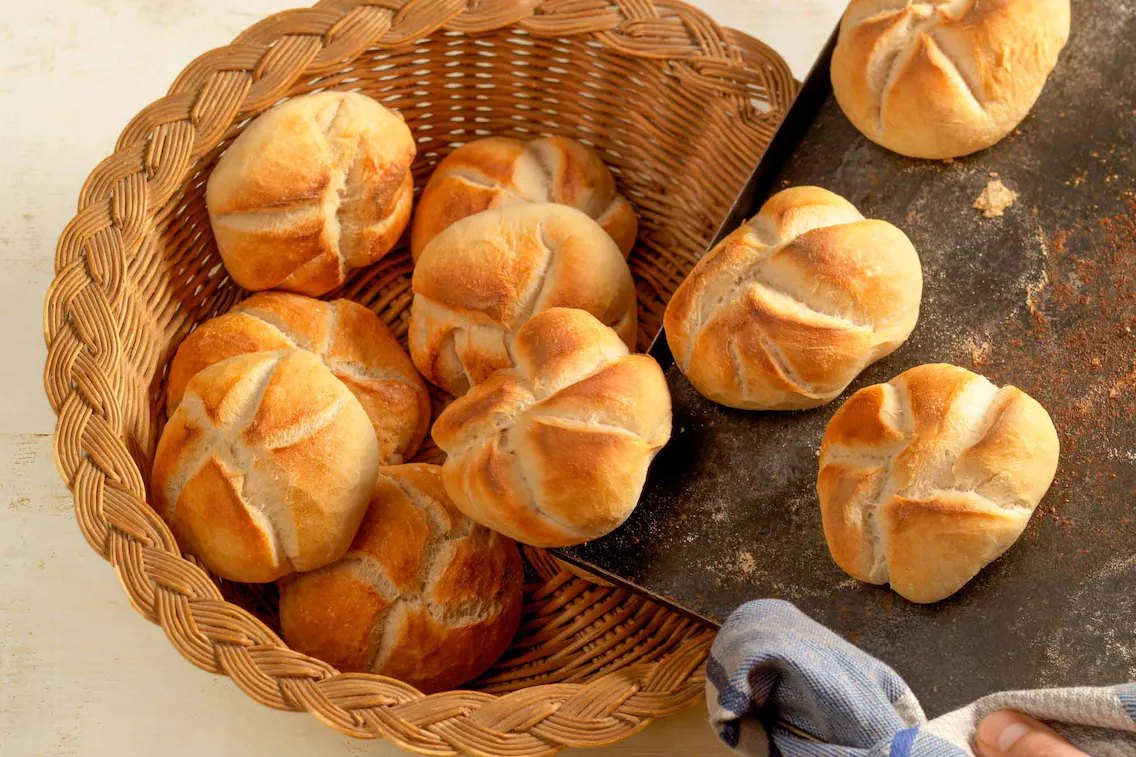
So, you walk into your local Billa on July 1st, expecting to see prices drop on milk, butter, and bread. The government promised a VAT cut from 10% to 4.9% on basic foods. You grab a Semmel (bread roll) and a pack of butter, head to the checkout, and… the total looks suspiciously similar to last week’s.
Welcome to the great Austrian grocery gamble.
The question everyone’s asking, and the one the government is desperately hoping you don’t, is simple: will the savings actually reach your wallet, or will they get absorbed somewhere along the supply chain? The answer, as you might expect from Austrian bureaucracy, is complicated.
The Promise vs. The Reality
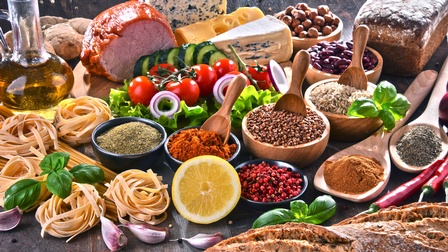
Let’s start with what’s actually happening. As of July 1st, 2026, Austria has slashed the VAT on a specific list of basic food items from 10% to 4.9%. The WKO (Austrian Economic Chambers) officially confirmed that the law was published in the Bundesgesetzblatt (Federal Law Gazette) on June 10th and took effect on July 1st. The list includes milk, butter, yogurt, eggs, fresh and frozen vegetables, certain fruits, rice, wheat flour, pasta, bread, and salt.
Sounds straightforward, right? The government cuts VAT, prices drop, you save money. Simple.
Except nothing about Austrian tax policy is simple.
The Wurstsemmel Paradox
Let me introduce you to the most Austrian problem you’ll encounter this year: the Wurstsemmel (sausage roll) paradox.
Here’s how it works. A plain Semmel (bread roll) now gets the reduced 4.9% VAT. Butter also gets the reduced rate. But a buttered Semmel? That’s a “composite product” and stays at 10%. A Wurstsemmel (sausage roll) bought at the deli counter? Also 10%. But if you buy the Semmel and the Wurst in separate bags and assemble them yourself at home, the Semmel gets 4.9% and the Wurst stays at 10%.
This isn’t satire. This is Austrian tax policy in 2026.
As one supermarket employee working in a Vienna deli counter put it: “When the Wurst is put INTO the Semmel, the entire Wurstsemmel is taxed at 10%. When the Wurst is put INTO THE SAME BAG as the Semmel, but not inside the cut Semmel, the Wurst is taxed at 10% and the Semmel at 4.9%!”
The absurdity is baked right into the legislation. And it raises the central question: if the system is this convoluted, will retailers even bother passing on the savings?
The Handelsverband Promise vs. The Skepticism
Rainer Will, head of the Austrian Handelsverband (Retail Association), has been clear: “As of July 1st, domestic consumers will immediately benefit from the tax advantage on the discounted products.” He claims the relief will be passed on 100% from day one.
The retail sector has reportedly invested around €6 million in updating IT systems, reprogramming cash registers, and retraining staff. The WKO (Austrian Economic Chambers) officially confirmed the new rates apply to a specific list of products classified by their Kombinierte Nomenklatur (Combined Nomenclature) codes.
But here’s where the skepticism kicks in. Many consumers remember the last time Austria tried something similar, the temporary VAT cut on restaurant meals during COVID. The general consensus? The savings never fully reached the customer. As one observer noted, “the tax advantage never arrived for the customer back then, and it won’t now either.”
The difference this time is that the government has promised to monitor and enforce pass-through. But as critics point out, how exactly do you prove what a “fair” price would have been without the tax cut? Food prices fluctuate constantly due to energy costs, harvests, supply chains, and labor. The price on June 30th is a reference point, but what about in October?
The Real Numbers: What You’ll Actually Save
Let’s cut through the political theater and look at the actual impact on your wallet.
According to the Momentum Institut, a progressive think tank, the average household will save between €77 and €108 per year depending on income level. The poorest fifth of households save €77 annually (0.43% of income), while the richest fifth save €108 (0.11% of income). The measure is expected to reduce inflation by 0.19 percentage points over the next year.
But here’s the catch: the government is partially financing this €400 million annual cost with a new Paketsteuer (parcel tax) of €2 per package, expected to raise €280 million. So the state gives with one hand and takes with the other. Your cheaper bread in July gets offset by more expensive Amazon deliveries in October.
The Bureaucratic Monster Behind the “Simple” Tax Cut
The WKO (Austrian Economic Chambers) has published a detailed list of exactly which products qualify for the reduced rate. The classification is based on the Kombinierte Nomenklatur (Combined Nomenclature) codes, the same system used for customs tariffs. This means a product’s tax treatment depends on its official customs classification, not on whether it looks like a basic food item.
Here’s where it gets truly absurd:
- Frozen spinach leaves: 4.9% VAT
- Cream spinach (with milk/fat): 10% VAT
- Plain butter: 4.9% VAT
- Yogurt butter or fasting butter: 10% VAT
- Wheat flour: 4.9% VAT
- Rye flour: 10% VAT
- A plain Semmel (bread roll): 4.9% VAT
- A Semmel with pumpkin seeds (higher fat content): 10% VAT
The BMF (Finance Ministry) has even published a special online calculator for bakeries to determine whether their specific bread recipe qualifies for the reduced rate based on fat and sugar content in dry matter. Bakeries now need to keep recipe documentation for years in case of audits.
The Real Cost of Implementation
The Handelsverband (Retail Association) reports that the industry invested approximately €6 million in IT system updates alone. Every cash register in the country needed software updates to handle the new 4.9% rate. As one software provider noted, “The update is mandatory for continued operation of your cash register system, regardless of whether the new tax rates are relevant for your business.”
This cost doesn’t disappear. It gets passed on somewhere. And while the Handelsverband promises 100% pass-through of the tax cut, the implementation costs alone suggest that margins are being squeezed.
The Social Impact: Who Really Benefits?
The Momentum Institut’s analysis reveals a nuanced picture. In absolute terms, richer households save more: €108 per year for the top income quintile versus €77 for the bottom quintile. But relative to income, the poorest fifth saves 0.43% of their income compared to just 0.11% for the richest. The measure is socially progressive in relative terms.
However, the institute also notes that the government could have achieved better targeting. If the product list had been more closely aligned with the consumption patterns of low-income households, the poorest could have saved an additional €40 per year.
And then there’s the Paketsteuer (parcel tax). Starting in October, a €2 tax on packages from large online retailers (those with over €100 million in domestic revenue) is expected to raise €280 million, partially offsetting the €400 million cost of the VAT cut. The government’s own economic ministry warned about “legal uncertainty, more bureaucracy, disadvantages for the digital location, and additional inflationary pressure.”
What History Tells Us
This isn’t Austria’s first experiment with targeted VAT cuts. During the COVID recovery period, the government temporarily reduced VAT on restaurant meals from 20% to 5%. The general consensus among consumers? The savings never fully arrived at the table. Restaurants largely pocketed the difference or used it to offset their own increased costs.
The same skepticism now applies to grocery stores. While the Handelsverband promises 100% pass-through, the reality is that food prices are influenced by dozens of factors: energy costs, labor, supply chains, weather, and global commodity markets. Disentangling the VAT effect from everything else is nearly impossible after the first week.
What You Should Actually Do
Here’s my practical advice, based on the data and the political theater:
-
Check your receipts starting July 1st. Look for the specific items on the reduced list, milk, butter, eggs, fresh vegetables, bread, rice, pasta, flour, salt. If the price hasn’t dropped by roughly 4.6% (the difference between 10% and 4.9% on the pre-tax price), the retailer isn’t passing it through.
-
Shop at discounters first. Lidl, Hofer, and Penny typically have thinner margins and more incentive to pass on tax cuts to maintain price competitiveness. Billa and Spar may be slower to adjust.
-
Don’t expect miracles. The maximum annual savings of €100-€108 per household is real but modest. This isn’t going to transform your budget. It’s roughly the cost of one decent dinner out.
-
Watch for the Paketsteuer (parcel tax) in October. If you order online frequently, the €2 per package surcharge could easily eat up your grocery savings. The government’s own budget office warned that the Paketsteuer could “weaken the relief and inflation-dampening effect” of the VAT cut.
-
Consider the bigger picture. This VAT cut is happening alongside other changes that affect your household budget. For example, how Austrian social security changes reduce net income might be taking more from your paycheck than you’ll save on groceries. And how Austrian tax policy squeezes household budgets through mechanisms like the Familienbonus (Family Bonus) reform could offset any gains.
The Bottom Line
The VAT cut on basic foods is a genuine attempt to help households cope with high inflation. The WKO (Austrian Economic Chambers) has confirmed the legal framework, and retailers have invested millions in implementation. The Handelsverband promises full pass-through.
But the skepticism is warranted. The bureaucratic complexity is staggering, a buttersemmel (buttered roll) taxed differently than its components, cream spinach excluded while frozen spinach qualifies, a Wurstsemmel (sausage roll) taxed at 10% while its individual parts could be at 4.9%. The implementation costs of €6 million don’t disappear. And the Paketsteuer (parcel tax) coming in October will claw back much of the benefit.
The real question isn’t whether the VAT cut will be passed on in the first week. It’s whether it will be sustained over time, as costs shift, as the bureaucracy settles, and as the political attention moves elsewhere.
My bet? You’ll see a small, visible drop on July 1st. By October, the savings will have been absorbed into the general price level, and the Paketsteuer will have taken back what the VAT cut gave. The net effect on your household budget over the next 12 months? Close to zero.
But hey, at least your Semmel will be a few cents cheaper. Just don’t put any butter on it.