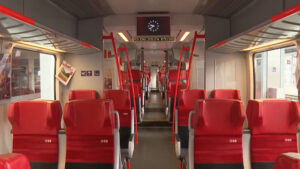
Picture this: it’s 7:58 AM, you’re standing on the platform at Wien Mitte, coffee in hand, watching the digital display flip from “S-Bahn delayed” to “S-Bahn cancelled.” The Stammstrecke (Vienna’s main rail artery) is down again, and you’re about to add 45 minutes to your commute. But here’s the plot twist, that cancelled train might just be worth money. Like, actual euros from the Finanzamt (Tax Office).
The Austrian Pendlerpauschale (commuter allowance) has always been a peculiar beast, but throw in flexitime, hybrid work, and a crumbling rail infrastructure, and you’ve got a tax puzzle that would make even seasoned Steuerberater (tax advisors) scratch their heads.
The 20-Minute Rule That Decides Your Tax Fate
Here’s where things get properly absurd. The Pendlerrechner (commuter calculator) on the Finanzamt website doesn’t just ask how far you travel, it asks when you travel. Not kidding. Punch in a 7:30 AM departure and you might qualify for the allowance. Change it to 8:00 AM, and suddenly the algorithm decides your commute is perfectly reasonable and you get nothing.
I’ve seen this exact scenario play out in online discussions, and the frustration is real. One commuter reported getting completely different results depending on which platform their train departed from, 19.9 km versus 20.1 km of commuting distance, all because of an underpass that added a few meters to their walk. The difference between those two numbers? Roughly €400 per year in tax benefits.
The core criteria for the Pendlerpauschale: the journey must take at least 20 minutes longer by public transport than by car, or the distance must exceed 20 km. But here’s the catch, that 20-minute threshold is evaluated based on your specific departure time. With Gleitzeit (flexitime), your employer has essentially handed you a get-out-of-jail-free card: you can pick the departure time that actually reflects your real schedule.
When Construction Becomes Your Tax Ally
The ongoing disruptions on Vienna’s S-Bahn Stammstrecke have created an unexpected financial silver lining for commuters. When your usual route becomes unusable and your alternative takes significantly longer, you suddenly cross that magical 20-minute threshold.
The practical approach? For the months the line was disrupted, use the Pendlerrechner to calculate your entitlement, save the results, and claim only for those specific months. The Finanzamt accepts monthly calculations when circumstances change mid-year, they don’t expect you to claim for January if the disruption only started in March.
For documentation, you don’t need a formal form. Just enter the calculated amount directly in the Arbeitnehmerveranlagung (employee tax return) field during your FinanzOnline filing. If you’re submitting on paper, the L34a form handles it. Screenshots of the Pendlerrechner results are solid backup, though I’ve never actually heard of anyone being asked to produce them.
The Home Office Calculation Dance
Now for the part that makes everyone nervous: mixing Homeoffice (remote work) days with your Pendlerpauschale claim. The rule is refreshingly simple, you need at least 10 days per month in the office to claim the full allowance. Anything less, and your claim shrinks proportionally.
Nobody’s asking you to maintain a minute-by-minute diary of your movements. If your standard hybrid arrangement has you in the office 12 days one month and 8 the next, you’re not going to end up in a courtroom over the difference. Austrian tax authorities aren’t equipped for that level of surveillance, and they know it. The practical approach: count your office days, use the months where you hit the 10-day threshold, and don’t stress about the occasional exception.
For those of you using how to file taxes efficiently in Austria using FinanzOnline, the digital submission process handles all this automatically. You just plug in your numbers and let the system crunch.
What Changed in 2026 (And Why It Matters)
The 2026 tax year brought significant changes to how the Pendlerpauschale works. The rate jumped to 38 cents per kilometer, applied from the very first kilometer of your commute, previously, you had to exceed 20 km before the allowance kicked in at all.
Quick math for a 20-km commute over 220 working days: that’s €1,672 annually. Which beats the standard Arbeitnehmerpauschbetrag (employee lump sum) of €1,230. If you’re in this situation, claiming the Pendlerpauschale instead of the standard deduction genuinely matters.
For those of you weighing the broader picture of alternative commuting costs and realities in rural Austria, these changes make public transport more competitive than ever, at least on paper.
The 2027 Shake-Up
Before you get too comfortable, the rules are shifting again. Starting 2027, the Telearbeitspauschale (telework allowance) disappears entirely, along with the small and large Arbeitsplatzpauschale (workplace allowances) for self-employed individuals. The Homeoffice-Pauschale (home office allowance) remains, €6 per day up to €1,260 annually, but the landscape is changing.
This creates an interesting calculation: if you’re working from home three days a week, the math on your total tax benefits changes. The question becomes whether the commuter allowance for fewer office days plus the home office daily rate nets out better than the old system.
The Bottom Line
The Austrian tax system isn’t designed for the messy reality of modern work schedules. Construction delays, flexitime, and hybrid arrangements weren’t part of the original legislative blueprint. But that doesn’t mean you should leave money on the table.
Take the 15 minutes to run your actual routes through the Pendlerrechner, multiple times, at different departure times. Save those results. If your commute genuinely crosses the threshold at certain times of day, claim it. If disruptions genuinely extend your journey, claim for those months.
The authorities are looking for flagrant fraud, not people who interpreted ambiguous rules in their favor. If you’re maximizing financial outcomes from your Austrian salary through tax deductions and savings, understanding these nuances is exactly the kind of edge that compounds over time.
And honestly? After years of Austrian trains making you late for work, it’s about time the system paid you back.