Meet the new Austrian commuting math: sell your second car, save €400 per month, and gain a part-time job waiting at rural train stations. That’s not sarcasm, it’s the actual trade-off one family man in Upper Austria is making after ditching his Zweitwagen (second car) for what looked like a “perfect” public transport connection.
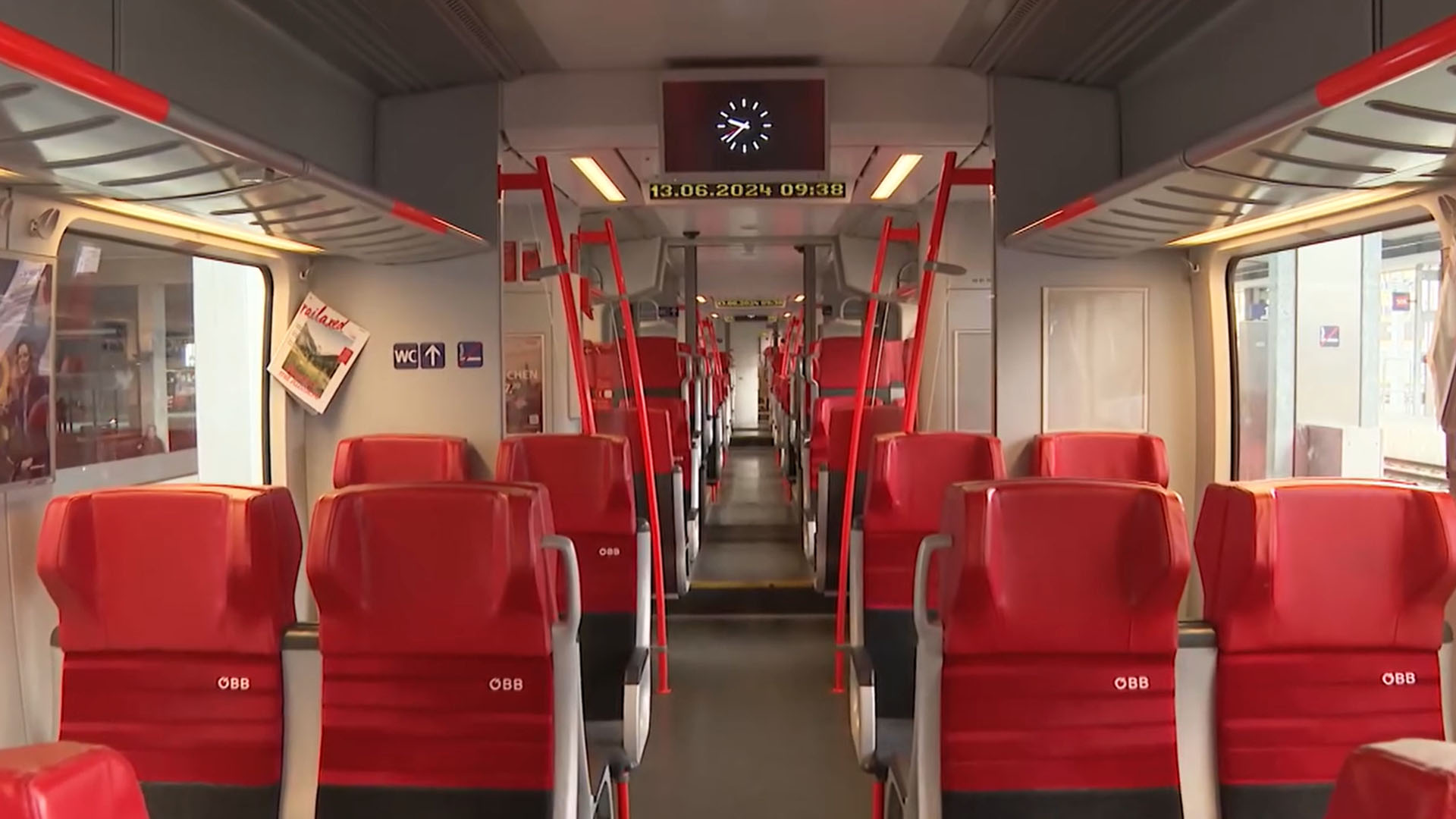
The setup sounds ideal: 20 minutes on the Zug (train) to the state capital, three minutes walking to work. The problem? Those final six kilometers from Bahnhof (train station) to his Dorf (village) involve a single bus. Hourly. Up a steep mountain road with 400 meters of elevation gain. In winter, that road is snow-covered. In rain, it’s a death wish on an E-Bike. And when the train runs 10-15 minutes late, which happens once or twice weekly, he misses his Anschluss (connection) and watches his bus disappear up the mountain.
So he waits. Up to two hours per week. That’s eight hours monthly, minimum wage equivalent to €50 per hour of pure waiting time. His wife and child get delayed dinners. His evening evaporates. And this is the good scenario.
The Last Mile Problem Isn’t a Bug, It’s a Feature of Rural Planning
Austrian transport planners love building massive Park-and-Ride facilities at Bahnhöfen. What they don’t love? Funding actual public transport to get you there. One commenter on the original thread nailed it: “In areas known for commuting, they build huge P+R but don’t provide public transport for the last few kilometers. Families own three cars just for the Bahnhof run. Total madness.”
This isn’t a minor oversight, it’s systematic. The ÖPNV (Public Transport Network) works beautifully between major hubs. But that final stretch? You’re on your own. The bus company knows the problem exists but cites “no budget” and “insufficient demand” for 30-minute intervals. Yet somehow there’s budget for a 200-space parking lot.
The Pendlerpauschale Doesn’t Care About Your Waiting Time
Here’s where Austrian tax law reveals its blind spot. The Pendlerpauschale (commuter allowance) for 2026 offers up to €3,672 annually plus a Pendlereuro of €6 per kilometer, but only for distance, not reliability. Whether your bus shows up on time or leaves you freezing for an hour, the tax relief remains identical.
The system distinguishes between “kleine” (small) and “große” (large) Pendlerpauschale based on ÖPNV availability. If public transport is “zumutbar” (reasonable) for at least half your route, you get the small version starting at 20km. If it’s “unzumutbar” (unreasonable), the large version kicks in at just 2km. But “zumutbar” means a travel time under 60 minutes, scheduled time, not real time. Delays don’t factor into the calculation.
So our waiting commuter gets the same tax treatment as someone whose bus arrives perfectly, despite losing 100+ hours annually to delays. The Finanzamt (Tax Office) doesn’t ask about your Bahnhof waiting time. It only cares about your Meldezettel (Registration Certificate) address and workplace distance.
Bürgergeld Reimbursement: €0.20 Per Kilometer of Bureaucratic Theater
If you’re receiving Bürgergeld (Citizen’s Income), the situation gets more absurd. The Jobcenter reimburses travel costs at €0.20 per kilometer for appointments. But here’s the kicker: they recently fought a legal battle over whether biking to appointments qualifies for reimbursement.
The Sozialgericht Leipzig ruled that yes, even cyclists deserve compensation, but only for “unmittelbar” (immediate) travel costs, not for “Duschen nach der Radtour” (showering after the bike ride) or weather-appropriate clothing. The Jobcenter retains “Ermessensspielraum” (discretionary leeway) on the amount, meaning you’ll spend more time arguing over a few euros than the trip is worth.
For rural commuters, this creates a perverse incentive: the system will grudgingly pay for your bike ride to a Jobcenter appointment, but not for reliable transport to your actual job.
The Real Financial Calculation: €400 Savings vs. Unlimited Downside
Let’s do the actual math our commuter faces:
Monthly Savings: €400 (full car costs including insurance, fuel, maintenance)
Monthly Waiting Time: 8 hours minimum
Hourly “Wage”: €50/hour
Sounds decent, right? Until you factor in:
Opportunity Costs:
– Family time: His wife and child wait for delayed dinners, missing quality time
– Career flexibility: Can’t stay late at work without missing the last bus and paying €50 for a taxi
– Weather risk: Snow days mean either no-show at work or €80+ taxi rides
– Health impact: Standing in Austrian winter weather for hours isn’t free
– Stress: The mental load of constant schedule monitoring and delay anxiety
And then there’s the hidden financial trap: emergency transport. When his child gets sick at school and needs immediate pickup, that €400 monthly savings evaporates in a single €120 taxi ride. When the last bus is cancelled due to a driver’s shortage, a growing problem in rural Austria, he’s stranded.
Why Alternative Transport Fails the Rural Reality Check
The internet’s favorite solutions collapse under Austrian rural conditions:
E-Scooter: Useless on 400m elevation gain in snow
Moped: Seasonal at best (May-October), impractical in Anzug (business suit)
Car-sharing: Doesn’t exist in villages of 500 people
E-Bike: The original poster called this “lebensmüde” (suicidal) for good reason
Folding bike on train: Still leaves you 6km from home on an icy mountain road
One commenter suggested a Fiat Topolino (microcar), which is actually the most realistic proposal, except it costs €10,000+ and requires insurance, maintenance, and parking. At that point, why not keep the original second car?
The Pendlerrechner vs. The Real World
The Finanzministerium’s Pendlerrechner (commuter calculator) is the official arbiter of what’s “zumutbar.” It uses scheduled times, not real-world reliability data. It doesn’t know that the bus driver occasionally forgets the route, or that the Zug is delayed 15% of the time due to “technische Störungen” (technical issues).
This creates a dangerous financial planning gap. You can run the calculator, get approved for the Pendlerpauschale, and still find yourself functionally unable to commute reliably. The tax system assumes infrastructure works. Rural Austria knows it doesn’t.
When the Math Stops Being Funny
Our original poster frames this with humor, but the comments reveal the underlying frustration. One person asks about his wife and child’s “Stundensatz” (hourly rate), pointing out that their waiting time matters too. Another notes that reading and working during delays sounds productive, except he’s already worked a full day and his unpaid overtime at the Bahnhof doesn’t advance his career.
The most telling comment: “After a long workday, you stand there waiting like a Vollpfosten” (complete idiot). That captures the psychological cost. You’re not just losing time, you’re losing dignity.
The Legal Precedent That Changes Nothing
A recent Sozialgericht decision ruled that Jobcenters must consider individual mobility needs and can’t automatically reject car repair cost coverage if employment depends on it. This sounds promising, but it’s an Einzelfallentscheidung (individual case decision), not a blanket rule.
You’d need to prove:
– No public alternative exists (check)
– Employment is at risk (check)
– It’s “zumutbar” for the Jobcenter to pay (good luck)
The process takes months. Meanwhile, you’re still waiting at the Bahnhof.
The Uncomfortable Truth: Rural Austria Requires Car Ownership
Here’s my take: the €400 monthly savings is a false economy. It’s a tax on your time, family, and career flexibility that no Austrian tax allowance fully compensates. The Pendlerpauschale and Pendlereuro improvements for 2026 are welcome, but they address distance, not reliability.
The real financial advice? Keep the second car, but optimize it. Buy a used Kleinwagen (small car) for €3,000. Get minimal insurance. Use it only for the Bahnhof run. The actual cost might be €150-200 monthly, not €400. Or organize a Fahrgemeinschaft (carpool) with neighbors, splitting fuel costs.
The alternative is accepting that Austria’s rural transport system treats you as a statistical abstraction. The Pendlerrechner says your connection is “zumutbar.” The Bürgergeld regulations assume €50.50 monthly covers your transport needs. The Bahnhof parking lot assumes you own a car.
But standing alone on a dark February evening, watching your bus taillights disappear up a mountain? That’s when you realize the hidden costs aren’t hidden at all. They’re just not in the spreadsheet.
Your move: run the Pendlerrechner, check your Bürgergeld eligibility, then do the real math on what your time and sanity are worth. Sometimes the cheapest option is the most expensive mistake you can make.
For more on understanding the real cost behind major lifestyle changes, see our analysis of tariff trap promotions. And if you’re wondering where hidden costs often hide in other financial areas, our breakdown of neo-broker fee structures reveals similar gaps between advertised savings and reality.