
“I am very wealthy. And I still rent.” — Gerd Kommer
Picture this: You’re at a family gathering in Germany. Someone mentions they’re thinking about buying a house. The room nods approvingly. Your uncle launches into a lecture about how renting is “throwing money away” and how property is “the only safe investment.” Everyone agrees. The Kuchen (cake) is served. Case closed.
Now imagine someone at that table saying: “Actually, statistically, you’d be better off renting and putting your money in global ETFs.”
Silence. Then the arguments start flying from every direction.
That person would be Gerd Kommer, and he’s not just anyone. He’s Germany’s most prominent advocate for passive index investing, managing over €3.3 billion across his asset management, robo-advisor, and ETF products. The man literally wrote the book on rational, scientific investing for German audiences.
And in a recent interview with Die Zeit, he dropped a bombshell that sent financial Germany into a collective crisis: “I am very wealthy. And I still rent.”
His penthouse in Munich? Rented. His stance? Unapologetic. And his reasoning cuts through decades of German financial folklore like a scalpel.
The Numbers That Make Homeowners Uncomfortable
Kommer’s core argument isn’t emotional, it’s statistical. He’s stated publicly that “if you rent and invest broadly diversified in equity ETFs, it’s statistically more profitable than buying a home, with or without loan financing.”
Let that sink in for a moment. The man who manages billions in investments is saying your grandparents’ advice about buying property might be financially suboptimal.
This isn’t about hating the idea of owning a home. It’s about doing the math honestly. When you buy a property in Germany, you’re committing to a highly concentrated, illiquid asset in one geographic location. You’re paying Grunderwerbsteuer (real estate transfer tax) of 3.5-6.5% depending on your state, plus Notar (notary) fees, plus Makler (broker) commissions, plus ongoing maintenance costs that many first-time buyers conveniently forget.
Meanwhile, a globally diversified ETF portfolio gives you exposure to thousands of companies across dozens of countries, with complete liquidity, minimal costs, and no one calling you at 2 AM because the heating broke.
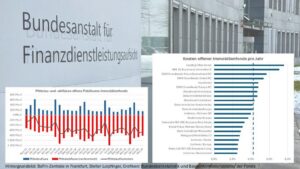
The debate gets even more interesting when you consider how official real estate data distorts risk and return perceptions. The charts that show German property prices quadrupling over decades often ignore the true costs of ownership, inflation-adjusted returns, and the illiquidity premium that makes real estate look better on paper than in reality.
The Flexibility Factor Nobody Talks About
Here’s what most financial discussions about renting versus buying miss: the value of optionality.
Kommer, at 63 with no children, doesn’t need the stability of a family home. But his logic extends beyond his personal situation. The flexibility of renting means you can pivot when life changes. A job opportunity in another city? You can move in three months. A relationship change? No complicated property division. A better apartment becomes available? You’re not stuck managing a sale.
Many expats and international residents understand this intuitively. They’ve watched German colleagues sink their entire savings into an Eigentumswohnung (condo) and then stress about every interest rate change, every renovation, every unexpected expense. The freedom of renting isn’t just financial, it’s psychological.
One financial forum participant put it well: there’s a fundamental difference between being forced to rent because you can’t afford to buy, and choosing to rent because you’ve calculated it’s the smarter move. Kommer made the calculation. The math works in his favor.
The Real Estate Fallacy: Owning Where You Live vs. Owning as an Investment
Here’s where things get genuinely interesting, and counterintuitive.
Many investors who advocate for real estate make a crucial error: they conflate owning property as an investment with owning the property they live in. These are fundamentally different propositions.
If you buy a rental property, you can deduct maintenance costs, interest, and depreciation from your taxes. You receive rental income. The property generates cash flow. That’s an investment decision with clear metrics.
But when you buy a home to live in, you’re consuming the shelter it provides. The financial returns are murkier. Your “rent” is the opportunity cost of your capital plus ongoing maintenance, and you can’t deduct any of it.
This ties directly into the debate between ETF investing and rental property ownership. The math often favors ETFs for pure investment purposes, especially when you factor in the German tax system’s treatment of capital gains versus real estate.
Some German investors have even discovered an unofficial hack: buy a property, rent it out to someone else, and continue renting yourself. The tax advantages of renting out property (Abschreibung, or depreciation deductions) make it more financially attractive than living in it yourself. One forum user shared how a colleague bought an apartment, rents it out, and is constantly amazed at how much money the state “gifts” him simply because he doesn’t live there.
The same property, invested in identically, produces wildly different financial outcomes depending on whether you live in it or rent it out. That’s not an argument for property ownership, it’s an argument for understanding how German tax law shapes investment decisions.
The Risk Dimension Everyone Ignores
Germans love Sicherheit (security). It’s practically a national value. And homeownership is often framed as the ultimate security, nobody can kick you out of your own home.
But is that true?
Consider the risk of a Eigenbedarfskündigung (landlord termination for personal use), the fear of every renter in Germany. This risk is real but often overstated. And crucially, it’s manageable when you have financial resources. As one commentator noted, the people who suffered from Eigenbedarfskündigungen are usually those with limited budgets and children, desperately searching for affordable housing in tight markets. That’s a problem of financial constraints, not of renting per se.
Meanwhile, owners face their own risks. A divorce in the middle of a mortgage with rising interest rates? A job loss when you can’t sell quickly because the market has shifted? The idea that ownership eliminates risk is a fantasy. It just changes the nature of the risks.
In Kommer’s case, his 70/30 portfolio (70% equities, 30% cash/money market ETFs) provides enough liquidity to handle any personal emergency. He could find a new apartment anywhere in the world tomorrow if he wanted to. His rental status isn’t a vulnerability, it’s a strategic advantage.
The Controversial Part: Inheritance Tax
If the renting stance wasn’t enough to spark controversy, Kommer went further in his AMA session, revealing views that even some of his fans find hard to swallow.
He wants to completely abolish inheritance and gift tax (Erbschaft- und Schenkungsteuer), arguing that it represents double taxation and that Germany’s approach is internationally unusual.
The reaction was mixed. Some critics point out that eliminating inheritance tax would accelerate wealth concentration and undermine democratic equality. Others counter that Germany’s current system has massive loopholes anyway, the super-rich often pay nothing while moderately wealthy families get hit hard.
One commenter made a sharp observation: Germany’s inheritance law already exempts business assets and real estate portfolios over a certain size, while ordinary families pay tax on inherited apartments or small businesses. Abolishing the tax entirely would be more honest than the current system of exemptions for the wealthy and burdens for the middle class.
Regardless of where you stand, Kommer’s willingness to voice controversial positions, even when they alienate potential clients, is part of what makes him credible. He doesn’t just follow popular opinion, he follows his analysis.
What This Means for You
Let’s be clear: Gerd Kommer isn’t saying everyone should rent. He’s saying the decision shouldn’t be made on emotion, tradition, or social pressure. It should be made on honest calculation.
If you’re a family with children who values stability and community, buying might be the right choice, even if the financial returns aren’t optimal. There’s real value in not worrying about landlords, in being able to renovate your kitchen without asking permission, in planting a garden that’s truly yours. That’s lifestyle consumption, not investment. And that’s okay.
But if you’re buying a home because you believe it’s “the only safe investment” or because “renting is throwing money away”, you’re operating on outdated assumptions. The numbers don’t support you. A diversified ETF portfolio historically outperforms German real estate, with more liquidity and lower costs.
Kommer’s portfolio, 70% stocks, 30% liquid reserves, zero real estate, is a living demonstration that a wealthy, sophisticated investor can choose renting without sacrificing wealth accumulation. In fact, he’d argue that renting enhances his wealth accumulation by keeping his capital deployed in higher-returning assets.
The Bottom Line
Germany has one of the lowest homeownership rates in Europe, and many see this as a problem. But maybe it’s not a problem, maybe it’s a rational response to a market where property prices have outpaced income growth, where transaction costs eat 10% of your capital, and where the tax system doesn’t favor owner-occupiers.
The cultural narrative that owning a home is the pinnacle of financial success needs an update. Gerd Kommer provides that update, backed by billions under management and the math to prove it.
So the next time someone tells you renting is “throwing money away”, ask them about their maintenance costs, their property transfer tax, their notary fees, their opportunity cost. Ask them if they’ve calculated the difference between their mortgage interest and what they’d earn in a global ETF.
Or just tell them about the wealthiest investor in Germany who rents his penthouse in Munich.
The silence will be deafening, at least until they find their next argument.