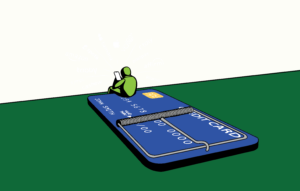

You’ve crunched the numbers. Your ETF portfolio is fat, your withdrawal rate is lean, and you’re mentally rehearsing the exact words you’ll say when you hand in your notice. “I’m pursuing financial independence”, you’ll declare, maybe with a slight smirk.
But here’s a question that rarely makes it into the FIRE spreadsheets: what happens to your credit card when you stop being a salaried employee?
The German financial system has a peculiar obsession with the monthly Gehaltsnachweis (salary statement). Banks, landlords, and even mobile phone companies treat it like a sacred artifact. And the moment you become a Privatier (person living off investments), that artifact disappears, along with your access to a shocking number of financial services.
I’ve watched friends hit this wall, and let me tell you, it’s not pretty. One friend with a seven-figure portfolio was denied a simple credit card because he couldn’t prove “regular income.” Another got rejected for an apartment despite offering to prepay a year of rent in advance.
So before you pull the trigger on early retirement, let’s talk about what you need to secure while you still have that salary. Because the German banking system operates with the same efficiency as a Deutsche Bahn train, usually impeccable, until there’s construction on the line.

The Credit Card Catch-22: You Need Income to Get Credit (But You’re Quitting Income)
Here’s the uncomfortable truth about the German credit card market: most traditional banks want to see a steady income before they’ll hand you a piece of plastic with a Visa logo on it. It doesn’t matter if you have €500,000 sitting in a broker account. The algorithm sees “no monthly salary” and flags you as a risk.
This is particularly maddening because kreditkarten comparison sites show how many excellent cards are out there. Cards like the Bank Norwegian Visa offer dauerhaft keine Jahresgebühr (permanently no annual fee), up to €10,000 in credit, and free withdrawals worldwide. But try applying for them after you’ve quit your job, and you’ll hit a wall.
The Bank Norwegian requirements are telling: they explicitly ask for “ein zu versteuerndes Einkommen” (taxable income). If your answer is “dividends and ETF sales”, you’re entering a grey zone. Some banks accept this if you can show consistent distributions, but many simply reject you at the first hurdle.
The Solution: Apply Before You Leap
The smart move is to secure your credit card lineup at least 6-12 months before your last day of work. This gives you several advantages:
During the application process, most banks ask for your most recent pay slips. Even if you’re planning to quit, those slips are still valid proof of income. Once you’re a Privatier, that window closes.
With a salary, you’ll typically get approved for a higher Kreditrahmen (credit limit). This is crucial because your credit limit becomes a key indicator of your creditworthiness for other services.
A card you’ve used responsibly for six months looks far better on your SCHUFA report than a card you’re applying for fresh. The SCHUFA (German credit bureau) tracks your credit behavior, and a history of on-time payments will help you secure housing and other services later.
Which Cards Should You Prioritize?
Not all credit cards are created equal. When you’re preparing for financial independence, focus on:
- Cards without Girokonto (checking account) requirements. As Bank Norwegian explains, these standalone cards give you maximum flexibility. You can settle the balance from any account you choose, and you’re not tied to a specific bank’s ecosystem.
- Cards with no foreign transaction fees. When you’re no longer earning a salary, travel becomes more common (or at least, more tempting). A card with 0% Fremdwährungsgebühren (foreign currency fees) will save you money on every purchase abroad.
- Cards with included insurance. Many premium credit cards come with travel insurance, rental car coverage, and purchase protection. Once you’re a Privatier, buying these separately gets expensive.
- Cards with revolving credit options. Not to use them, necessarily, but for the flexibility. A card that allows Teilzahlung (installment payments) gives you a safety net in emergencies.
The TF Bank Mastercard scores well in comparisons for its combo of no fees and included travel insurance. The Advanzia Mastercard Gold is another favorite for its permanent fee-free structure and impressive credit limits. And if you want something completely straightforward, the Easybank Visa, formerly Barclays, has long been the German FIRE community’s go-to.
The Apartment Problem: Rental Applications Without a Salary
Now here’s the thing that catches most future Privatiers completely off guard. You might think your hefty investment portfolio makes you a dream tenant. Landlords, in my experience, see it differently.
Most German landlords, especially the big housing corporations in cities like Berlin and Munich, want to see three things:
- A positive SCHUFA report
- Proof of regular income (usually your last 3 payslips)
- A clean Mietschuldenfreiheitsbescheinigung (certificate of no rental debts)
That second box is where you’ll struggle. “As international residents report, even a seven-figure portfolio often isn’t enough, landlords see ‘no salary’ and immediately mark you as a risk”, notes one long-time financial advisor I spoke with.
The Strategy: Move Before You Quit
If you’re planning to move apartments around the time of your retirement, here’s my blunt advice: do it before you quit. Many in the FIRE community have found it’s far easier to secure a new rental contract while you’re still employed, even if you plan to leave that job within weeks.
If you’re already in a rental you love, consider staying put for the first year or two of your early retirement. The Kaution (security deposit) is often the largest sum you’ll need to transfer, and doing that while still salaried avoids the “why no income?” interrogation.
And if you absolutely must move as a Privatier, some people suggest reframing how you describe yourself. The German word Privatier sometimes gets confused looks from housing company employees. Many find that presenting yourself as a “Berater” (consultant) or “Investor” makes conversations flow much more smoothly. Not dishonest, just more marketable.
Beyond Credit Cards: Other Services to Lock In
Credit cards and apartments are the two biggest friction points, but they’re not the only ones. Let me walk you through the full checklist I wish someone had given me before I made the leap.
1. Health Insurance (Krankenversicherung)
This one is non-negotiable in Germany. You’re legally required to have health insurance, and if you’re leaving a job, you need to figure out your post-employment coverage before you quit.
If you’re in a public health insurance (gesetzliche Krankenversicherung), you’ll likely transition to freiwillige Versicherung (voluntary insurance). The catch? Your contributions are calculated based on your total income, including capital gains and rental income. For a Privatier with a solid investment portfolio, this can get expensive quickly.
Private health insurance (private Krankenversicherung) is typically cheaper for healthy, younger retirees, but it’s notoriously difficult to switch into later in life. If you’re even considering private insurance, do your research years before quitting.
2. Mortgage Renewals and Refinancing
If you have a mortgage with a fixed interest rate, that Zinsbindung (interest rate lock period) will eventually expire. And when it does, you’ll want to refinance.
“Do it while you still have salary”, advises one mortgage broker who specializes in expat finances. “Banks are far more willing to negotiate rates with a current employee than with someone living off assets. Even if your portfolio is massive, they see ‘asset-based income’ as riskier.”
If you’re planning to stay in your current home for the long term, consider extending your mortgage’s fixed-rate period before you quit. It might cost a little more now, but it eliminates the stress of refinancing without a salary.
3. Loan Eligibility
Consumer loans, car financing (Leasing), and even small business loans follow the same pattern. The German financial system is built on the assumption that regular income = ability to repay.
If you’re thinking about buying a car, renovating your kitchen, or financing any major purchase in the near future, do it while you’re employed. The interest rates you’ll get with a salary will be significantly better than what you’ll face as a Privatier.
4. Mobile Phone Contracts and Subscriptions
This one surprises people. Many mobile phone providers in Germany offer their best deals only to customers who pass a SCHUFA check. And that check assumes you have a regular income.
Prepaid plans exist, sure, but they often lack the data allowances and features of contract plans. If you want that premium unlimited-data plan, secure it before you quit.
5. A Second Credit Card (Yes, Really)
OK, hear me out. Having a backup credit card is like having a spare tire, you hope you never need it, but you’ll be grateful it’s there. Many Privatiers keep one primary card for daily use and one backup card in a drawer for emergencies.
Some people even recommend a card from a completely different banking group, so if one bank decides to freeze your account (it happens!), you have options.
The Asset-Based Alternative: When Investments Become Your “Income”
Here’s where the situation isn’t as bleak as it seems. Some European banks have started recognizing that investment portfolios represent real financial stability. The trick is finding them.
“Your broker can be your best friend”, notes one Privatier who’s navigated this system for over a decade. Many banks in Germany now offer asset-based lending, where they evaluate your portfolio’s value and dividend yield instead of a monthly salary. Quality providers like Consorsbank, Trade Republic, and even the DKB have begun embracing this approach.
You’ll need to provide:
– Recent portfolio statements showing your asset values
– Documentation of dividend and distribution income
– A breakdown of your projected annual cash flow
Some banks have even started accepting a “portfolio pledge”, where you hand over a portion of your securities as collateral for a line of credit. It’s not for everyone, and you need to be careful about the risks, but it shows how the German financial system is slowly adapting to the rise of the Privatier class.
The Timing Question: How Many Months of Salary Should You Show?
Here’s a practical question that stumps many people: how many months of payslips should you have accumulated before applying for financial services?
The answer, based on my research and conversations with bankers, is typically six months. That’s the sweet spot most banks use to establish a pattern of “regular income.”
If you’re planning to quit in, say, eight months, this means you should already be applying for cards, loans, and credit facilities. Don’t wait until the last month, that looks desperate, and banks can sense it.
The European Alternative: Looking Beyond German Borders
One interesting workaround that’s gaining traction in the FIRE community is to secure financial services from non-German banks. Digital banks like Revolut, N26, and Qonto have more flexible eligibility criteria. Many don’t require a German salary at all, they’ll accept investment documentation or foreign income.
The catch? These banks often have lower credit limits, and their cards may not be accepted everywhere German cards are. But as a stopgap, or for travelers, they’re a solid backup.
The Hard Truth: Expect to Explain Yourself Forever
Here’s the reality you need to internalize before making the leap: you’ll spend the rest of your financial life explaining what “Privatier” means. Landlords will question it. Bank tellers will raise eyebrows. Credit approval algorithms will keep rejecting you.
Community advice on this is consistent: craft a title that makes people comfortable. “Investor” has a nice ring. “Consultant” works well. And yes, some people admit to having used “Berater” (advisor) for years with zero pushback.
It’s not about lying, it’s about communicating your financial reality in terms the German bureaucratic mind can process. Your investment income is your consulting revenue, in a sense. Framing it that way doesn’t change the facts, it just makes the conversation easier.
Your Pre-Quit Checklist: What to Do in the Next 12 Months
Let me leave you with a concrete action plan. If you’re planning to quit your job within the next year, here’s what I’d suggest you line up:
Month 1-3
- Apply for 2-3 high-quality credit cards while your salary is still on paper
- Check your SCHUFA report and resolve any issues
- Start researching health insurance options for your retirement status
Month 4-6
- If you have a mortgage, extend the fixed-rate period or refinance
- Secure any major loans you might need in the next 3-5 years
- Consider upgrading your mobile phone contract to a premium plan
Month 7-9
- Build your payment history: put recurring bills on your credit cards
- Negotiate a higher credit limit on your primary card
- Start cultivating your new professional identity (Investor, Consultant, etc.)
Month 10-12
- Final month of employment: move any remaining apartment or contract negotiations to completion
- Set up automated payments from your investment accounts
- Keep a copy of your final payslips and employment certificate (Arbeitsbescheinigung)
The Bottom Line
Financial independence isn’t just about having enough assets, it’s about maintaining access to the financial infrastructure that makes modern life work. In Germany, that infrastructure runs on salary statements.
The good news? This is entirely manageable if you plan ahead. The credit card you secure now will serve you for decades. The mortgage rate you lock in now will keep your housing costs predictable. The SCHUFA history you build now will open doors that would otherwise remain firmly shut.
Think of it like this: you’re not just building wealth for retirement. You’re also building the credibility systems that will let you actually enjoy that wealth.
So before you celebrate your last day of work, schedule one more appointment, with your bank. Your future Privatier self will thank you.