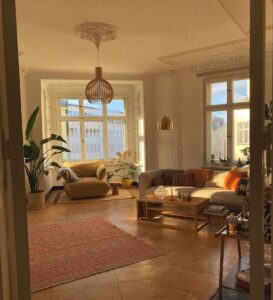
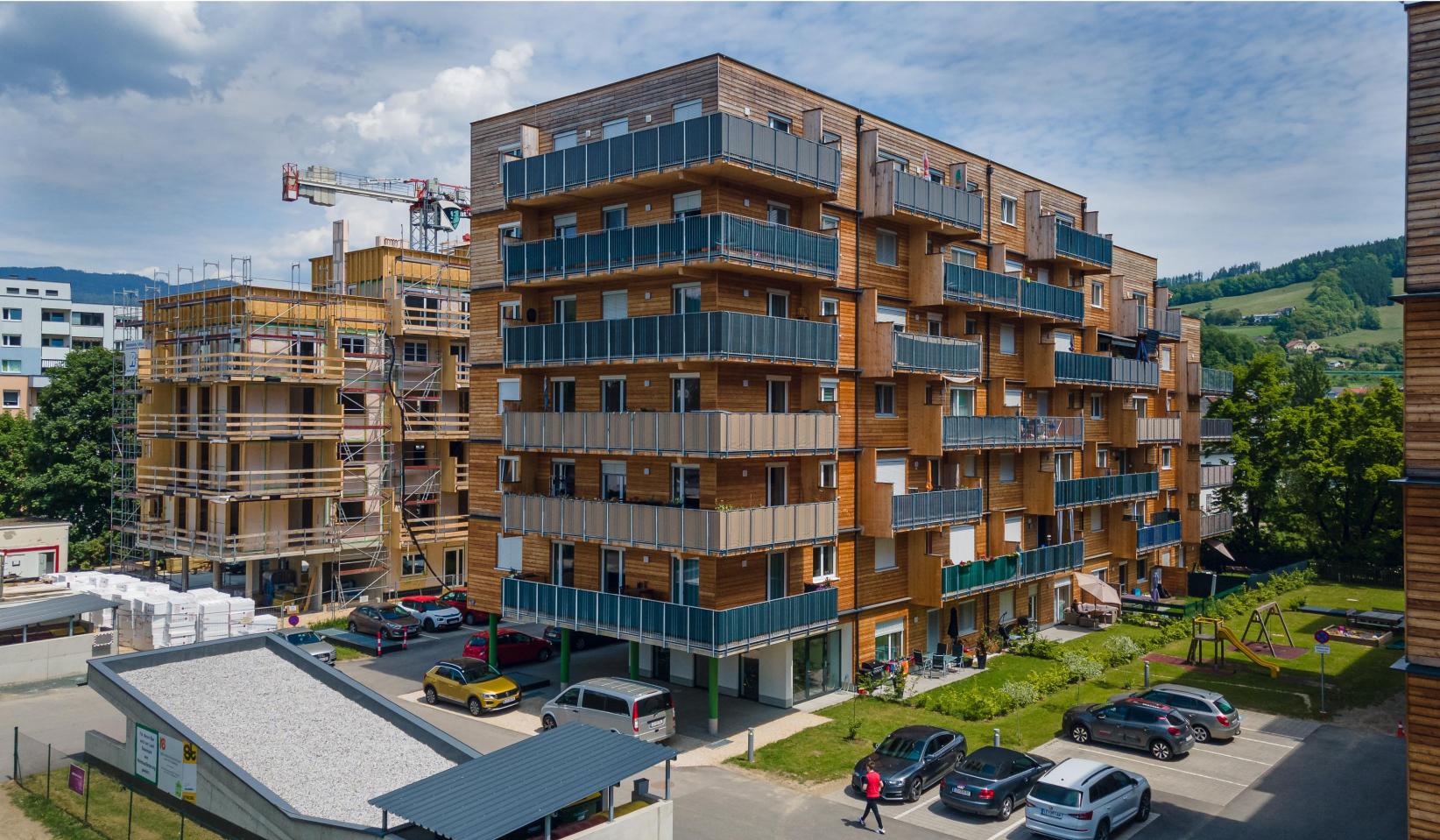
But here’s the thing, this is real, and it’s part of one of Austria’s best-kept housing secrets: the Genossenschaftswohnung (cooperative apartment). Around 460,000 Austrian households live in cooperative housing, paying rents that would make your friends in Munich or London weep with jealousy. The average cooperative rent runs about €5.20 per square metre, compared to €11.80 for a newly-signed private contract. That’s not a discount, that’s a different universe.
So what’s the catch? Why isn’t everyone in on this? And more importantly, can you actually get one?
The Cost-Rent Miracle, Explained
Before you start dreaming about that €561 flat, you need to understand why it exists in the first place. Austria’s cooperative housing system operates under something called the Wohnungsgemeinnützigkeitsgesetz (Limited-Profit Housing Act), which has been the backbone of affordable housing since 1979. The rules are deceptively simple: cooperative landlords must charge rents that only cover their actual costs, land, construction, financing, maintenance, and any surplus gets reinvested into building more affordable housing.
This isn’t charity. It’s structural. A cooperative built in the 1970s, like the Leoben listing, likely has its loan paid off by now. That means the rent drops to just cover ongoing maintenance and operating costs. The building might be older, sure, but you’re paying for the walls and the roof, not for someone’s yacht in Mallorca.
“When the financing is paid off, the rent drops significantly because the interest costs disappear”, notes one housing expert who’s been tracking this sector for years. “Older cooperative buildings often have substantially lower rents than new builds, even though they’ve been renovated using the Erhaltungs- und Verbesserungsbeitrag (maintenance and improvement contribution).”
That’s the magic of cost-rent: there’s no profit motive, no landlord squeezing you for maximum yield, no market forces pushing rent ever upward. Just the plain cost of keeping a roof over your head.
The Fine Print Nobody Warns You About
Now, before you start packing boxes for Leoben (or anywhere else, for that matter), let’s talk about the strings attached, because there are plenty.
The Upfront Capital Problem
The most obvious barrier? You usually need to buy in. Most cooperatives require a Geschäftsanteil (membership share) that can run anywhere from a few hundred to several thousand euros. One listing for a similar 75m² cooperative apartment in Leoben asks for over €12,000 in what’s called a Finanzierungsbeitrag (financing contribution). That’s not a deposit you get back when you leave, it’s money that gets “used up” over time, often at a rate of 1% per year. In theory, after 100 years, it’s completely gone.
The good news? The €561 listing only requires €100 for membership plus roughly €1,600 as a Kaution (deposit). The bad news? This is the exception, not the rule. That €12,000 figure is closer to what you’ll face with many cooperatives, especially newer builds.
Location, Location, Location
Here’s the dirty secret of cooperative housing: the best deals are often in places people don’t want to live. That Leoben apartment is cheap partly because Leoben, a charming but sleepy town in Styria, isn’t exactly bursting with job opportunities. The rental vacancy rate in Austria sits at just 1.2%, but much of that is “structural” vacancy in shrinking Alpine valleys. This isn’t necessarily a bad thing, if you work remotely or in local industries, you could score an amazing deal, but it’s worth asking yourself why the cooperative had to advertise publicly at all rather than working through their waiting list.
Speaking of Waiting Lists…
Here’s the thing about those amazingly cheap cooperative apartments: they rarely make it to public listings. Most cooperatives maintain Vormerkungen (reservation lists) with hundreds of eager applicants waiting for a unit to open up. When someone moves out, which happens far less often than in the private market because, honestly, why would you give up a €561 apartment?, the new tenant usually comes from that list, not from Willhaben.
The fact that this Leoben apartment was publicly listed is, by many accounts, genuinely unusual. Someone familiar with the local market called it “rather the exception” because “there are usually enough reservations on file.” Translation: cheap cooperative apartments exist, but catching one in the wild is like spotting a unicorn.
The 60% Catch: Who Actually Qualifies?
Here’s a number that might surprise you: approximately 60% of Austrian households would qualify for limited-profit housing based on income grounds. That’s the good news, the gate isn’t as narrow as in other countries where social housing is strictly for the very poor.
But that 60% figure cuts both ways. It means you’re competing with two-thirds of the country for a limited supply of units. In Vienna, with its famous Gemeindebau (municipal housing) and cooperative developments like Wohnprojekt Wien or the new aspern Seestadt district, demand massively outstrips supply. The system works beautifully if you’re already in, getting in is the challenge.
And there’s another layer to consider: cooperative housing tends to favor those who have been members longest. Seniority matters. If you’re new to Austria, new to the system, and new to the waiting lists, you might be years away from actually getting a unit, regardless of your income level.
“[Cooperative housing] delivers breadth, a quarter of all homes priced below the market, rather than a residual safety net for the very poorest”, notes one analysis of cost-based social housing systems. “The model’s strength is its scale and durability, its blind spot is the household that cannot raise the entry share at all.”
The Burgenland Factor: When Policy Actually Works
If you want to see what happens when cooperative housing becomes the default, look at Burgenland. Austria’s easternmost state has the highest share of cooperative housing in the country, over 70% of rental units, and it shows in the prices.
Recent Statistik Austria data shows Burgenland leading the nation with an average rent of just €7.65 per square meter, including operating costs. Compare that to Salzburg’s €12.17 or Tyrol’s €12.02, and you start to understand why politicians like SPÖ housing spokesman Kilian Brandstätter call this “the result of political decisions.”
The difference is meaningful: for a 70m² apartment, living in Burgenland instead of Styria saves you over €150 per month, that’s €1,820 a year going back into your pocket instead of a landlord’s. Cooperative housing isn’t just an abstract policy idea, it’s literally more grocery money, more restaurant dinners, more savings for your ETF portfolio.
The 2025 Mietpaket Shake-Up
Just when you thought you understood the system, the rules changed. In December 2025, Austria passed its most significant tenancy reform since 2006, the Mietpaket (rental package). For the first time, the state is capping rent increases in the previously unregulated free-rent segment, where increases are now limited to inflation up to 3%, with only half of any excess beyond that.
What does this mean for cooperatives? Surprisingly little directly, since cooperative rents are already cost-based rather than market-based, there’s no excess profit to cap. But indirectly, it’s a game-changer. By dampening rent increases in the private sector, the Mietpaket reduces the pressure on the cost-rent sector to accommodate everyone who can’t afford market rates. It also extends minimum lease terms from three to five years, giving tenants more stability.
Yet here’s where it gets interesting: the same rent caps that protect tenants also limit the surplus cooperatives can generate for new construction and renovation. With construction costs up over 20% since 2020 and interest rates having spiked from 0% to 4.5% between 2022 and 2023, the sector is caught in a squeeze. The very affordability that makes cooperatives attractive is becoming harder to fund.
One sector representative put it bluntly: the 2024-26 rent-break, which caps even cost-rents at 5% annual increases, “reduces the funds limited-profit landlords have for new construction and renovation.” Translation: the system that delivers those €561 apartments is under financial strain, and the medium-term outlook for new supply is uncertain.
So, Is It Actually a Bargain?
Here’s my honest take after digging through all the numbers, the regulations, and the real-world experiences of people who’ve been through this system.
Yes, it’s a genuine bargain. The average cooperative rent of €5.20/m² versus €11.80/m² for new private contracts isn’t marketing hype, it’s structural, built into the legal framework of the WGG (Limited-Profit Housing Act). If you can secure a unit, you’re effectively getting housing at 40-45% of market rates.
But it’s a bargain with heavy transaction costs. The upfront capital requirements (anywhere from €100 to €12,000+), the waiting lists, the bureaucratic application process, and the relative scarcity of units in desirable locations mean you’re not just walking in and signing a lease. It requires patience, capital, and often a willingness to live outside the major urban centers.
And it’s a bargain that’s under threat. The financing squeeze, the Mietpaket caps, and lingering construction cost inflation mean cooperatives are building less, renovating more slowly, and finding it harder to maintain their cost-rent obligations. The model isn’t broken, but it’s showing cracks.
What Should You Actually Do?
If you’re convinced cooperative housing is worth pursuing, and I think for many people it is, here’s your practical playbook:
- Get on every waiting list you can find. Contact cooperatives directly in areas you’re interested in (even if you’re not ready to move yet). The GBV (Austrian Federation of Limited-Profit Housing Associations) maintains a list of member organizations. Some, like Sozialbau AG or Wien-Süd, are major players with extensive portfolios.
- Read the fine print on capital contributions. That €100 membership might sound great, but it could also mean higher monthly costs or fewer amenities. Conversely, a high Finanzierungsbeitrag might buy you a share in a building with better long-term prospects. Know what you’re getting into.
- Consider location trade-offs. If you’re flexible about where you live, or work remotely, cooperative housing outside Vienna’s core can be life-changingly affordable. The Burgenland model proves that policy can keep rents reasonable, and there are apartment-hunters who’ve found incredible deals in places they’d never initially considered.
- Weigh the opportunity cost. That €12,000 you could tie up in a Genossenschaftswohnung is €12,000 you’re not investing elsewhere. For some people, the ETF-versus-cooperative-ownership question is genuinely complex, rental savings versus portfolio growth. For others, the stability and predictability of cooperative housing outweighs everything else.
- Be patient but persistent. Cooperative housing is a long game. You might spend years on lists before a unit opens up. The people who succeed are the ones who started early, stayed organized, and were ready to act when opportunity appeared.
Cooperative housing in Austria is one of the most successful affordable housing models in Europe, arguably the world. It has kept rents reasonable for over a century, provided stability for hundreds of thousands of households, and demonstrated that housing doesn’t have to be a speculative asset. The question isn’t whether it’s a bargain, it’s whether you can navigate the system to get one.
That €561 apartment in Leoben isn’t a scam. It’s not a mistake. It’s a window into a housing system that works differently, one that prioritizes living costs over investment returns. The real “catch” is that it’s embedded in a bureaucratic, conservative, and often slow-moving sector that doesn’t always reward the impatient.
But here’s the thing worth remembering: in a country where decades of policy decisions have turned apartments into investment portfolios, the cooperative model remains the exception that proves the rule. It’s proof that affordable housing isn’t a fantasy, it’s a policy choice.
And for the right person, in the right situation, with the right expectations? That €561 apartment might just be the best financial decision you ever make, even if it does take you three years to actually get it.