
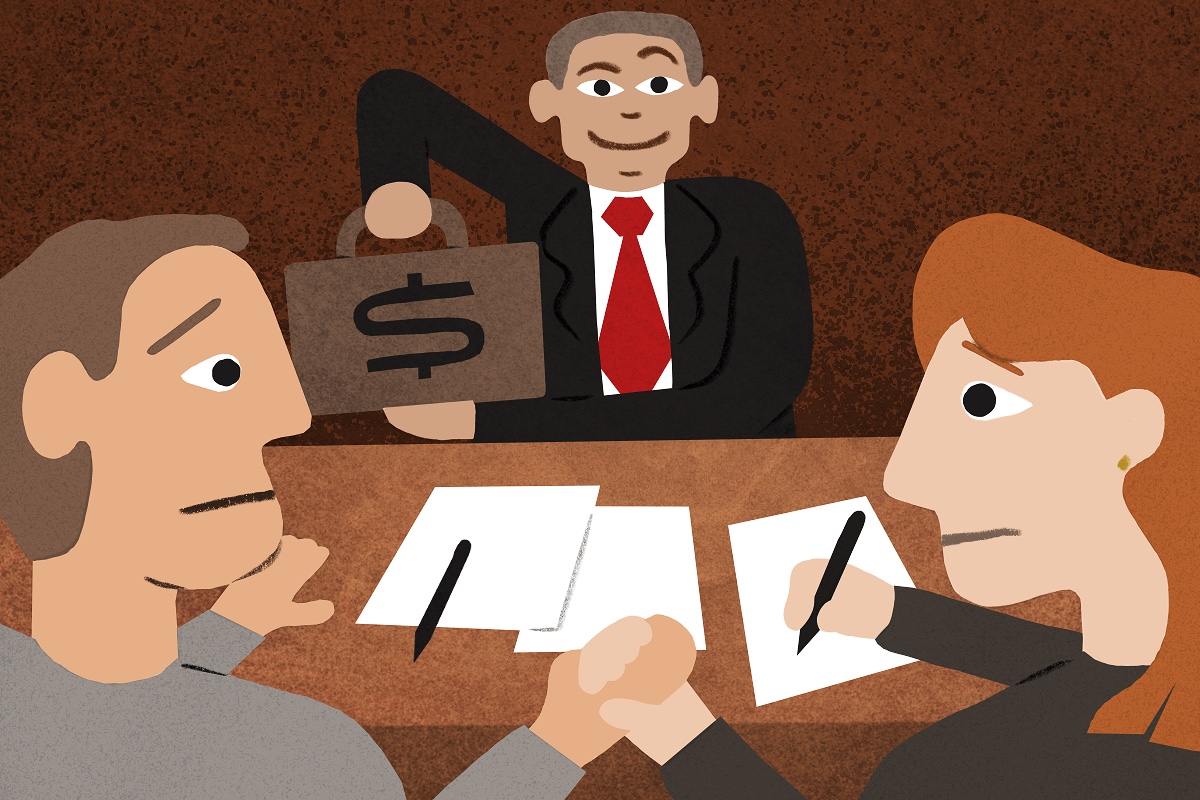
You’ve just received your annual tax assessment and there it is: a bill for €450 from your tax advisor, who you’re pretty sure just typed your Lohnsteuerbescheinigung (wage tax certificate) into a software program. Meanwhile, your colleague proudly claims they did the same thing with a free tool and got a bigger refund.
The question gnaws at you: did you just throw that money away, or did you actually get value for it?
I’ve sat on both sides of this table. As someone who writes about German finances daily, I’ve watched countless people agonize over whether to hire professionals or go full DIY. The financial advice industry in Germany has a trust problem, and frankly, it’s earned it. But that doesn’t mean every paid service is a rip-off.
So when does paying for expertise actually make sense, and when are you just funding someone’s commission-driven holiday home?
The Tax Advisor Trap: When “Professional Help” Is Just Data Entry
Let’s start with the most common financial service in Germany: the Steuerberater (tax advisor). For many international residents, the German tax system feels like a bureaucratic labyrinth designed by someone who genuinely enjoys paperwork. The Anlage N, the Sonderausgaben, the confusing rules about what counts as a Werbungskosten (work-related expense), it’s enough to make anyone reach for professional help.
But here’s the uncomfortable truth: if you’re a standard employee with one job and no side hustles, a tax advisor might be the most expensive redundancy you can buy.
This sentiment echoes through German personal finance circles. Many people report paying once for a tax advisor and discovering the results were no better than what they got with a €30 tax software program like WISO. The standard deductions, the pauschalen (lump sums), the common write-offs, all of this is effectively automated now. As one observer noted, many tax advisors will literally send regular employees away because there’s nothing for them to do.
That’s not to say the profession is useless. Far from it. But a tax advisor is meant to navigate you through the minefield of German tax law, not to magically reduce your tax burden. If all your income comes from a single employer, the minefield is basically a flat parking lot with clearly marked paths.
Where it gets genuinely valuable: self-employment, property ownership, foreign investments, inheritance matters. If you’re juggling multiple income streams or complex assets, a good advisor can save you more than they cost. One reader recounted how the only time professional tax help paid off was when they challenged a decision with the Finanzamt (Tax Office) and ended up with a six-figure settlement.
Honorarberatung vs. Provision: The Honest Broker Problem
Now let’s talk about the more controversial territory: financial advice. Over 99 percent of financial advisors in Germany work on commission, which means they get paid when you buy a product. This creates what critics call a structural conflict of interest, not necessarily greedy people, but a system that rewards selling you stuff over helping you.
The math is sobering. Studies suggest German investors lose approximately €98 billion annually to commission-based financial products through hidden costs and underperformance. That’s about €2,400 per household, every single year. This loss doesn’t come from malicious advice, it comes from expensive products like fonggebundene Rentenversicherung (unit-linked pension insurance) that eat up 2-3.5 percent of your returns annually in various fees.
Consider this: if you invest €200 monthly for 30 years in a fund and pay 2 percent in yearly costs, you’ll end up with over €50,000 less than someone who invested in the exact same fund directly. Fifty thousand euros, gone, not because the product was bad, but because the cost structure was designed to enrich the intermediary.
This is why the Honorarberater (fee-based advisor) concept has gained traction. Instead of commissions, you pay directly for their time and expertise, typically through hourly rates, flat fees, or a percentage of assets under management. The logic is simple: a financial advisor who earns from advice, not products, has no incentive to push you into whatever pays them the most.
But, and this is a big but, the term “Honorarberater” isn’t legally protected. Anyone can slap that label on themselves. In fact, some so-called fee-based advisors still pocket commissions on the side. If you’re considering this route, you need to check for specific licenses (Zulassung): Section 34h of the Gewerbeordnung (Industrial Code) for fee-based investment advisors, or Section 93 of the Wertpapierhandelsgesetz (Securities Trading Act) for independent fee-based advisors. And verify these credentials in the official BaFin or DIHK registers, not just on the advisor’s marketing page.
Even Stiftung Warentest (the German consumer watchdog) has warned that some industry associations, which purported to certify independent advisors, regularly referred to firms whose founders were connected to the association itself. The independence industry has its own conflicts.
The Real Cost-Benefit Analysis: What Are You Actually Buying?
Before you hand over money to any financial professional, ask yourself what you’re actually buying. There are three distinct products, and they’re not the same:
Data processing: Someone files your forms, checks boxes, and sends documents. This is increasingly automated and increasingly cheap. Using ELSTER (the free government tax portal) or software like WISO can accomplish this for a fraction of a professional’s fee. A tax advisor or an online tax platform can be worth it for complex filings, but for a standard German employee, you’re often paying for convenience rather than expertise.
Expertise: This is the knowledge that comes from years of dealing with edge cases, understanding the latest court rulings, and knowing which strategies work in practice versus theory. This is valuable when you’re making decisions with lasting consequences, buying a property, starting a business, navigating an inheritance, or dealing with cross-border tax issues. This is where professionals earn their fees.
Peace of mind: Sometimes the value isn’t mathematical. It’s the relief of knowing someone competent is handling your finances, keeping track of deadlines, and dealing with the Finanzamt on your behalf. If you hate spreadsheets, if financial paperwork triggers anxiety, or if your time is genuinely worth more than the advisor’s fee, this can justify the cost even when the math alone doesn’t.
When the Answer Is “Do It Yourself”
Let me be practical here. For most international residents in Germany with straightforward employment income, the DIY approach makes sense:
- Tax returns: Use ELSTER directly or a reputable software program. The learning curve is manageable, and you’ll gain understanding that makes you better at financial decisions overall. If you get stuck, a one-time consultation with a specialist is far cheaper than an ongoing mandate.
- Standard investments: An ETF-Sparplan (ETF savings plan) at a low-cost broker accomplishes what most advisors would recommend for long-term wealth building, at a fraction of the cost of managed products.
- Basic insurance decisions: Germany’s mandatory insurance lines (health, care, liability) are relatively standardized. Comparison websites can help you make informed choices without paying a middleman.
And When It’s Worth Opening Your Wallet
Professional help starts to justify its cost when your financial life becomes genuinely complicated.
That includes a property purchase. The first-time homebuyer process in Germany involves notarization, Grundbuch (land registry) entries, and tax implications that can compound errors. A real estate specialist or tax advisor who knows specific regional rules can save you significant money.
Self-employment is another obvious trigger. If you’re freelancing or running a Gewerbe (registered business), the complexity of Umsatzsteuer (VAT), quarterly filings, and business expense rules makes professional support almost indispensable. One mistake can cost more than a year’s worth of advisor fees.
Likewise, investment coaching might be defensible if you’re starting late with significant assets and need to avoid common expensive mistakes. Just be careful about what you’re buying. A coach who teaches you to self-direct your investments might be worth the cash, one who “manages” your portfolio for you is just an expensive salesperson with extra steps.
There’s also the risk mitigation angle. The German financial system does not offer second chances on a lot of things, a missed deadline can result in penalties, an incorrect declaration can trigger an audit, and so on. If you’re dealing with anything unusual, a professional who can help you structure decisions properly from the start is worth careful consideration.
The Bottom Line: Pay for It Only If It Buys You Something You Can’t Get Yourself
The German financial advice industry has serious structural issues. The commission-based model creates conflicts that no amount of individual good intentions can paper over. The title protection for Honorarberater is insufficient, and the industry’s attempts at self-regulation have proven unreliable.
But this skepticism shouldn’t slide into blanket refusal to ever pay for expertise. Some services genuinely deliver value that exceeds their cost. The key is to be brutally honest about what you’re buying.
If you’re paying someone to process paperwork, get the cheapest person (or software) who can file it correctly. If you’re paying for expertise, demand it, ask for specific examples of how they’ve saved clients money, check their credentials carefully, and verify their independence with your own research. If you’re paying for peace of mind, acknowledge that upfront and negotiate accordingly.
And remember: financial literacy is an investment with infinite returns. Every hour you spend learning how taxes and investments work in Germany is an hour that compounds into savings. The high cost of financial illiteracy isn’t limited to Austria, it’s a regional epidemic. Understanding the basics yourself puts you in a position to evaluate advice, spot red flags, and negotiate from strength.
If you’re still unsure whether professional advice is right for your situation, try the middle path. The willingness to compare options before committing is the most valuable financial skill, and starting with free consultations often costs nothing. European advisory platforms can help you connect with vetted professionals, and your initial discovery call will tell you a lot about someone’s actual value.
Just remember: no one will ever care as much about your money as you do. When financial advice is worth the cost, it’s because you’ve hired a specialist to augment, not replace, your own financial judgment. The advisors who shift your own responsibility are the most expensive professionals of all.
And if you want a deeper dive into just how much commission-based structure costs you, check out what your financial advisor isn’t telling you. It may just be the most important homework assignment you get all year.