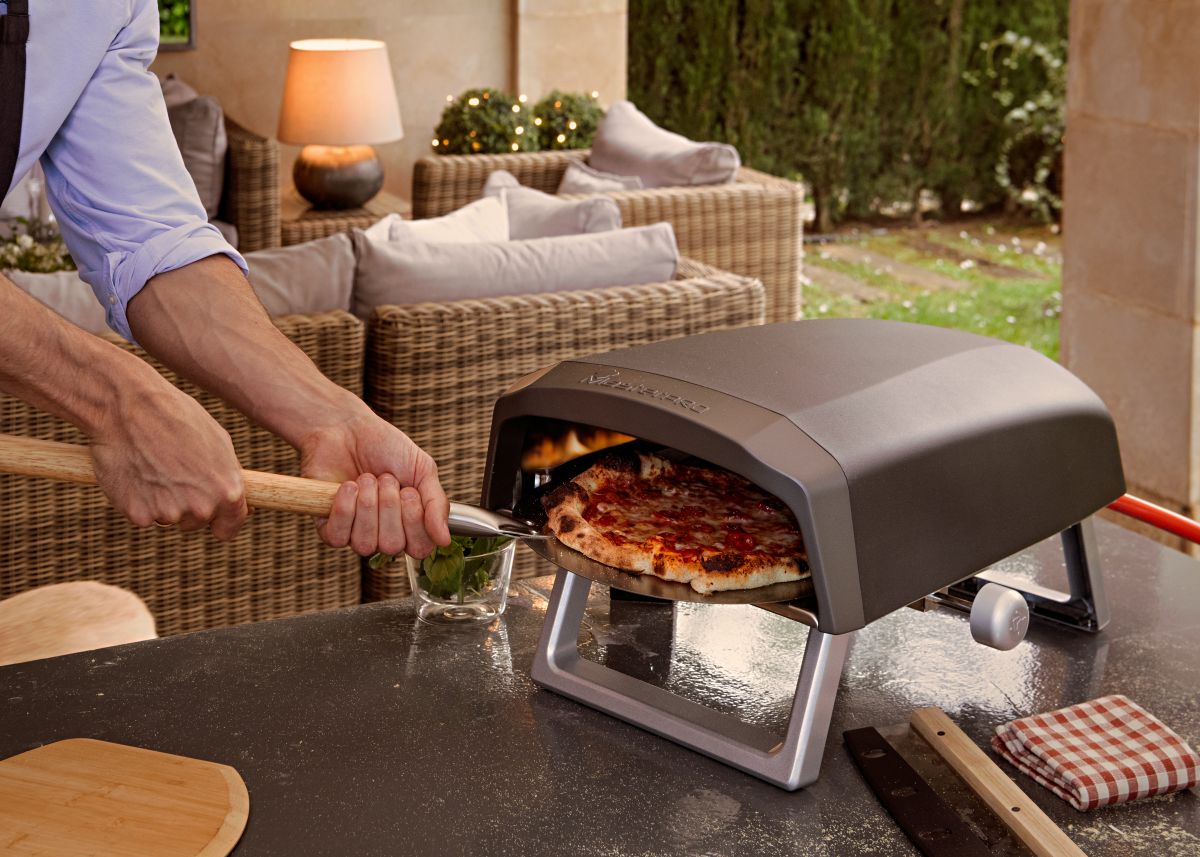
Picture this: It’s a Sunday afternoon in rural Germany. The local “Italian” restaurant serves pizzas that taste like cardboard with a side of regret, and the nearest decent option is a 40-minute drive. You’ve got a proper home oven, a decent dough recipe, and a growing list of neighbors who’d kill for a real margherita.
What do you do?
If you’re the Reddit user behind one of the most heated threads on r/Finanzen this week, you quietly set up a pre-order pizza operation, park a donation box next to the oven, and pull in €1,410 over the summer, completely off the books.
The post sparked a firestorm. Over 1,000 upvotes, 83 comments, and a debate that touches everything from food safety regulations to the soul of rural economics. But here’s the question nobody can answer cleanly: Is this brilliant grassroots entrepreneurship or just well-disguised tax evasion?

The Numbers Behind the Pizza Empire
Let’s break down what this amateur pizzaiolo actually built:
- 15 bake days across the summer
- 20 pizzas per session = 300 total
- €1,800 in “donations” at a suggested €5 per pizza
- €390 in ingredient costs (about €1.30 per margherita)
- €1,410 net profit, tax-free
Not bad for a hobby. The oven and mixer paid for themselves within the first year, and the neighbors showed their appreciation in the most German way possible: by gifting wine. The operator reported zero grocery bills all summer because thank-you wine replaced his personal consumption entirely.
But here’s where it gets interesting. The setup carefully avoided a fixed price list. Instead, a donation box sat beside the oven with a suggested contribution of €5 per pizza. In theory, there’s no “profit intention”, just a hobby that happens to recover costs with a bit extra.
The Reddit post’s author called this “local village compliance”: Wo kein Kläger, da kein Richter, where there’s no plaintiff, there’s no judge.
The Legal Gray Zone: What’s Actually Allowed?
Germany doesn’t have a simple threshold for when a side hustle becomes a business. The Sparkasse’s guide to Nebenverdienst (side income) makes this crystal clear: there’s no fixed earning limit where you can work without registration.
However, the reality is more nuanced. Here’s where the tax-free thresholds for Nebeneinkünfte (additional income) come into play:
Self-employed side income up to €410/year: You don’t even need to file a tax return
Between €410 and €820/year: You must file, but a hardship adjustment (Härteausgleich) kicks in
Above €820/year: Full taxation applies
Our pizza entrepreneur blew through that €410 threshold in about four bake days. By the end of summer, he was sitting on €1,410 of untaxed profit. That’s not a gray zone anymore, that’s just not declaring income.
But wait, there’s more. For commercial activities in Germany, there’s also the Gewerbeanmeldung (business registration) requirement, plus potential Umsatzsteuer (VAT) considerations. The Kleinunternehmerregelung (small business owner regulation) allows businesses under €25,000 annual turnover to skip VAT, but that still requires registration.
And then there’s the food safety dimension. Germany has strict regulations about commercial food preparation for a reason. The comment section didn’t hold back on this point: as one user noted, everything’s fine until someone gets food poisoning from an unregulated home kitchen. The same user pointed out that the reason real restaurants charge €12+ for a margherita isn’t greed, it’s overhead. Taxes, insurance, health regulations, rent, staff. All the things our home pizza operation conveniently skipped.
The “Donation” Loophole: Clever or Criminal?
The donation box strategy is the most legally dubious part of this whole operation. In German tax law, there’s a critical distinction between a Spende (donation) and Entgelt (payment for services).
If you’re providing pizzas in exchange for money, even voluntary money, that’s generally considered income, not a gift. The suggested price of €5 creates an expectation of payment. The fact that it’s framed as a donation doesn’t change the economic reality: people are paying for food.
This is precisely the kind of informal arrangement that German tax authorities (Steuerfahndung) can and do investigate. Just ask the Chinese restaurant operator in the Werra-Meißner district who got three years in prison for manipulating his cash register and hiding €1.4 million in revenue over 12 years.
Now, obviously, there’s a massive difference between hiding €1,400 from a village pizza hobby and systematically defrauding the state of millions. German courts process around 5,600 tax evasion convictions per year, and the vast majority are for amounts far smaller than a restaurant empire.
But here’s the uncomfortable truth about the “village compliance” model: it works until it doesn’t. One disgruntled neighbor, one envious local restaurateur, or one unlucky health inspection is all it takes to turn a cozy side hustle into a legal nightmare.
The Case FOR the Informal Economy
Let me play devil’s advocate for a moment, because the comment section raised some genuinely compelling points.
Rural Germany has a service problem. When the closest decent restaurant is 30 kilometers away, home-based micro-businesses fill a genuine void. One commenter described this as “grassroots small business that benefits everyone” and argued that such initiatives could help solve structural problems in rural areas.
The scale doesn’t harm anyone. €1,410 over a summer isn’t exactly undercutting the local pizzeria. The established “Italian” restaurant in the village survives because it serves a different function: convenience, seating, and consistency. Nobody’s choosing between a home-baked pizza and the restaurant for their anniversary dinner.
The community benefits. The provider gains extra income, neighbors get better pizza than the local alternative, and the social fabric of the village strengthens. The wine gifts alone suggest this created genuine social capital. Many commenters shared similar stories from their own villages, describeing arrangements ranging from Christmas market stalls run by local clubs to communal food-sharing initiatives.
There’s a cultural tradition here. One commenter described how their village runs an entire Christmas market through volunteer structures, with all proceeds going to local clubs and children’s activities. The line between “hobby” and “business” has always been blurry in rural Germany.
This isn’t just a German phenomenon. Across Europe, similar informal workarounds in rural economies exist, sometimes out of necessity, sometimes out of preference. The financial pressures that push people toward informal economies aren’t unique to Germany either.
The Case AGAINST: Where It Gets Ugly
Now let me argue the other side, because the comment section didn’t hold back here either.
The free-rider problem. As one commenter pointed out, if the pizza operation scales up, say, to €1,400 per month instead of per summer, the operator might decide to reduce their main job hours. That means paying less into the social security system while still claiming benefits if things go wrong. The health insurance contributions (Krankenversicherung) are based on declared income. Undeclared income means underfunded public systems.
The food safety risk. This is the point that gives me genuine pause. German food regulations exist because people have died from improperly handled food. Commercial kitchens undergo routine inspections precisely because home kitchens don’t follow the same standards. One commenter put it bluntly: “Everything’s fine until someone gets food poisoning.” If a pizza from an unregulated home kitchen makes someone sick, the operator faces liability they’ve never considered, and their homeowners’ insurance almost certainly doesn’t cover commercial food operations.
The unfair competition angle. The established pizzeria pays taxes, follows health codes, carries insurance, and employs staff. A home operation with none of those costs can undercut prices while pocketing more profit. One particularly sharp commenter summed it up: “Everything is cheaper and easier when you do it (a) under the table and (b) don’t have to live off it.”
The escalation problem. Right now it’s €1,400 from pizza. But what happens when the dough recipe gets famous? When the village starts ordering 50 pizzas? When someone suggests opening a food stall at the local festival? The line between “hobby” and “business” shifts, and what starts as a charming side hustle can become a serious legal problem.

The Middle Path: What Would Actually Be Legal?
Here’s the thing, there are legitimate ways to run this exact operation that don’t require diving into the gray zone:
Option 1: The Verein (club) model. One commenter described how their village operates a Christmas market through a registered club structure. Food sales happen under the club’s umbrella, with proceeds funding community activities. This provides legal cover, tax advantages, and liability protection. The key difference: the operator doesn’t personally profit beyond cost recovery.
Option 2: Proper registration. A Gewerbeanmeldung (business registration) costs around €20-60 depending on the municipality. With the Kleinunternehmerregelung (small business regulation), you don’t need to charge VAT until you hit €25,000 in annual revenue. The tax burden on €1,410 profit would be minimal, likely under €200. This also gives you legal protection if someone gets sick or complains.
Option 3: Treat it as a hobby with strict cost recovery. If you genuinely only charge for ingredients and not labor, say, €2-3 per pizza covering exact material costs, you can argue there’s no profit intention. But as soon as you add a “suggested donation” of €5 on top of €1.30 in ingredients, you’ve left hobby territory.
Option 4: The Ehrenamt (volunteer) route. If the pizzas are sold for a local cause, say, the fire department or sports club, the Ehrenamtspauschale (volunteer allowance) allows up to €840/year tax-free (€3,000 for certain coaching/educational roles). This requires the money to go to the organization, not your pocket, but it’s a legitimate framework.
The Real Question: What Does This Say About German Rural Life?
Stepping back from the legal weeds, this entire debate reveals something important about life outside German cities. The demand for this pizza existed because the market wasn’t serving the community. The village restaurant charges €7.50+ for mediocre pizza because it has overhead costs. Nobody’s opening a quality pizzeria in a village of 300 people because it wouldn’t be profitable, without the informal economy, those villagers simply have no good options.
This isn’t unique to pizza or to Germany. It’s the same logic that drives informal workarounds in rural economies across Europe. When formal markets fail to serve a community, informal markets emerge.
The comment section captured this tension perfectly. One user praised the initiative as solving structural problems in rural areas. Another warned that if the operation scales up, “working time in the main job gets reduced, health insurance contributions drop, but taking advantage of public services continues.” Both are right.
What Should You Do If You’re Considering This?
If this story inspired you to start your own home-based food operation, here’s my honest advice:
-
Check your employment contract. Many German employment contracts require employer approval for additional income-generating activities. Violating this can cost you your main job, which would make that €1,400 summer much more expensive.
-
Talk to the Finanzamt (Tax Office). You don’t need to provide your name. Call and ask about the rules for “gelegentliche Tätigkeit” (occasional activities). The 410-Euro threshold is real, but so is the registration requirement.
-
Consider liability insurance. If you’re selling food, you need a Betriebshaftpflicht (business liability insurance). Your private Haftpflicht (personal liability insurance) almost certainly doesn’t cover commercial food sales.
-
Think about the escalation risk. The village pizza operation works because it’s small and everyone knows everyone. But the moment someone outside your circle gets hurt, or the Finanzamt gets notified by an unhappy competitor, the calculus changes completely.
-
Consider the legitimate alternatives. A Gewerbeanmeldung costs less than you’d make from two pizzas. The paperwork is manageable. And you’ll sleep better knowing you’re not one bitter neighbor away from a Steuerfahndung (tax investigation) visit.
The Bottom Line
The village pizza operation is a perfect case study in Germany’s relationship with informal work: bureaucratically overregulated, culturally tolerated, and legally ambiguous. It works exactly until it doesn’t, and the threshold for “doesn’t work” depends entirely on whether anyone complains.
The Reddit poster is likely fine. The village benefits, the neighbors are happy, and the scale is too small to attract serious attention. But the system that makes this operation legally gray also creates the conditions where a restaurant operator in the next district spent 12 years manipulating his cash register before getting caught.
Germany’s informal economy is a parallel universe where village compliance replaces bureaucratic compliance, and word-of-mouth replaces Gewerbeanmeldung (business registration). It works for the community, but it exists because the formal system has failed to adapt to rural realities.
So yes, the pizza was probably delicious. The wine gifts flowed. And next summer, the oven will fire up again, right up until the day it doesn’t.