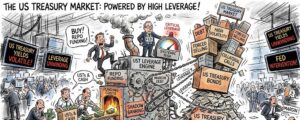

The Next Financial Crisis Is Already Brewing in Your Portfolio
You’re staring at your portfolio on a Tuesday evening in Munich, watching your supposedly “safe” global ETF bleed red. Your Sparkasse advisor told you diversification would protect you. Yet here you are, losing money on American software stocks you’ve never heard of, while the Iran-Krieg (Iran war) drives up your heating costs and the Finanzamt (Tax Office) is already sharpening its pencils for next year’s Steuererklärung (tax return). Welcome to 2026, where the next financial crisis isn’t coming, it’s already sitting in your living room, eating your chips.

The scary part? Most German investors don’t see it because it doesn’t look like 2008. There are no crowds outside Lehman Brothers. Instead, the crisis is hiding in three places: the shadowy private credit markets financing your SaaS subscriptions, the concentrated AI bubble propping up your index funds, and the geopolitical tinderbox that could torch the whole thing before the EZB (European Central Bank) finishes its Kaffeepause (coffee break).
The Private Credit Time Bomb Nobody Talks About
Remember when Basel III regulations made traditional banks “safer”? Mission accomplished, if you ignore where all the risk actually went. The smart money moved to Private Credit (private credit), an unregulated $3 trillion market where hedge funds and shadow banks lend directly to companies. No oversight, no transparency, no problem, until there is.
Here’s the kicker: these shadow lenders have pumped over $500 billion into software companies since 2015. Your Adobe subscription, your Slack workspace, your company’s cloud storage, much of it runs on debt held by funds like Blue Owl, Apollo, and Blackstone. When Jamie Dimon says he’s seeing banks do “dumme Dinge” (stupid things) again, this is what he means. The same reckless lending that killed Lehman is alive and well, just wearing a different Anzug (suit).
The numbers are already flashing red. Blue Owl’s stock crashed 40% this year. Investors are trying to pull money from these funds, but there’s a catch: unlike stocks, you can’t just sell private credit on a whim. It’s like trying to exit a WG (shared apartment) contract in Berlin, technically possible, but you’ll pay dearly for the privilege. When enough people panic, you get what’s essentially a “Bank-Run ohne Bank” (bank run without a bank), as one market insider described it.
Why Your ETF Is a Tech Trojan Horse
Your globally diversified ETF? It’s basically a tech fund in disguise. Ten mega-cap companies now represent over a third of the S&P 500’s value. NVIDIA, Microsoft, Meta, these aren’t just stocks, they’re the entire market. The MSCI World Software Index is down 20% since January, and that’s before any real crisis hits.
The AI hype created a perfect storm: massive valuations funded by private credit, dependent on resources (chips, energy, water) that are themselves geopolitical pawns. Taiwan produces the GPUs that power AI. The Iran conflict threatens the energy prices that make data centers viable. Your “diversified” portfolio is actually a house of cards built on semiconductor supply chains and Middle Eastern oil.
German investors are particularly exposed. Your Riester-Rente (Riester pension) or company pension likely holds these US tech giants. Your supposedly conservative Anlageberater (investment advisor) at Deutsche Bank has probably parked your money in the same handful of stocks as everyone else. When the AI bubble pops, and it will, it won’t just be day traders in New York crying. It’ll be retirees in Stuttgart wondering why their supposedly safe pension plans are down 30%.
Geopolitics: The Match Already Lit
The Iran-Krieg isn’t just an energy story, it’s the domino that could topple everything. Rising oil prices mean rising inflation, which means the EZB might finally have to raise rates meaningfully. For highly leveraged software companies paying floating-rate debt to private credit funds, that’s a death sentence.
German Bundesanleihen (federal bonds) are already flashing warning signs. Yields jumped from 2.7% to over 3% in weeks, the highest since the 2011 debt crisis. Marcel Fratzscher from DIW notes this creates problems for highly indebted European countries, though Germany’s relatively low Staatsverschuldung (national debt) provides some cushion. But cushion against what, exactly?
The real danger is how interconnected everything has become. US banks have $95 billion in credit lines to private credit vehicles, ten times more than a decade ago. The BIZ (Bank for International Settlements) warns these create “neue Schockübertragungskanäle” (new shock transmission channels). Translation: when the shadow banking system coughs, traditional banks catch the flu.
What German Investors Should Actually Do
First, Stop Trusting the False Narrative
Stop trusting the “alles wird gut” (everything will be fine) narrative from your bank. They’re either clueless or lying. The Schuldenbremse (debt brake) debate in Berlin shows even the government is preparing for turbulence. When economic advisors to Finanzminister Lars Klingbeil start talking about “massive Staatsausgabensenkungen” (massive spending cuts), you know they’re not optimistic.
Second, Audit Your Liquidity
That Festgeld (fixed-term deposit) at 5.84% might be a trap set by a fake bank, as we’ve warned before when recognizing predatory financial offers that emerge during economic uncertainty. In a real crisis, you need cash, not promises from institutions that might not exist next year.
Third, Understand What You Own
If your ETF is 30% US tech, you don’t have diversification, you have concentration risk. If your pension fund is invested in private credit, you have liquidity risk. Ask your advisor: “Wie liquide ist dieses Produkt im Stressfall?” (How liquid is this product in a stress scenario?). If they can’t answer clearly in German, that’s your answer.
Fourth, Consider Real Geopolitical Hedges
Gold is volatile and pays no interest, but it’s nobody else’s liability. German real estate is expensive but physically exists. Your Anmeldung (registration) at the Bürgeramt (citizens’ registration office) won’t protect you from market crashes, but owning tangible assets in a stable jurisdiction might.
The Bottom Line
The next crisis won’t announce itself with a Lehman-style collapse. It’ll start with software company layoffs funded by private credit. It’ll accelerate when Iran tensions spike energy prices. It’ll climax when German pension funds freeze redemptions because their private credit holdings are illiquid. By the time Tagesschau runs a special report, your portfolio will already be down 40%.
The experts who called 2008 are already positioning themselves. Jamie Dimon is holding high cash positions. Lloyd Blankfein says the longer between crises, the worse the next one hits. Richard Bookstaber sees the system as a “hochverdrahteter Stromkasten” (highly wired electrical cabinet) where shorts can spread instantly.
You don’t need to panic. You need to prepare. Check your liquidity, reduce your tech concentration, and stop believing that German bureaucracy will protect you from global financial chaos. The Finanzamt will still want its taxes whether your portfolio crashes or not. That’s the one certainty in this whole mess.
The crisis isn’t brewing, it’s already served. The question is whether you’ll see it before you take the first sip.