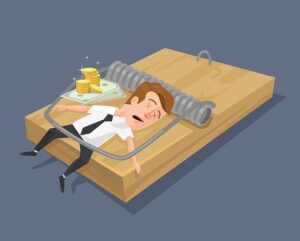

You’ve been waiting for the crash for nine months. Your emergency fund is sitting in a Tagesgeldkonto (day savings account) earning 2.3%, collecting dust while the MSCI World just keeps climbing. Every week you tell yourself “this is the top” and watch the green candles with the same feeling you’d have watching someone eat your lunch. Then one Tuesday afternoon, you snap. “Fuck it”, you mutter, and click buy.
Congratulations. You just timed the top.
This isn’t a cautionary tale about late-stage capitalism or market manipulation. This is the story of a user on a German finance forum who, after months of stubbornly waiting for the “Crash” (the crash) to go “All-In” (all in), finally broke down, bought the index at what turned out to be the local peak, and watched it tumble the very next day. And the best part? He knows exactly how to fix it. “If I sell everything”, he wrote, “the sun will shine again for months.”
The self-awareness is brutal. And painfully relatable.
The Price of Perfect Timing
German savers have a complicated relationship with the stock market. We love the idea of compounding returns but hate the volatility that comes with them. We stash cash in Tagesgeldkonten (day savings accounts) like squirrels preparing for nuclear winter, all while inflation nibbles away at our purchasing power. The “wait for the crash” strategy feels prudent. It feels like discipline. But in practice, it’s often just a fancy way of saying “I’m too scared to invest, so I’ll pretend I’m being strategic.”
The irony, as one commenter perfectly illustrated, is that this approach usually results in buying at the exact wrong moment. You sit on cash for months, watching prices climb. Your tolerance for missing out erodes. Finally, when you can’t take it anymore, you capitulate, right as the market decides to take a breather.
It’s the emotional equivalent of holding your breath until you pass out, then complaining that the ground hit you.
This pattern is so common in German investing communities that it has almost become a running joke. Someone always steps up and says, “Sorry, I’m the reason we’re going down. I just bought in.” And the responses are a masterpiece of market psychology: denial, hope, belief, and disbelief, all wrapped into one thread.
When Fear and Greed Fight to the Death
The psychology behind this trap operates on a simple loop:
- Phase 1: The Denial Zone – Markets go up. You watch. You wait. You’re convinced a crash is coming because… you read a newsletter? Your colleague said something?
- Phase 2: The FOMO Override – The market keeps climbing. Your cash is losing purchasing power. You feel stupid. You abandon your “strategy” and buy in impulsively.
- Phase 3: The Immediate Regret – The market drops. You feel like the universe is personally punishing you. You consider selling. You stop checking your account.
- Phase 4: Repeat – The market recovers. You didn’t sell. You feel relief. But now you’re traumatized. Next time, you’ll wait for the crash… again.
This is not a strategy. This is a hamster wheel. And the financial cost of running on it is higher than you think.
Consider the math. If you waited 12 months for a 10% correction that never came, you missed out on a year of market returns. Historically, the MSCI World returns around 7-9% annually. That means your “waiting period” cost you roughly the same amount as the crash you were trying to avoid. And that’s assuming the crash even happens in your timeframe.
The trap is that we overestimate our ability to time the market and underestimate the cost of waiting. The German approach to investing, methodical, cautious, evidence-based, is normally a strength. But applied to market timing, it becomes a liability.
The Emotional Hangover of a “Wrong” Buy
What makes this story so compelling is the raw honesty. The user’s post is titled “Sorry, I am guilty of the downward movement.” He’s joking, but the humor masks a real frustration. He feels dumb. He feels like he broke his own rules.
And that feeling, the emotional hangover of buying at a perceived top, is dangerous. It makes you want to sell at the bottom. It makes you reactive instead of systematic. It’s the exact opposite of what long-term investing requires.
The most upvoted comment on that thread wasn’t advice about asset allocation or diversification. It was a chart showing the stages of market emotion: complacency, denial, panic, capitulation, hope. The user who posted it didn’t claim to know what comes next. His approach was refreshingly pragmatic: “I manage my risk as if the next bear market is at the door, but I believe more in a year-end rally than a crash. I would never invest in my beliefs, I take targeted risks based on market movements.”
That’s the difference between a gambler and an investor. One waits for the crash to “finally happen.” The other builds a system that doesn’t depend on perfect timing.
How to Actually Survive the Waiting Game
So, what do you do if you’re sitting on cash right now, paralyzed by the fear of buying at the top?
First, acknowledge that the psychological cost of waiting for the perfect moment to invest is real. You’re not being smart by sitting out. You’re being emotional. The math supports being in the market, even if you buy at what feels like a high point.
Second, stop trying to time the market. You can’t. Nobody can. Even the professionals who predict crashes for a living get it wrong more often than they get it right. The difference between a successful investor and a frustrated one isn’t perfect timing, it’s consistency.
Third, structure your entry to reduce regret. Instead of going “All-In” (all in) with your lump sum at a random Tuesday afternoon, consider dollar-cost averaging over 6-12 months. This won’t guarantee you buy the bottom, but it will guarantee you don’t buy the exact top either. And it’ll keep your emotions in check, which is worth more than an extra percentage point of return.
The Real Crash Is Staying Out
There’s a deeper lesson here, and it applies to anyone who’s ever waited for “a better time” to make a financial decision, whether that’s investing, buying a property, or even switching jobs.
The real rekt (slang for “wrecked”, popular in German trading communities) isn’t the 5% drawdown you suffer after buying at the peak. It’s the years of returns you miss while waiting for a crash that doesn’t come within your time horizon.
One market observer in the thread made a crucial point that cuts through all the noise: “If you compare this AI phase with the Dotcom phase… it’s hard to assess whether we’re in 1996 or 1998.” In other words, we might be in the middle of a multi-year bull run, not at the precipice of a collapse. And waiting for the crash in that scenario is like refusing to board a plane because you’re afraid of turbulence, except the plane is taking off, and you’re standing on the tarmac.
This dynamic is especially pronounced in the current market cycle, where FOMO driven by explosive gains in AI stocks is creating a tug-of-war between fear and greed.
The user who apologized for the crash probably made the right decision in the end. He bought. He held. He’ll survive the dip. But the next time he has cash to invest, he might wait again, and the cycle continues.
The Only Strategy That Works
If there’s one thing to take away from this story, it’s this: waiting for the crash is not a strategy. It’s a coping mechanism for anxiety. The most successful long-term investors don’t try to avoid drawdowns. They don’t try to time the market. They buy regularly, systematically, and with the understanding that they will sometimes buy at the peak and sometimes at the valley.
The German habit of hoarding cash in Tagesgeldkonten (day savings accounts) while inflation eats away at it is understandable, but it’s not wealth building. It’s wealth preservation, at best. And if you’re under 50, preservation alone won’t get you to retirement.
The crash you’re waiting for might come. It might be a 20% correction like in 2020, or a proper bear market like 2008. But if you’re sitting on cash for years waiting for it, you’re paying a price that’s invisible but very real.
The user who apologized for the market downturn understood the joke. The real punchline is that he was probably never wrong for buying. He was just early. And in investing, early and wrong look exactly the same until they don’t.
The best time to invest was yesterday. The second-best time is today. Even if today feels like the top. Even if tomorrow feels like the crash.
Stop waiting. Start building.