
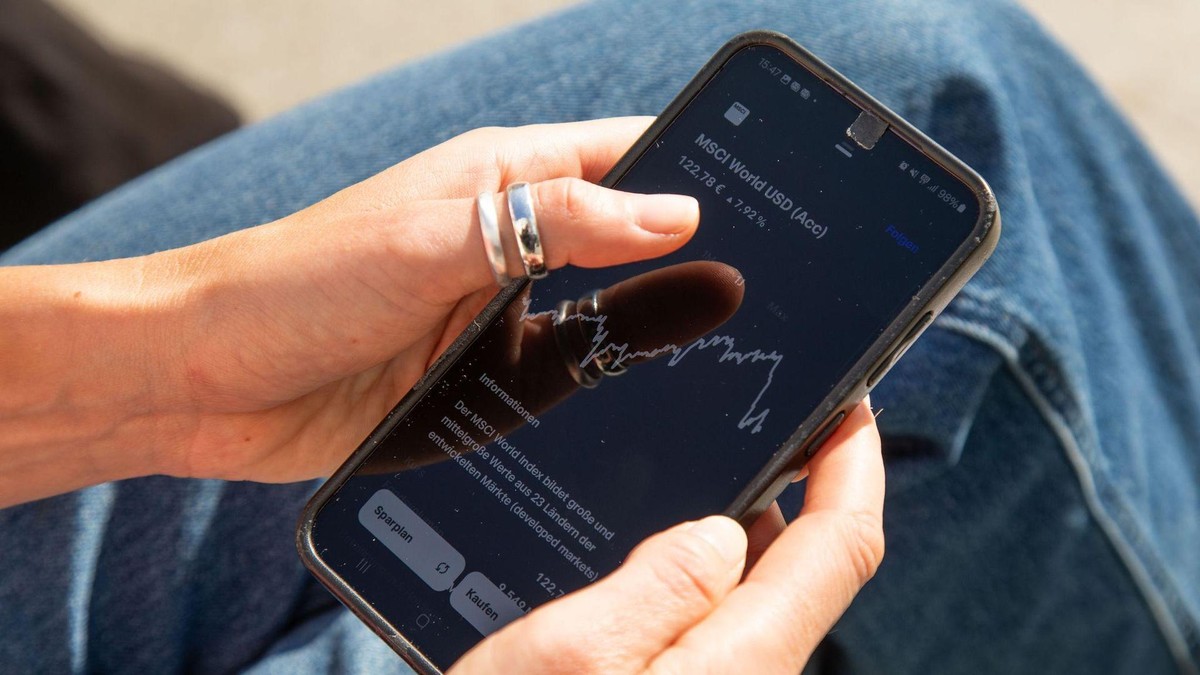
You’re staring at your True Wealth dashboard. The portfolio’s up, the interface is clean, and your monthly Sparplan (savings plan) runs like clockwork. Life is good.
Then you do the math.
0.58% total fees. Every year. On your entire portfolio. For the next 25 years. And suddenly that Swiss efficiency doesn’t feel so efficient anymore.
This is the moment thousands of Swiss investors are hitting. They started with True Wealth because it was the smart choice compared to their cantonal bank’s 1.5% asset management fees. But now cheaper alternatives exist, and the question of whether to jump ship is keeping people up at night.
Let’s break down whether high-fee robo-advisors like True Wealth are actually worth it over the long term, or if you’re bleeding money you don’t even see.
The Math That Keeps Smart Investors Awake
Here’s the uncomfortable truth about fees: they compound against you just as powerfully as returns compound for you.
Take a CHF 100,000 portfolio with a 20-year horizon. Assuming a modest 5% annual return:
- True Wealth (0.58% total fees): You end up with roughly CHF 231,000
- Low-cost broker + cheap ETFs (0.15% total fees): You end up with roughly CHF 257,000
That’s a CHF 26,000 difference. For doing absolutely nothing different.
Now scale that up. If you’re contributing monthly and your portfolio grows to CHF 500,000 or more, we’re talking six-figure differences over 25 years. That’s not pocket change, that’s a down payment on a property in most Swiss cantons.
One investor on Swiss finance forums put it bluntly: after 10 years, True Wealth’s asset management fee alone is 5.8% of your portfolio. On CHF 200,000, that’s CHF 11,600 gone to fees. And it only gets worse as your portfolio grows.
But Wait, Is True Wealth Actually “High-Fee”?
Let’s be fair here. Context matters.
True Wealth isn’t ripping you off in absolute terms. The Swiss market is full of far worse offenders. Just look at Bank Cler, which charges up to 1.26% total costs on their Säule 3a (Third Pillar) pension products, while delivering worse performance than simple index funds. That’s the definition of a fee vampire.
Even many cantonal banks charge 1% or more for investment management that doesn’t beat the market. In that context, True Wealth’s 0.58% looks positively reasonable.
But here’s the thing: reasonable isn’t the same as optimal.
The robo-advisor industry has matured. What was once revolutionary, automated portfolio management for under 1%, is now table stakes. The question isn’t whether True Wealth is expensive. It’s whether you’re paying for value you actually use.
What Are You Actually Paying For?
True Wealth does several things well:
- Portfolio construction: Their ETF selection is sensible, tax-optimized, and rebalanced automatically
- Tax handling: For Swiss residents, they handle the tricky stuff, withholding taxes, Swiss-specific funds, and tax reporting
- Hands-off investing: You literally never have to think about your portfolio
- Säule 3a solutions: Their 3a offering consistently ranks at the top of performance and fee comparisons
That last point matters. In the Säule 3a space, True Wealth is actually a leader, not a laggard.
But if you’re using True Wealth for a standard, non-pillar investment portfolio? You’re paying 0.50% management fee for a service that’s essentially… a few ETFs rebalanced a couple times a year.
The uncomfortable question: Can you do that yourself?
The DIY Alternative: “VT and Chill”
The Swiss personal finance community has a mantra: “VT and chill.” Buy Vanguard’s Total World Stock ETF (VT), set up a savings plan with a low-cost broker, and stop thinking about it.
A portfolio like this costs you roughly 0.07% in TER (Total Expense Ratio) and maybe CHF 10-20 per trade at brokers like Saxo, Swissquote, or Interactive Brokers. Even with Swiss stamp duty (Umsatzabgabe) on purchases, your total annual costs stay well under 0.20%.
Compare that to True Wealth’s 0.58%. You’re looking at a 0.4% annual cost difference. On a CHF 250,000 portfolio, that’s CHF 1,000 per year, every year, for something you could set up in a weekend.
And the deeper truth? For a simple global equity portfolio, the algorithm that True Wealth runs isn’t doing anything magical. It’s holding a handful of ETFs, rebalancing occasionally, and taking a cut for the convenience.

The Switching Costs Nobody Talks About
Okay, so you’re convinced. Time to liquidate and move to a cheaper broker, right?
Not so fast. There are real one-time costs:
- Selling your True Wealth positions: You’ll pay Swiss stamp duty (Stempelsteuer) of about 0.075-0.15% depending on the instrument
- Buying back at your new broker: Another stamp duty hit
- Market timing risk: You’re out of the market for a few days between selling and buying
- Tax implications: If you’re holding individual positions with capital gains, selling triggers tax events
One investor with CHF 100,000 calculated the round-trip cost at roughly CHF 600-650. That’s about one year of True Wealth fees.
But here’s the thing: you’ll save that amount every single year after switching. The breakeven point is essentially immediate.
The market risk concern, “what if prices jump while I’m out?”, is largely psychological. Over a 20-year horizon, a few days out of the market doesn’t move the needle. What does move the needle is 0.4% in annual fees eating your compounding for two decades.
The Case for Staying Put
Before you rush to liquidate everything, let me play devil’s advocate.
Some investors are genuinely better off staying with True Wealth:
You’re uninformed and happy to stay that way. The “lazy, completely uninformed past self” that one investor described isn’t a bug, it’s a feature. If you’re not interested in learning about ETFs, tax-efficient fund selection, and rebalancing rules, True Wealth’s hands-off model has real value.
You want a Swiss-regulated provider. Some investors specifically avoid foreign brokers like Interactive Brokers because they want their assets held by a Swiss-regulated entity. That’s a legitimate preference, not just paranoia.
You invest in their Säule 3a solution. Here, True Wealth genuinely shines. Their low-cost 3a offering puts traditional banks to shame. This is the one area where I’d argue the fees are absolutely worth it.
You’re prone to panic selling. Robo-advisors add a behavioral layer, they keep you invested when you might otherwise sell in a downturn. If that’s you, the fee is cheap insurance against your own worst instincts.
The Middle Path: What Several Wise Investors Recommend
Some of the most sensible advice I’ve seen from experienced Swiss investors isn’t “switch everything immediately.” It’s this:
Stop new contributions to True Wealth. Open a low-cost broker account. Start your savings plan there.
This does several things:
– Your new money goes into the cheaper platform
– You have time to learn the new platform without pressure
– You’re not forced to sell at a bad moment
– After a year or two, you can liquidate True Wealth with a smaller balance (less tax impact) and consolidate
One investor described exactly this journey: started with True Wealth, paused contributions, explored a cheaper broker, and only after feeling comfortable liquidated the True Wealth positions. Total time? Two years. Total cost? Minimal.
The opposite approach, liquidating CHF 100,000+ in one go, repurchasing at a new broker, and hoping the market doesn’t move against you, works too. But it takes more conviction.
What About the “Hidden” ETF Costs?
Here’s something the robo-advisor marketing doesn’t emphasize: you’re paying twice.
True Wealth’s 0.50% management fee is on top of the TER of the underlying ETFs. When they quote “0.58% total”, they’re including both, but that’s still substantially higher than a pure DIY approach.
The real cost comparison:
| True Wealth | DIY with Saxo/Swissquote | |
|---|---|---|
| Management fee | 0.50% | 0% |
| ETF TER | ~0.08-0.20% | ~0.07-0.20% |
| Transaction costs | Included | CHF 10-50 per trade |
| Stamp duty | Included | 0.075-0.15% on purchases |
| Total annual cost | ~0.58-0.70% | ~0.10-0.25% |
The difference compounds mercilessly. The long-term impact of fees on wealth accumulation isn’t a niche concern, it’s the single biggest factor you control as an investor.
The Tax Angle: More Complicated Than You Think
Swiss taxes add another layer to this decision.
True Wealth structures their portfolios with Swiss tax efficiency in mind. They use Swiss-domiciled ETFs where possible, which means hidden costs and risks behind seemingly low-fee ETFs can actually favor them over foreign alternatives.
If you move to a DIY setup, you need to be aware of:
- US-domiciled ETFs are generally bad for Swiss investors due to US estate tax and withholding issues
- Distributing vs. accumulating ETFs have different tax treatment and reporting requirements
- The Steuererklärung (tax declaration) gets more complex if you’re holding ETFs from multiple providers
This is where True Wealth genuinely earns its fee for many people. They handle the tax reporting, provide the right documents, and ensure their fund selection is Swiss-friendly.
But, and this is a big but, it’s not that complex to figure out yourself. A simple portfolio of one or two Swiss-domiciled MSCI World ETFs solves 90% of the tax headache. You just need to spend an afternoon understanding the basics.
The Verdict: It Depends on Your Situation
Here’s my honest take after digging through the numbers and countless investor experiences:
Switch to a low-cost broker if:
– You have more than CHF 50,000 invested (or plan to)
– You’re comfortable selecting 1-3 broad ETFs
– You can handle basic Swiss tax reporting
– Your investment horizon is 10+ years
Stay with True Wealth if:
– You want genuinely hands-off investing with zero management
– You use their Säule 3a solution (it’s top-tier)
– You’re not confident in your ability to stay disciplined
– Your portfolio is small enough that CHF 500/year in savings doesn’t matter
The absolute worst move: Doing nothing because switching feels complicated. That’s how high-fee asset management traps work, they rely on your inertia.

Your Next Steps, in Order
If you’re leaning toward switching, here’s a practical action plan:
- Open an account with a low-cost Swiss broker (Saxo, Swissquote, or if you’re comfortable with foreign brokers, Interactive Brokers)
- Start your monthly savings plan there with one broad ETF, something like iShares Core MSCI World or Vanguard FTSE All-World
- Let both platforms run in parallel for 3-6 months while you learn the new interface
- Liquidate True Wealth in stages when you’re comfortable, keeping tax implications in mind
- Consolidate and never look back
The one-time cost of switching, stamp duty, transaction fees, a few days out of the market, is a rounding error compared to what you’ll save over two decades.
The Bottom Line
True Wealth isn’t a scam. It’s a well-run, honest service that’s dramatically cheaper than traditional Swiss banking. For many people, it remains the right choice.
But “not a scam” and “the best use of your money” are very different standards. At 0.58% total fees, you’re paying over CHF 500 per year for every CHF 100,000 invested. Over 25 years, that’s easily CHF 50,000-100,000+ in lost compounding.
The Swiss banking system operates with the same reliability as an SBB train, usually impeccable, until construction slows the line. True Wealth was the right train when it launched. But newer, cheaper alternatives have arrived. And unlike a missed connection, you have a choice: get off now, or watch your returns get eaten by fees for another two decades.
Your future self, the one with an extra six figures in their portfolio, will thank you.