


You’re sitting in a crowded Viennese coffee house, eavesdropping on the table next door. A young doctor in a crisp white coat is bragging about his new contract, €6,000 net per month. His friends nod approvingly, one quietly calculating his own €3,500 average salary and feeling the pinch of inadequacy. Nobody mentions the actual financial superpower that determines wealth in Austria. It’s not the degree. It’s not the promotion. It’s whether your grandmother owns a Baugrund (building plot) in the suburbs.
This is the conversation Austria refuses to have honestly. While we obsess over salary comparisons on Kununu and negotiate raises that barely outpace inflation, the real wealth gap yawns wider, between those who inherit and those who must earn every single cent.
The Math That Destroys Salary Pride
Let me hit you with numbers that should make you question everything. That doctor earning €6,000 net? He’s bringing home roughly €72,000 annually. The average Austrian salary hovers around €3,500 net monthly, about €42,000 per year. The difference is €30,000 per year, which sounds substantial until you compare it to what inheritance actually delivers.
Your cousin just inherited a €200,000 building plot from Oma (grandma). That’s not a luxury inheritance, that’s a completely normal, trivial transfer that happens across Austria daily. To accumulate that same €200,000 through salary alone, our high-earning doctor would need to work five years just to cover the gap between his salary and the average. Five years of nights, weekends, student debt, and professional liability insurance, all to match what someone else received because they had the foresight to be born into the right family.

The absurdity becomes clearer when you look at actual Austrian salaries. According to Kununu data, the average gross salary in Austria sits at €49,200 annually. Even if you’re pulling €71,000 at Raiffeisen Software or the Bundesrechenzentrum (Federal Computing Center), you’re still playing a game where the rules are stacked against you. purchasing power erosion of wages has already kneecapped your earning power, but inheritance operates in a different universe entirely.
Why Inheritance Is "Overpowered" in Austria
International residents quickly discover what locals already know: Austria’s system makes inheritance almost comically advantageous. As one observer noted, "Erben ist extrem overpowered in Österreich" (Inheritance is extremely overpowered in Austria). Middle-income earners with family assets often live better than high-performing first-generation professionals who pour half their income into Austria’s social system.
The tax structure amplifies this. Austria currently has no federal Erbschaftssteuer (inheritance tax), though political winds are shifting. Compare that to your salary, which faces Lohnsteuer (income tax), Sozialversicherung (social insurance), and various other deductions before you even see a cent. Your "hard-earned" income gets taxed at source, while inherited wealth transfers largely intact.
The timing makes it even more lopsided. Inheriting at 30 changes your entire life trajectory, you can take risks, start businesses, buy property before prices surge. Inheriting at 60, when you’re already marod (frail) and your kids have moved to the city for work, means that wealth arrives too late to transform your working years. You’ve already spent decades grinding through the salary plateau that most Austrians hit in their 40s.
The Political Earthquake Nobody Talks About
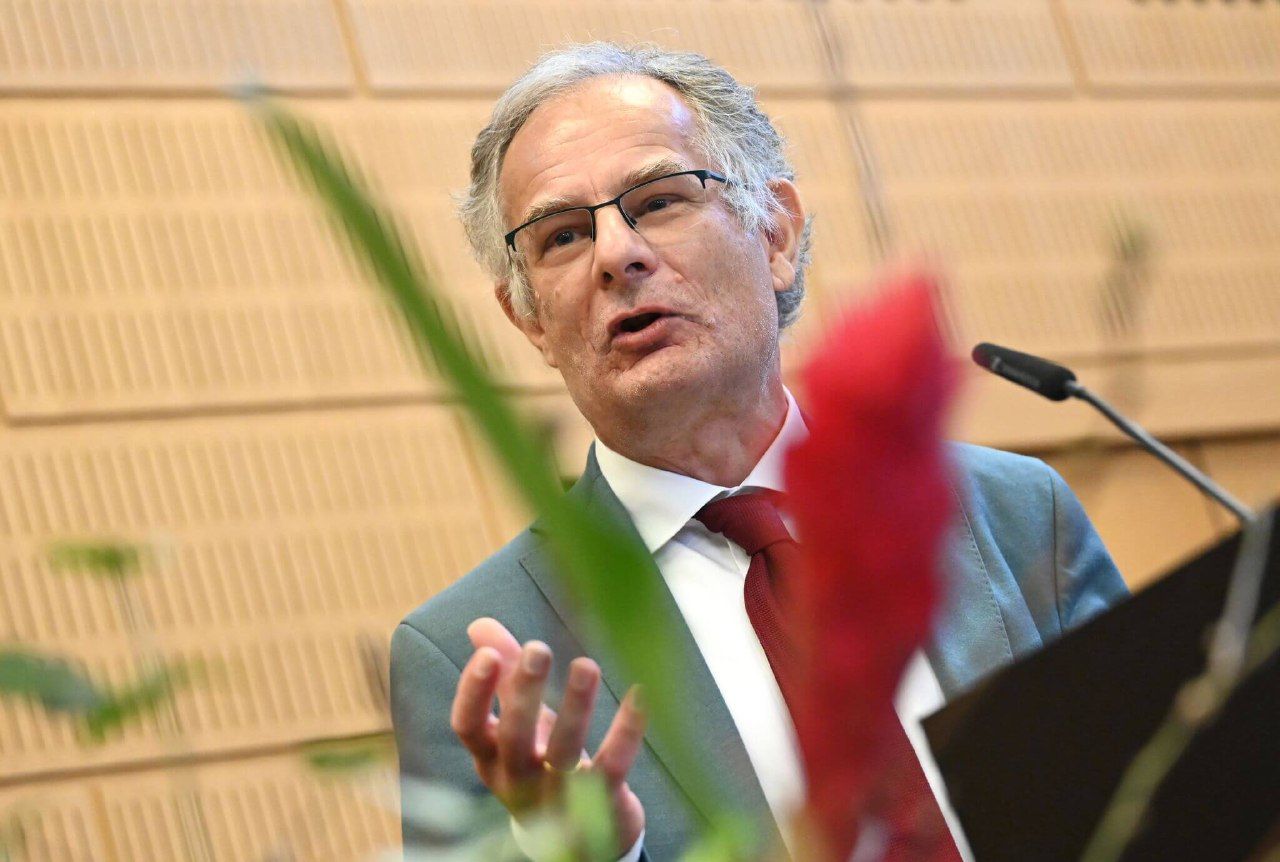
Finance Minister Markus Marterbauer (SPÖ) is stirring the pot, actively campaigning for a national Erbschaftssteuer. In March 2026 parliamentary debates, he pushed the controversial line that inheritance tax could fund public services and climate initiatives. The proposal targets the "Superreiche" (super-rich), but the ÖVP warns it would crush the Mittelstand (middle class).
Hans Scharfetter from the Salzburger Volkspartei frames it as a "schleichende Enteignung" (creeping expropriation) of families who’ve already paid taxes on their "hart erarbeitetes Vermögen" (hard-earned wealth). His argument resonates across Austria’s family-owned businesses, where wealth is locked in machinery, buildings, and company equity, not liquid cash.
The political tension exposes a raw nerve. Austria already extracts 44% of GDP in taxes, among Europe’s highest rates. Scharfetter’s camp argues that adding inheritance tax would be a Mehrfachbelastung (multiple burden) on productive citizens, while Marterbauer sees it as fair redistribution of "Vermögen, die keine Eigenleistung erforderten" (wealth requiring no personal effort).
The Swiss Warning: When Property Becomes a Tax Trap
Switzerland’s recent inheritance tax debate offers Austria a cautionary tale. Swiss experts Natalie Dini and Marija Ilic warn that substanzgebundene Vermögenswerte (substance-bound assets) like property create a liquidity crisis. The tax bill arrives regardless of whether you have cash.

Imagine inheriting a €8 million house in Vienna’s 19th district. Under Switzerland’s proposed 5% tax above a €5 million exemption, you’d owe €150,000, with no cash to pay it. Many heirs would be forced to sell family properties just to cover the tax. Pius Baumgartner, a Swiss tax expert, notes this creates a "Doppelbesteuerung" (double taxation) since property already faces annual wealth taxes.
This is the hidden risk of Austria’s property obsession. While your salary might never buy you a house in Grinzing, inheriting one could saddle you with a tax bill that forces you to sell it anyway. The wealth gap closes in the cruelest way possible, by making inherited assets a burden rather than a blessing.
The Three Questions That Actually Matter
The salary obsession misses the point entirely. If you’re serious about financial security in Austria, stop asking "What’s the average salary for my role?" and start asking:
a) How wealthy is your "erblassende" (bequeathing) family?
A €500,000 apartment in Salzburg changes everything. A €2 million Gasthaus (inn) in Tyrol makes your salary irrelevant.
b) When is the expected Erbfall (inheritance event)?
Inheriting at 35 versus 65 is the difference between wealth creation and wealth management.
c) How many potential heirs must you share with?
That €800,000 family home divided among four siblings becomes €200,000 each, still life-changing, but not retirement-level wealth.
These questions reveal more about your financial future than any Gehaltsverhandlung (salary negotiation) ever will. Yet we keep comparing salaries because it’s the only metric we can control, a psychological comfort blanket that ignores the structural reality of Austrian wealth.
What This Means for Your Financial Strategy
If you’re inheritance-poor, you have two choices: extreme savings or extreme risk-taking. The €36K Vienna savings blueprint shows what’s possible, banking half a €75,000 salary requires monk-like discipline. Most people can’t sustain it.
The alternative is leveraging real estate for asset accumulation, essentially trying to build what others inherit. But you’re starting from zero while competing against heirs who got a €200,000 head start. In Vienna’s current market, where Altbau (old building) apartments start at €500,000, that gap is nearly impossible to close through wages alone.
The third path, leaving Austria for higher salaries, has its own costs. Your €88,000 Swiss salary looks impressive until you factor in Basel’s housing costs and the fact that you’re now paying Swiss wealth taxes. You’re running faster on a treadmill that’s accelerating.
The Uncomfortable Truth
Austrian society pretends meritocracy works because it has to. Acknowledging that inheritance dwarfs lifetime earnings would unravel the social contract that keeps people grinding through 40-hour weeks. But the math is stark: a single mid-range property inheritance can equal five to ten years of net salary differential between average and high earners.
This doesn’t mean you should give up. It means you need to stop playing by rules designed for a different game. If you don’t have family assets, your salary is a survival tool, not a wealth-building mechanism. You need to think like an heir, make bold, early bets on assets, use leverage aggressively while young, and build something that can be passed down.
The inheritance vs. salary debate isn’t about fairness. It’s about recognizing which game you’re actually playing. In Austria, the winners were decided before they were born. The rest of us are just trying to catch up with tools that were never designed for the task.
Your move: Stop comparing salaries. Start building something worth inheriting, or find a way to inherit something worth building.