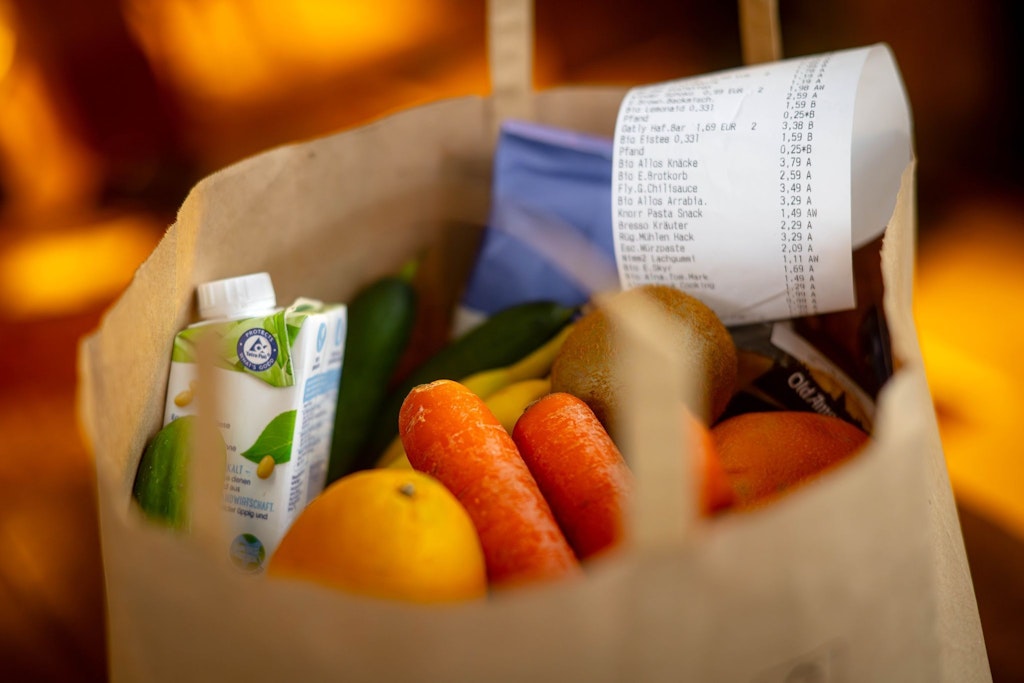
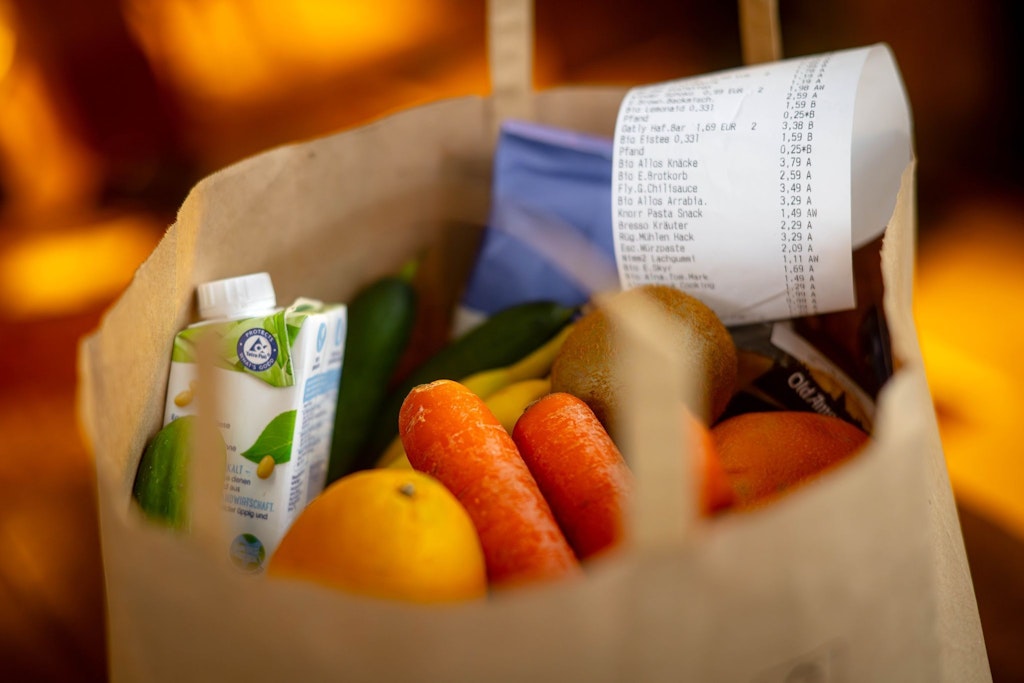
You’re standing at the Berlin-Mitte Rewe checkout, watching the cashier ring up your usual weekly haul. The same milk, bread, and coffee that cost €47 last month now demands €56. Your phone buzzes, another Nebenkosten (additional housing costs) adjustment from your landlord. You swipe your card, sigh, and wonder: Am I going crazy, or is everything actually getting way more expensive than they’re telling us?
You’re not crazy. And the numbers finally prove it.
According to a recent government response to a parliamentary inquiry by Die Linke (The Left party), food prices in Germany have surged a whopping 36.3% between January 2020 and mid-2025. Meanwhile, the official headline inflation figure for the same period? Just 22%. That’s a 14-percentage-point gap that nobody at the Statistische Bundesamt (Federal Statistical Office) seems eager to shout from the rooftops.
This isn’t “felt inflation.” This is real, documented, supermarket-till-receipt inflation. And it’s quietly gutting household budgets across the country.
The €56.90 Reality Check
Let’s get specific. A typical Wocheneinkauf (weekly grocery shop) for a two-person household in 2020 might have set you back around €90. Today, that same basket of goods, assuming you buy the exact same products, now costs approximately €122.60.
That’s not a rounding error. That’s €32.60 extra per week just to eat the same stuff.
But here’s where it gets interesting: the official CPI (Consumer Price Index) calculation uses a weighted “Warenkorb” (basket of goods) that includes everything from rent to cinema tickets to car insurance. Since energy prices have moderated somewhat and electronics have actually gotten cheaper (that TV you bought last year? Probably cost less than the one from 2020), the overall inflation number gets pulled down. But nobody eats a television. You eat Butter, Brot, and Käse (butter, bread, and cheese), and those specific items have skyrocketed.
Top Price Culprits (since 2020)
- Geflügelfleisch (poultry meat): Up dramatically
- Molkereiprodukte und Eier (dairy products and eggs): Seeing double-digit percentage jumps
- Speisefette und Speiseöle (cooking fats and oils): Brutal increases
- Zucker (sugar): Sharply more expensive
Moderate Risers
- Obst (fruit)
- Fisch (fish)
- Getränke (beverages)
If you’re a health-conscious eater loading up on fresh vegetables and fish, you’re slightly less screwed than the person who loves cheese omelets and chicken wings.
The disconnect between nominal salaries and real purchasing power in Germany due to inflation has never been more apparent. Your Gehaltserhöhung (salary increase) of 5-10% over the last few years is being completely devoured by a 36% food price spike.
Why Isn’t This Headline News?
Good question. Part of the answer lies in how official inflation statistics are constructed. The general inflation rate of 22% since 2020 is an average that gets smoothed by cheaper durable goods and services that aren’t rising as fast. But food is a necessity, you can’t defer your grocery purchases like you might delay buying a new phone.
The reaction from readers has been predictably sharp. One commenter on the original WELT article noted: “Also ich beobachte z. T. 50 – 100 %” (I observe price increases of 50-100% in some cases.) Another pointed out the obvious: “Es sind sehr viele Lebensmittel des täglichen Konsums bis 70-100% teurer geworden. Aber in der ‘schönrechnerei’ sind unsere Politiker Weltmeister.” (Many daily-use foods have become 70-100% more expensive. But our politicians are world champions at “beautifying” the numbers.)
The bitterness is palpable. And honestly, it’s justified. When your actual lived experience at the Kasse (checkout) contradicts what you see on the evening news about “inflation easing”, it creates a corrosive distrust in institutions.
The Supermarket Oligopoly Problem
Here’s where this gets spicy, and where Latendorf’s criticism hits home. Four companies, Edeka, Rewe, Aldi, and Lidl (the Lidl/Kaufland group), control approximately 85% of Germany’s Lebensmitteleinzelhandel (food retail market), according to the Monopolkommission (Monopolies Commission).
When you have that much market concentration, pricing power shifts dramatically. These giants can negotiate aggressively with suppliers, and they can set prices that maximize their own margins. Critics argue that while commodity costs for energy and raw materials have partially fallen back to normal levels, supermarket prices haven’t followed. They’ve stayed stubbornly high.
Foodwatch’s Call
Foodwatch has explicitly called for a Preisbeobachtungsstelle (price monitoring agency) to regularly investigate whether retailers and manufacturers are making unjustified profits at consumer expense. The organization points out that the big four’s combined market share gives them an effective stranglehold over what Germans pay for food.
Latendorf’s Criticism
Latendorf herself put it bluntly: “Es ist erstaunständig, dass sich die Bundesregierung weigert, in die Marktmacht der vier Supermarkt-Riesen einzugreifen…” (It’s astonishing that the federal government refuses to intervene in the market power of the four supermarket giants.)
What This Means For Your Budget (And Your Sanity)
For the average German household spending about €3,000 per month (based on 2023 data), food accounts for roughly one-fifth of total expenditure, the second largest line item after housing and energy. That means the additional 14-percentage-point premium on food prices above general inflation represents hundreds of euros per year that disappear from your disposable income.
Hardest Hit Groups
- Low-income households: They spend a much higher proportion of their income on food. A 36% price hike hits them hardest.
- Families with children: More mouths to feed means more exposure to these price increases.
- Students and young professionals: Already stretched budgets get decimated.
- Anyone not getting proportional salary increases: If your €3,100 netto salary hasn’t kept pace, your financial situation is actually a mirage in the desert.
The impact of inflation on household budgets for high earners in Germany is also significant, though less catastrophic. Even at €5,400 netto, the silent erosion of purchasing power means you’re effectively paying a “grocery tax” that didn’t exist four years ago.
Will the Government Actually Do Anything?
There’s talk in coalition circles about raising the general VAT rate from 19% to 22% to generate up to €30 billion for the federal budget, while lowering the reduced VAT rate on food from 7% to 0%. Finance Minister Lars Klingbeil (SPD) has reportedly said that raising VAT is “not my goal”, but the discussions continue.
Economists are split. DIW President Marcel Fratzscher supports reducing VAT on basic foods to provide targeted relief. But Ifo Institute President Clemens Fuest warns that blanket tax cuts cost too much and suggests direct transfers to low-income households instead.
The political reality? Don’t hold your breath for quick action.
The Takeaway: Don’t Trust The Headline Number
If you’ve been feeling like your grocery bills are defying logic and government statistics, you’re right. The 36.3% food price increase since 2020 is a concrete, government-confirmed number that exposes the gap between “official inflation” and lived reality.
Your Best Strategies
- Track your own spending with the Statistisches Bundesamt’s personal inflation calculator, it’s surprisingly useful.
- Shift toward cheaper proteins: If poultry and dairy are spiking hardest, consider more plant-based alternatives or fish (which has risen less).
- Buy seasonal and local: The Wochenmarkt (weekly market) in towns like Münster shows that while prices are high, you often get better quality for comparable costs.
- Watch for Sonderangebote (special offers) and stock up when staple items go on sale.
- Accept the cognitive dissonance: The official inflation rate of 2-3% per year doesn’t mean your individual shopping basket costs that much more. It’s an average. Your basket is uniquely, frustratingly expensive.
Remember
The German grocery price shock is real, it’s documented, and it’s not going away anytime soon. Your best defense is awareness, and maybe eating a lot more Obst and Fisch.