
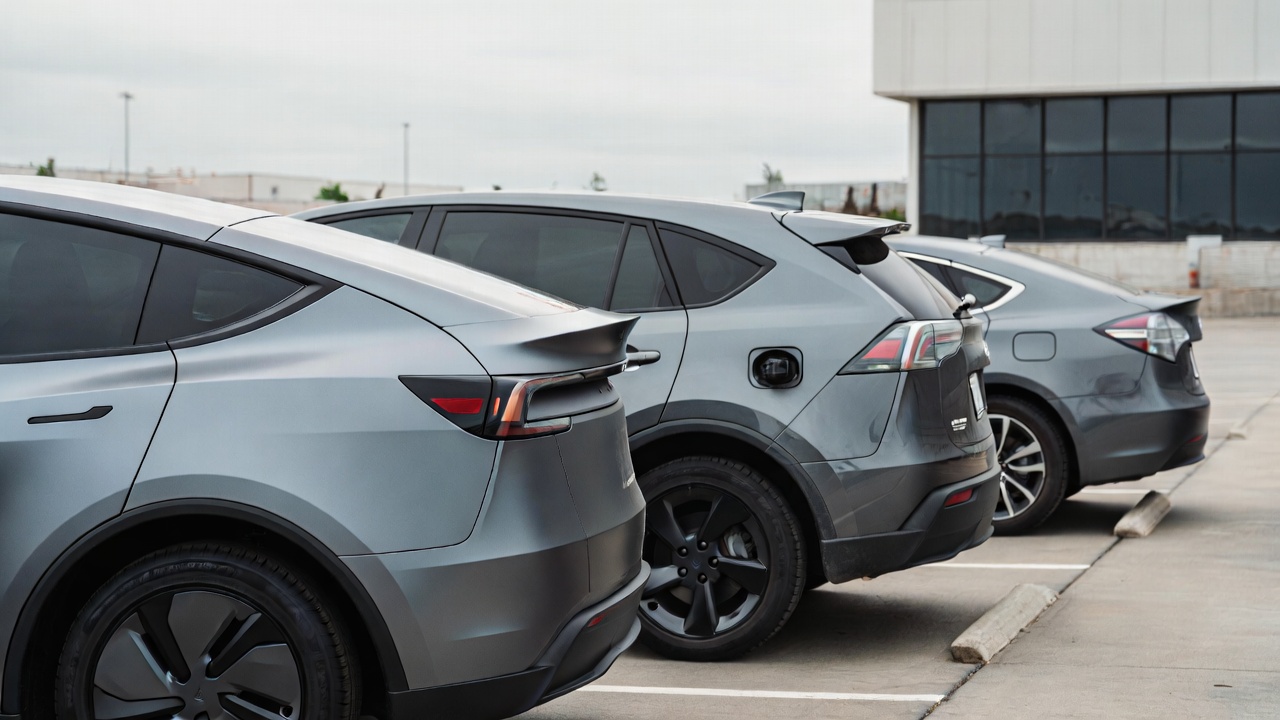
Picture this: you’re standing at a Shell station on the A3 near Cologne, watching the digital display tick past €2.30 per liter of Super E10. The car behind you is a glossy Tesla Model Y. The driver isn’t even looking at the price, they’re scrolling through Spotify, waiting to plug into the nearby fast charger instead.
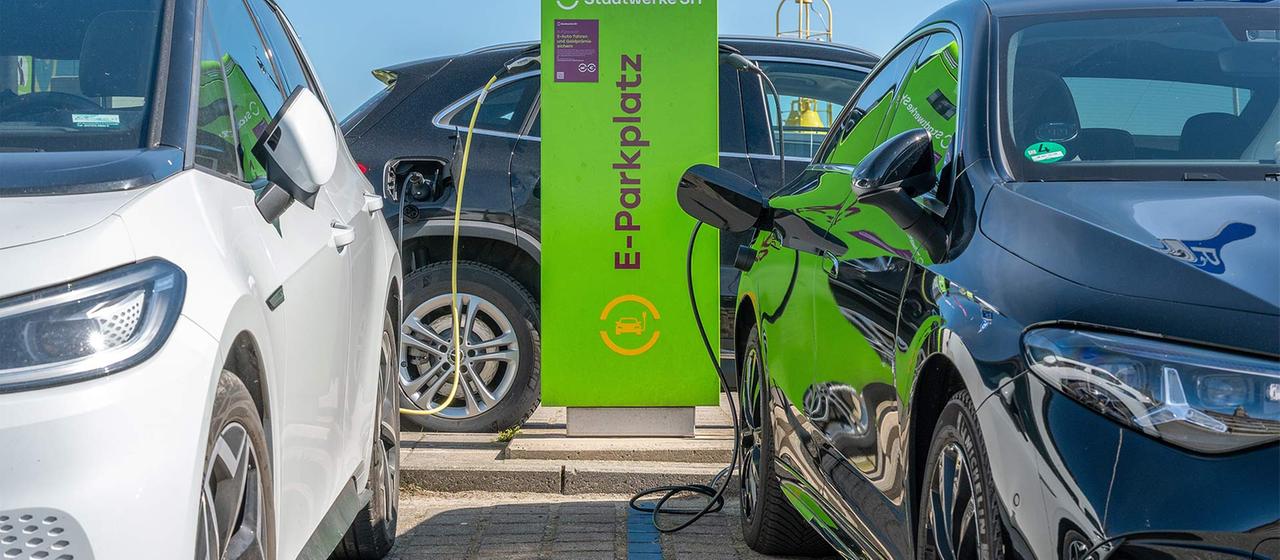
That scenario is becoming increasingly common. Nearly one in three new cars registered in Germany in August was a pure electric vehicle, while demand for new gasoline cars collapsed by almost 38 percent. The EV revolution isn’t coming, it’s already reshaping German streets.
But here’s the question nobody seems to answer clearly: what happens to the price of gasoline when fewer people buy it?
Your first instinct might be simple economics. Less demand means cheaper prices, right? That’s what you learned in school. Supply and demand, curve shifts, equilibrium. Done.
Except the real world, especially the German energy world, doesn’t work like that. And the answer might surprise you in ways that hit your wallet either way.
Refinery Problem: Supply Can’t Simply Turn Off
Let’s start with a chemistry fact that complicates everything: crude oil isn’t just gasoline.
When refineries process a barrel of crude, they don’t get to choose what comes out. A typical barrel yields roughly 25 percent gasoline, 25 percent diesel and heating oil, 5 percent kerosene for airplanes, and the rest goes into plastics, lubricants, bitumen, and industrial products.
This creates a massive structural problem. As more Germans switch to EVs and demand for gasoline drops, refineries can’t simply turn off the gasoline tap. They still need to produce diesel for trucks, kerosene for planes, and all those petrochemical products for industry. The gasoline comes along for the ride whether anyone wants it or not.
So what happens when you have a surplus of gasoline but no demand? In a functioning market, prices would crash. But this isn’t a functioning market, it’s a global oligopoly where OPEC and major producers deliberately throttle production to keep prices artificially high.
Many international residents and even long-time Germans are confused by why fuel prices keep climbing despite the EV boom. The answer lies in this disconnect: local demand for gasoline is falling, but global crude prices are set by players who care about total revenue, not about German driving habits.
The Infrastructure Death Spiral
Now for the part that really stings: the fixed costs.
Germany has roughly 14,000 gas stations. Each one has land costs, staff, maintenance, safety inspections, and environmental compliance. These costs don’t disappear when fewer customers show up.
Think of it like a restaurant in a dying mall. The rent stays the same, the staff still needs pay, the kitchen still needs to run, except now you have half the customers to spread those costs across.
The same logic applies to the entire gasoline supply chain. Pipelines, storage tanks, distribution trucks, refineries, all have massive fixed costs that must be covered by the liters actually sold. When demand drops from 100,000 liters per day to 50,000, the per-liter infrastructure cost doubles.
Gas stations will inevitably close as the EV transition accelerates. Rural areas will lose their stations first, forcing remaining combustion drivers to travel further. Longer trips mean more demand at fewer stations, which gives those stations pricing power.
This mirrors exactly what’s happening with heating gas in Germany. As more households switch to heat pumps, the cost of maintaining the gas pipeline network gets spread across fewer customers, making gas heating increasingly expensive for those who remain.
The same dynamic applies to gasoline infrastructure. Expect fewer stations, longer drives to the pump, and higher prices to cover the shrinking network’s fixed costs.
The Tax Elephant in the Room
Here’s where things get genuinely political, and spicy.
Germany collects roughly €30-40 billion annually from fuel taxes, including the energy tax (Energiesteuer) and value-added tax on fuel. That’s about 65 percent of the price of every liter of gasoline you buy. Half the cost at the pump goes straight to the state.
Now, what do you think happens when EV adoption grows and fuel tax revenue collapses?
The state still needs money for roads, bridges, and the Autobahn maintenance that doesn’t care whether the car above it is electric or combustion-powered. The question of who pays for Germany’s road network when gas taxes dry up is becoming urgent.
Politicians face two options: let the roads crumble, or find new revenue sources. The easiest political path is to raise taxes on the fuel that remains, because the people still buying gasoline are a shrinking minority. Politicians don’t lose elections by taxing a declining demographic.
This is already visible in the CO₂ price, which gets folded into every liter. The CO₂ Abgabe (carbon tax) has risen steadily and will continue climbing as the EU expands its emissions trading system to road fuels. Spain and Portugal are already easing the burden, but Germany’s current government structure has consistently supported carbon pricing.
Let me add a personal observation here: I remember when diesel was briefly cheaper than gasoline, and drivers celebrated. Then the CO₂ pricing arrived, and suddenly diesel was hit harder because it emits more carbon per liter. The environmental logic made sense, but the price signal was unmistakable, politicians will use fuel taxation to shape behavior, not to save you money.
The Efficiency Paradox: Why Prices Stay High
Here’s a counterintuitive twist that most people overlook: gasoline might not get cheaper even if demand drops, because the remaining demand comes from the least price-sensitive users.
Think about who’s driving gasoline cars in ten years. Not the urban commuter, they’ve already switched to an EV for city driving. The remaining combustion drivers will be:
- Enthusiasts who don’t care about cost
- People in remote areas without charging infrastructure
- Commercial vehicles where combustion still makes sense
- Those who simply can’t afford the upfront EV premium
This is the exact opposite of a price-sensitive customer base. When the only people left buying gasoline are those who must have it regardless of price, oil companies have enormous pricing power. Why would they drop prices when their remaining customers have demonstrated they’ll pay anything?
Compare this with the heating market. Germany saw this exact pattern with heating oil and gas, even as demand fell, prices for remaining customers stayed high because fixed network costs got distributed across fewer users.
Cost Difference: EV vs. Combustion
If you’re doing the math on whether to switch, the numbers already favor EVs dramatically. The International Council on Clean Transportation found that EVs in the EU are 33 percent cheaper to run than gasoline vehicles. In Germany specifically, the gap has widened further as fuel prices hit record highs.
According to recent cost comparisons, an EV charging at home costs roughly €53 per month for 1,000 kilometers of driving, while a comparable gasoline car costs €160 for the same distance. That’s 67 percent savings, and the gap will only widen if gasoline prices rise as infrastructure shrinks.

It’s worth noting that how tax advantages for company cars influence car ownership patterns amplifies this effect. German companies moving their fleets to EVs are accelerating the gasoline demand decline while sheltering employees from fuel costs entirely.
The Breaking Point: When Infrastructure Collapses
Experts point to a critical threshold: when refineries fall below roughly 80 percent utilization, they stop being profitable. Germany has already lost several refineries in recent years, and the trend will accelerate.
When a refinery shuts down, it doesn’t reduce prices for the remaining ones. It reduces supply. And with fewer refineries, transportation distances increase, logistics costs rise, and the remaining facilities gain local monopoly power.
The same applies to gas stations. We’re already seeing stations in rural Bavaria and Brandenburg close their fuel pumps and convert to pure convenience stores. Each closure makes the remaining stations more valuable, and more expensive.
This is the death spiral scenario: fewer customers → fewer stations → higher per-station costs → higher prices → more customers switch to EV → repeat.
The total cost of ownership for gasoline vehicles has been climbing for years, and the trend shows no sign of reversing.
The CO₂ Price Acceleration
Let me end with the one factor that could override everything else: politics.
The EU’s carbon market is expanding. Starting in 2027, road transport fuels will be brought fully into the European Emissions Trading System. This means the CO₂ price on gasoline is set to multiply several times over the coming years, not because of demand, but because of policy.
Industry projections suggest that adding the full EU carbon price to gasoline could add another €0.50-1.00 per liter by the early 2030s. Combined with infrastructure cost spreading and refinery consolidation, the forecast of €3 per liter that German energy experts are discussing starts looking conservative.
So, Will Gasoline Be Cheaper or More Expensive?
The honest answer is clear: gasoline will almost certainly get more expensive, not cheaper, as EV adoption increases.
The simple supply-and-demand intuition fails because it ignores three structural realities:
- Fixed costs spread over fewer buyers, infrastructure doesn’t get cheaper when demand falls, it gets more expensive per unit
- Tax policy will fill the revenue gap, governments need money, and fuel taxes are an easy target
- Remaining demand is price-insensitive, the people left driving combustion cars will pay whatever it costs
For your personal finances, this creates a powerful incentive to switch now rather than later. Every year you delay, the cost differential widens. The EV Economic Era isn’t just about being environmentally conscious, it’s about protecting yourself from the inevitable price spiral that will punish remaining gasoline drivers.
The German energy transition (Energiewende) was always going to have winners and losers. If you’re still driving a combustion car, you’re positioned on the losing side of the gasoline pricing equation. That’s not ideology, that’s arithmetic.
The question isn’t whether gasoline will become unaffordable for most people. It’s whether you’ll still be buying it when it does.