
You meticulously plan your first EV road trip from Vienna to Südsteiermark like a military operation. You watched the YouTube videos. You joined the online forums. You have four different charging apps pre-installed, your Kreditkarte (credit card) ready, and a smug sense of doing the right thing warming your soul.
Then you arrive at the Supercharger, plug in, and eight minutes later, your car’s charged and your phone buzzes: “€8,00 debited.”
Wait, what? Just eight euros? The ghost of your former 3-liter Diesel, which would have slurped through €100 worth of fuel on that same trip, feels it has something to apologize for.
But wait. Is that the whole story? Let’s pop that utopian bubble with a reality check that involves your Finanzamt (Tax Office) bills, your Dächer (roof), and a cold, hard look at your Autobahn habits.
The Solar-Powered Honeymoon Is Real
Let’s start with the dream scenario, one that many Austrians are now living. You have a house with a Photovoltaikanlage (PV system) on the roof. You charge your EV overnight. Your effective fuel cost, as one BMW iX1 driver reports, can drop to a staggering 40 to 50 cents per 100 kilometers.
In a country where Diesel recently flirted with €1.80 per liter, that’s not just savings, it’s a financial revolution. The calculation is seductively simple: free sun equals nearly free driving. For someone replacing an old Mercedes ML diesel, as one recent convert did, the switch from €100-€150 fill-ups to pennies-per-kilometer operation feels like “your Umstieg (switch) from HDD to SSD. You don’t want to go back.”
Tax Changes Coming in 2026
But this is Austria. There are forms. Suddenly, the joy of solar charging meets the bureaucracy of the Sachbezug (benefit in kind) for home charging. Until 2025, you could claim a flat €30 tax-free per month for charging a company EV at home. Starting January 1, 2026, that’s gone. Now, the Finanzamt wants a detailed Ladeprotokoll (charging log) proving your actual consumption at a specific rate of 32.806 cents per kWh. Guess who isn’t getting a receipt from the sun?
The Supercharger Tab: Impulse or Expense?
Now let’s talk about what happens when you leave your sun-drenched Garage (garage). This is where the real-world maths get interesting.
App-Based Tariffs
Our research shows that the annual cost for an EV, assuming 20% of your charging is done publicly, can vary wildly based on your Tarif (tariff). Some apps charge monthly fees for lower per-kWh rates, others offer pay-as-you-go convenience at a premium.
The Tesla Advantage
The user experience pinnacle, as many report, is the Tesla Supercharger network: “Keine Kreditkarte, kein Abomodell, keine Probleme. Simply drive up, plug in, and it gets billed automatically.”
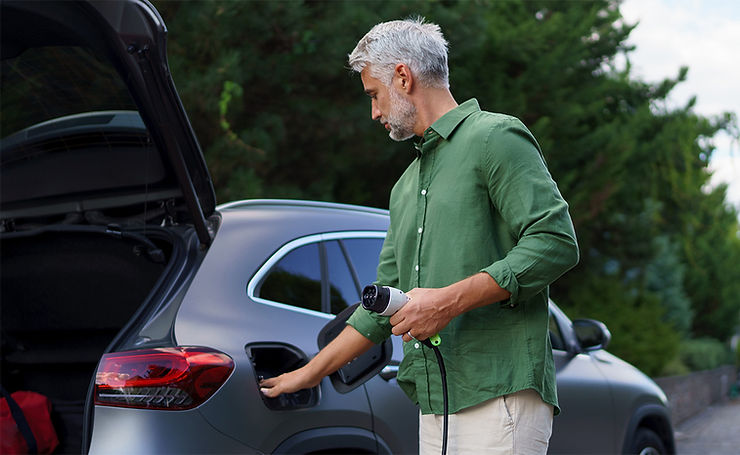
That convenience, however, comes with its own price tag. While that quick €8 top-up on a Steiermark (Styria) wine tour feels cheap, longer trips require strategy. On a 2700km trip to Spain, one driver made 14 charging stops. That sounds exhausting until you reframe it as a forced break every 2-2.5 hours, arguably safer and more pleasant than a Verbrenner (combustion engine) marathon session.
The key is understanding the public charging jungle. A recent test by electricar Magazin comparing Austrian and German providers revealed massive price disparities. Some chains, like those at Hofer or Billa supermarkets, offer affordable fast-charging while you shop. Others enforce weird rules, like only being available during Öffnungszeiten (opening hours), charge on a Sunday at your own legal peril.
Diesel’s Last Stand: The Impact of Convenience
EV Driving Reality
So, can an EV actually be cheaper for road trips than a modern, efficient Diesel? It depends entirely on your calculus of convenience versus cost.
Diesel Advantages
A Diesel driver fills up in five minutes at any Tankstelle (gas station) along the A2. They pay, on average, around €1.70 per liter. Their annual bill includes the infamous motorbezogene Versicherungssteuer (engine-related insurance tax), which EVs were exempt from until April 2025. Now, BEV owners pay €150-€300 yearly too. The playing field is leveling.
The EV driver’s trip requires a modicum of planning. “The navigation was surprisingly accurate for finding chargers”, reports one ID.4 driver who pushed his luck from the Marchfeld to Leoben and back, arriving home with 4% battery but a newfound trust in the system. The Austrian Ladeinfrastruktur (charging infrastructure) in Ballungsräumen (urban areas) is now described by many as “gut” (good), even for non-Tesla drivers.
But try that in rural Kärnten (Carinthia) or on a ski weekend when every Tesla in Vienna is heading to the Alps, and the story changes. The freedom of the open road gets algorithmically managed by your car’s battery percentage.
The 2026 Austrian EV Owner’s Checklist
- Home Charging is Non-Negotiable. If you can’t charge at home or work, the EV equation tilts heavily against you. Public charging, while improving, will eat your savings. Installing a Wallbox? Check for the soon-to-expire Umweltförderung (environmental funding) first.
- Your Driving Profile is King. Are you a weekly Autobahn warrior commuting from Linz to Salzburg? Or a Stadtbewohner (city dweller) doing short hops? The former will feel the “range anxiety” pinch more acutely, the latter will be swimming in savings. It’s a similar logic to the comparison of alternative commuting models and hidden car ownership costs, where context is everything.
- Become a Tarif Scout. Don’t just use the default app. Research. The difference between a casual user tariff and a Vielfahrer (frequent driver) plan could be hundreds of euros per year.
- Embrace the New “Normal” Costs. The Kaufprämie (purchase subsidy) is dead. The Sachbezug (benefit) for home charging is now bureaucratic. The NoVA (Normverbrauchsabgabe) exemption remains your biggest financial win. Factor it all in.
The ultimate takeaway? The EV versus Diesel debate in Austria is no longer about ideology. It’s a straightforward, merciless spreadsheet exercise.
For the suburban homeowner with solar panels, the EV is a money-printing machine on wheels. For the urban apartment dweller relying solely on public chargers, it’s a lifestyle choice with a price tag. And for everyone else in between, the answer lies not in grand statements about saving the planet, but in brutally honest maths about saving your own Girokonto (checking account).
The revolution isn’t coming. It’s already parked in your driveway, silently calculating its next charging stop. The only question is whether your wallet is ready for the bill.