
Your phone buzzes while you’re queuing for coffee at your favorite Kaffeehaus (coffee house) in Vienna’s 7th district. It’s a text message. “URGENT: Your ID Austria certificate expires in 24h. Update now to avoid account suspension.” Your stomach drops. Is this real? Did you miss an official deadline? That tiny seed of bureaucratic panic is exactly what criminals are counting on.
Welcome to Austria’s latest financial nightmare: a coordinated SMS phishing campaign that’s already cost victims nearly half a million euros. And it’s not just targeting your Finanzamt (Tax Office) login, it’s coming for your brokerage accounts, bank balances, and digital identity.
The Perfect Storm: Why This Scam Works in Austria Right Now
Here’s the thing about Austrian bureaucracy: it’s predictably unpredictable. You know you’ll face paperwork, but you never know exactly when the digital hammer will fall. Criminals have reverse-engineered this anxiety and timed their attack perfectly.
Right now, approximately 300,000 Austrian residents need to renew their ID Austria (Digital Identity Austria) certificates. Miss the deadline, and you’re locked out of essential services until you complete a fresh identity verification, potentially requiring an in-person visit to a government office. For expats juggling Meldezettel (registration certificate) updates and German-language forms, this is the stuff of nightmares.
The scammers’ playbook is brutally simple:
- SMS blast: Fake urgent message about ID Austria expiration
- Phone call: Fake bank employee follows up within minutes
- Remote access: Victim installs software like AnyDesk
- Theft: Criminals drain accounts while victim watches
The Bundeskriminalamt (Federal Criminal Police Office) has documented nearly 100 cases with total damages around €500,000. But those are just the reported numbers. Many victims stay silent, too embarrassed to admit they fell for it.
When Your Brokerage Becomes the Bait
Trade Republic users, listen up. You’re particularly vulnerable. Why? Because fintech apps already live on your phone, creating a seamless digital trail that scammers can exploit. One victim received an SMS that appeared to come from “Traderepubl” (note the missing “ic”, a classic spoofing trick). The message referenced a company phone number that had never been used for banking.
The psychological manipulation is sophisticated. These aren’t the clumsy “Nigerian prince” emails of the 90s. Modern Austrian phishing messages mimic official communication down to the font choices and legal disclaimers. They reference real deadlines, use correct German bureaucratic language, and create artificial time pressure that bypasses your rational thinking.
Here’s what makes this dangerous: Many international residents in Austria use fintech apps precisely because traditional Austrian banks can be frustratingly slow with English support. But that convenience creates a vulnerability. When you get a “security alert” about your brokerage account, you’re more likely to panic-click because you can’t easily call a German-speaking support line for verification.
The Anatomy of a Modern Austrian Smishing Attack
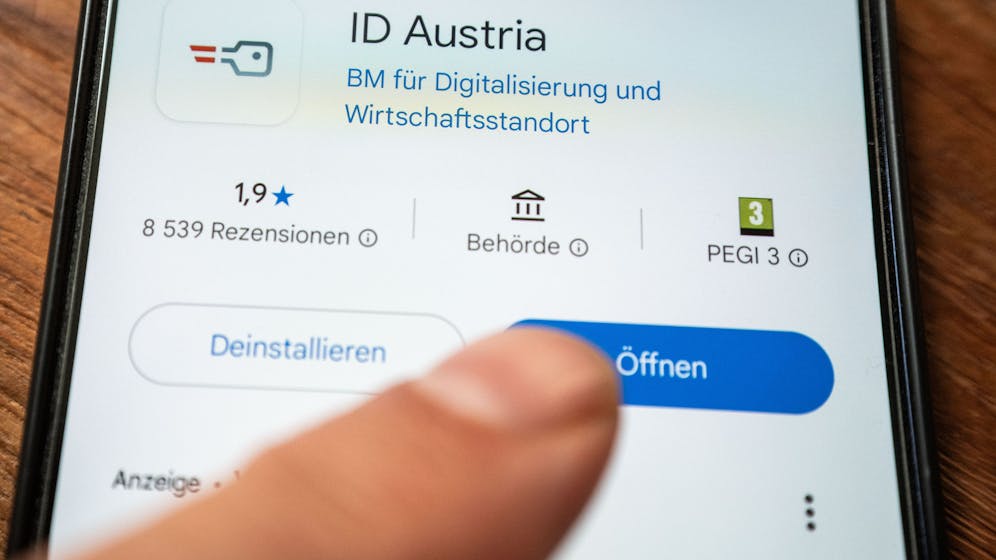
Let’s dissect a real example circulating right now. The SMS arrives from “ID-Austria” (spoofed sender ID). The message warns your certificate expires tomorrow and provides a link: id-austria-aktualisierung.at.gv-id.com. Looks official, right? That .gv-id.com suffix is the trap, it’s not the genuine gv.at domain.
Click the link, and you’re on a pixel-perfect clone of the real ID Austria login page. Enter your credentials, and the page “times out.” Within three minutes, your phone rings. The caller ID shows a Vienna number. A professional-sounding woman introduces herself as “Frau Müller from Oberbank security.” She knows your name, mentions the “failed login attempt”, and explains they need to verify your identity through a “secure remote session.”
She guides you to install AnyDesk “for verification purposes.” Once connected, she asks you to log into your online banking “to sync the security certificates.” And just like that, she has full access to everything.
Critical detail: Real Austrian banks will never ask you to install remote access software. Ever. This is the red flag that should send you hanging up immediately.
Red Flags That Scream “Betrug” (Fraud)
The Watchlist Internet, Austria’s official scam warning platform, has identified these specific warning signs:
- Unusual sender addresses: Official Austrian government domains end in
.gv.at. Anything else is fake. Period. - Artificial urgency: “24 hours until suspension” is a pressure tactic. Real Austrian authorities give you weeks, not hours.
- Unpersonalized greetings: “Sehr geehrter Kunde” (Dear Customer) instead of your actual name
- Follow-up phone calls: Legitimate institutions don’t call you within minutes of a digital action
- Remote software requests: Any mention of AnyDesk, TeamViewer, or similar tools is an instant scam indicator
But here’s the sneaky part: the phishing sites often include real security certificates (HTTPS) and copy legitimate security warnings word-for-word. One fake Oberbank page even included the bank’s current marketing slogan and footer links to the real Arbeiterkammer (Chamber of Labour) consumer protection pages.
What Austrian Fintech Users Must Do Right Now
If you receive any SMS about ID Austria, FinanzOnline, or banking security:
- Do not click links. Open your browser and manually type
id-austria.gv.atorfinanzonline.bmf.gv.at - Check certificate status directly in the official app, not through email or SMS links
- Enable two-factor authentication everywhere, especially on your brokerage and banking apps
- Save official phone numbers in your contacts. When “your bank” calls, hang up and call back using the number from their official website
If you’ve already clicked a link or installed software:
- Immediately change all passwords from a different device
- Contact your bank’s Sperrhotline (emergency lock line) to freeze accounts
- File a police report, yes, it’s a hassle, but it’s necessary for insurance claims
- Document everything: screenshots, phone numbers, times
The Cybercrime-Meldestelle (Cybercrime Reporting Office) at against-cybercrime@bmi.gv.at should be notified, but this doesn’t replace a formal police report.
The Bigger Picture: Why Austria Is a Target
Austria’s digital transformation has created a perfect target environment. We’re digitally advanced enough that most people use online banking and fintech apps, but the bureaucracy remains complex enough that official-sounding threats seem plausible. The mandatory ID Austria system, while secure when used correctly, creates a single point of failure that criminals can exploit.
Critics argue the five-year certificate renewal cycle is a structural security flaw. Every five years, hundreds of thousands of users must re-verify, creating predictable panic points. Smart criminals have simply added these dates to their calendars.
The uncomfortable truth: This isn’t just about individual vigilance. When navigating unexpected brokerage account freezes or financial emergencies, you need multiple financial institutions, not just one app. Diversifying your financial footprint across traditional banks and fintechs isn’t just smart investing, it’s survival.
Your Action Plan for the Next 48 Hours
Don’t wait for an SMS to test your readiness. Do this now:
- Verify your ID Austria certificate: Open the app, check the expiration date. If it’s within 90 days, renew it immediately through the official process
- Audit your SMS alerts: Log into your actual bank and brokerage accounts and check what communication preferences you have enabled
- Save the emergency numbers: Erste Bank’s Sperrhotline, BAWAG’s 24-hour line, Trade Republic’s support email, store them now
- Practice the pause: When you get any “urgent” financial message, force yourself to wait 10 minutes before acting. Brew some Mokka (mocha). Scammers rely on your panic, your calm is their kryptonite.
The Austrian financial system is remarkably secure, when you use it correctly. But in 2026, your biggest vulnerability isn’t weak encryption or bank failures. It’s that moment when your phone buzzes, your heart races, and you forget that in Austria, real bureaucracy moves at the speed of a municipal office on a Friday afternoon. Never at the speed of a threatening SMS.
Stay skeptical. Stay secure. And maybe turn off those SMS notifications entirely, your blood pressure will thank you.