
Why Your Sparkasse Savings Account Is Secretly Destroying Your Wealth
You’re sitting across from your Sparkasse (savings bank) advisor, sipping the obligatory watery coffee, when they lean forward with that concerned expression they’ve perfected in training. “Given the current market turbulence”, they murmur, “perhaps we should keep your €50,000 emergency fund in a Tagesgeld (daily money account) account. Just until things settle down.” You nod, because the Bild headline screaming about the Iran-Krieg (Iran war) and blocked oil shipments is still fresh in your mind. Meanwhile, the inflation rate just hit 2.7 percent in March, the highest in over two years, and your “safe” money is quietly evaporating.
This scene plays out in thousands of German branches every week, and it perfectly captures the bizarre paradox of German finance: one of the world’s most powerful economies, populated by people terrified of the very markets that built that prosperity.
The Media Panic Loop That’s Costing You Thousands
Let’s talk about that Merkur article warning about exploding energy prices and the Hormus-Risiko (Hormuz risk). You know the one, it’s got a photo of ships stacked up in the Persian Gulf and quotes experts predicting oil at $200 per barrel. The piece quotes Jörg Wiechmann from the Itzehoer Aktien Club saying inflation isn’t an accident but a recurring pattern that turns savers into losers. Yet the same article that warns about inflation also amplifies the fear that keeps you from protecting yourself against it.
German media has mastered this contradictory dance. One day they’re running headlines about the inflation paradox, how your wallet screams lies at the official 2.7% rate while your weekly REWE haul jumps from €47 to €56. The next day they’re publishing crisis narratives that make the stock market sound like a casino rigged to steal your retirement. This creates a psychological trap: you know your money is losing value, but the “responsible” choice feels like waiting for calmer waters.
The research backs this up. While 70 percent of private investors lose money due to cognitive errors, not market failures, German media continues to frame investing as dangerous speculation rather than necessary wealth preservation. You’ve been conditioned to treat market volatility as a threat instead of what it actually is: the price of admission for beating inflation.
Why Your Brain Is Your Worst Financial Enemy
Here’s where it gets uncomfortable. The hesitation isn’t just media manipulation, it’s hardwired into how humans process risk. Your brain is running on software designed for a world where losing your food supply meant death, not a temporary portfolio dip. This manifests in three devastating ways:
The Real Cost of Sitting on Cash
Let’s get specific about what this hesitation costs you. While your Sparkasse Tagesgeld account pays maybe 1.5% interest, inflation is running at 2.7%. That’s a 1.2% real loss every year. On €50,000, you’re losing €600 annually just to feel “safe.” Over a decade, that’s €6,000 evaporated, enough for a down payment on a small property in Leipzig.
But the real damage is worse. The perceived gap between official inflation and reality means your actual purchasing power is falling even faster. Your €3,100 netto (net) salary might look stable on paper, but when Nebenkosten (additional housing costs) spike by €90 monthly and your weekly grocery bill jumps 20%, you’re experiencing a financial mirage.
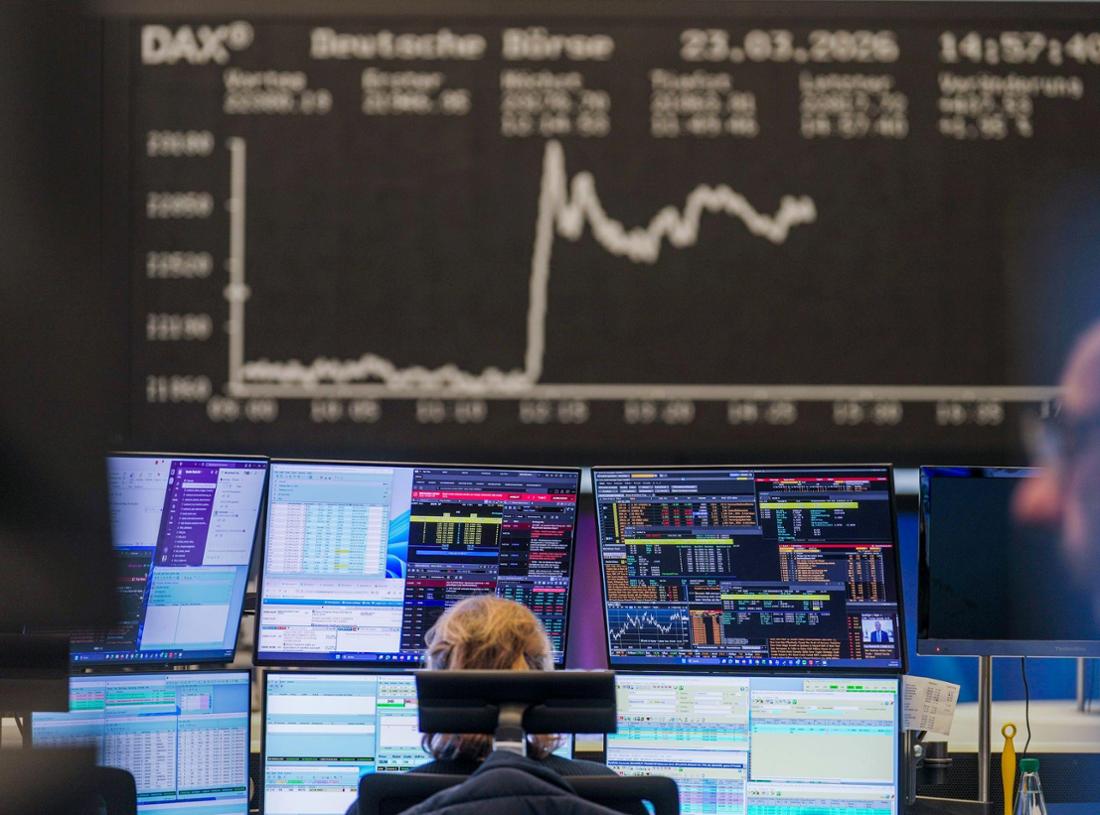
Meanwhile, the same media scaring you away from markets is reporting how DAX executives are pulling in nearly €19 million annually. They understand what you don’t: companies pass inflation costs to customers. As Jörg Wiechmann bluntly states, “A broadly diversified portfolio of international quality stocks was historically the best inflation protection.” The people running German industry aren’t hoarding cash in Sparkasse accounts, they’re invested.
Cultural Baggage That’s Gone Stale
Germany’s investment aversion has deep roots. Your grandparents lost everything in the war and hyperinflation. Your parents distrusted the Börsenspiel (stock market game) as capitalist gambling. This trauma got encoded into cultural DNA: real wealth means a paid-off house and a Bausparvertrag (building savings contract), not some abstract ETF.
This explains why Germans pour money into real estate while ignoring markets. The historical preference for property over stocks feels rational because it’s tangible. You can touch a wall. You can’t touch a DAX future. But this preference has become a liability as property prices detach from fundamentals and the state guts traditional retirement pillars.
The Riester-Rente (Riester pension) disaster perfectly illustrates this. Millions of Germans dutifully contributed to state-subsidized retirement accounts, only to discover opaque fees and anemic returns. This betrayal created deep distrust in traditional vehicles, but instead of learning to invest independently, many retreated further into cash and property.
The Modern Escape Routes You’re Ignoring
Here’s what makes this hesitation genuinely tragic: the barriers have never been lower. While you’re paralyzed by Bild headlines, modern platforms are dismantling every excuse:
- “It’s too expensive.” Trade Republic offers pension ETFs at 0.2% TER. That’s €20 annually on a €10,000 investment, less than your monthly Netflix subscription. The low-cost revolution has arrived, but you’re still paying your Sparkasse €50 a year for an account that loses money.
- “It’s too complicated.” Vanguard’s FTSE Global All-Cap gives you 7,000+ stocks in one ticker. No more picking winners. No more timing. Just buy the entire global economy and get on with your life. Yet confusion about providers keeps many Germans in analysis paralysis.
- “I don’t trust digital platforms.” Your Sparkasse app crashes weekly, but you’re worried about Trade Republic’s security? German banks are legally required to segregate client assets. Your ETF shares are yours even if the broker fails. The real risk isn’t platform collapse, it’s inflation erosion while you wait for some mythical “perfect” moment.
Breaking the Panic Cycle
So how do you escape this trap? Not with another “just invest monthly” lecture. You need a psychological reset:
Start with the inflation math. Calculate exactly how much purchasing power your cash position loses annually. Write it down. Stick it to your fridge. When you see “€600 evaporated” in black and white, the abstract fear of market volatility becomes concrete.
Reframe volatility as your friend. Those terrifying red days? They’re when shares go on sale. The Goldman Sachs recommendation to split your portfolio into three equal parts, innovation stocks, inflation-protected assets, and hedges, works because it removes the all-or-nothing terror. You don’t have to bet the farm, you just have to stop losing slowly.
Use the German Angst strategically. Your fear of scams is valid. So start with regulated, transparent products. Buy one share of a DAX ETF. Watch it for three months. Learn how it moves. Then add a global fund. The goal isn’t to become a day trader, it’s to stop being a guaranteed loser to inflation.
The media isn’t lying about crises. The Iran-Krieg is real. The Hormus-Risiko is real. Inflation is real. But here’s what they’re not emphasizing: cash is not safe. It’s a guaranteed loss. Every expert from BlackRock to Goldman Sachs to German fund managers agrees, diversified equity exposure isn’t optional if you want to preserve wealth.
Your Sparkasse advisor means well. They genuinely believe they’re protecting you. But they’re operating from a playbook written for a world that no longer exists, a world where savings accounts beat inflation and state pensions were secure. That world is gone.
The question isn’t whether to invest. It’s whether you can afford not to. And every month you spend paralyzed by headlines, another slice of your wealth dissolves into the ether, funding someone else’s DAX gains.
What’ll it be? Another year of “waiting for stability” while inflation munches through your reserves? Or one afternoon opening a depot and buying your first ETF share?
The markets will be turbulent tomorrow. They’ll be turbulent next year. That’s the point. And that’s exactly why you need to be in them.