

The Hidden Math of Swiss Lawsuits: When Legal Fees Eat Your Compensation

You’re lying in a Zurich emergency room with a concussion and a fresh scar across your cheekbone. The driver who doored you while you cycled down Badenerstrasse was clearly at fault. Your bike is toast. The insurance company calls: they’ll cover the bike replacement, but insist there is “no compensation for scars or injuries” in Switzerland. Your blood pressure spikes. Time to sue, right?
Hold that thought. Because that lawsuit might cost you CHF 5,000 to recover CHF 2,000, if you’re lucky.
The Swiss legal system doesn’t work like American courtroom dramas. You won’t get a six-figure payout for emotional distress. What you will get is a masterclass in procedural economics where the house, read: the insurance company, almost always wins. Let’s break down the real numbers behind the decision to sue in Switzerland, because the math rarely lies.
The Swiss Compensation Reality Check
First, let’s kill a dangerous myth: you cannot get rich from moderate injury lawsuits in Switzerland. Full stop. The Reddit threads are filled with disappointed expats who discover this the hard way. One cyclist with a facial scar and concussion learned that while his medical bills were covered through accident insurance, the concept of a “pain and suffering” jackpot doesn’t exist here.
Swiss law offers something called Integritätsentschädigung (compensation for loss of physical integrity), but it’s not the windfall Americans expect. For minor injuries, we’re talking hundreds, not thousands, of francs. The system prioritizes concrete financial losses: medical costs (covered by your mandatory Unfallversicherung, accident insurance), lost income, and direct expenses. Your scar? Unless it causes documented financial harm, like losing a modeling contract, it’s worth very little in court.
This is where the economic trap springs. Your potential recovery is small, but the costs to extract it are anything but.
The Real Cost of Your Day in Court
Let’s run the actual numbers for a typical moderate injury case in a Swiss cantonal court:
Legal Fees: Swiss lawyers typically charge CHF 200, 400 per hour. A simple case requires 10, 15 hours minimum: initial consultation, drafting the claim, correspondence, court appearance. That’s CHF 3,000, 6,000 before you even factor in the court’s own fees.
Court Costs: Swiss courts operate on a “loser pays” principle. If you lose, or even if you win but the court finds you partially at fault, you’ll cover a portion of the court’s administrative costs. These start around CHF 500 for small claims but escalate quickly with case complexity.
Expert Witnesses: Here’s where German cases reveal a brutal truth. One Landgericht Saarbrücken ruling showed how a private vehicle damage assessment costing €769 could be slashed to €450 because the expert’s fees exceeded “market rates.” The plaintiff ate the difference. In Swiss personal injury cases, you’ll need medical experts. Each costs CHF 1,500, 3,000. If the insurance company challenges the report’s validity, you might pay for a second opinion, or lose the claim for expert fees entirely.
The Premature Lawsuit Penalty: This is the killer. German case law (which influences Swiss procedural thinking) shows that filing before the insurance company’s review period expires makes you liable for all costs, even if they later admit liability. One motorcyclist filed a claim before the insurer’s four-to-six-week Prüffrist (review period) expired. Result: he paid every franc of court and legal fees despite winning an CHF 800 settlement.
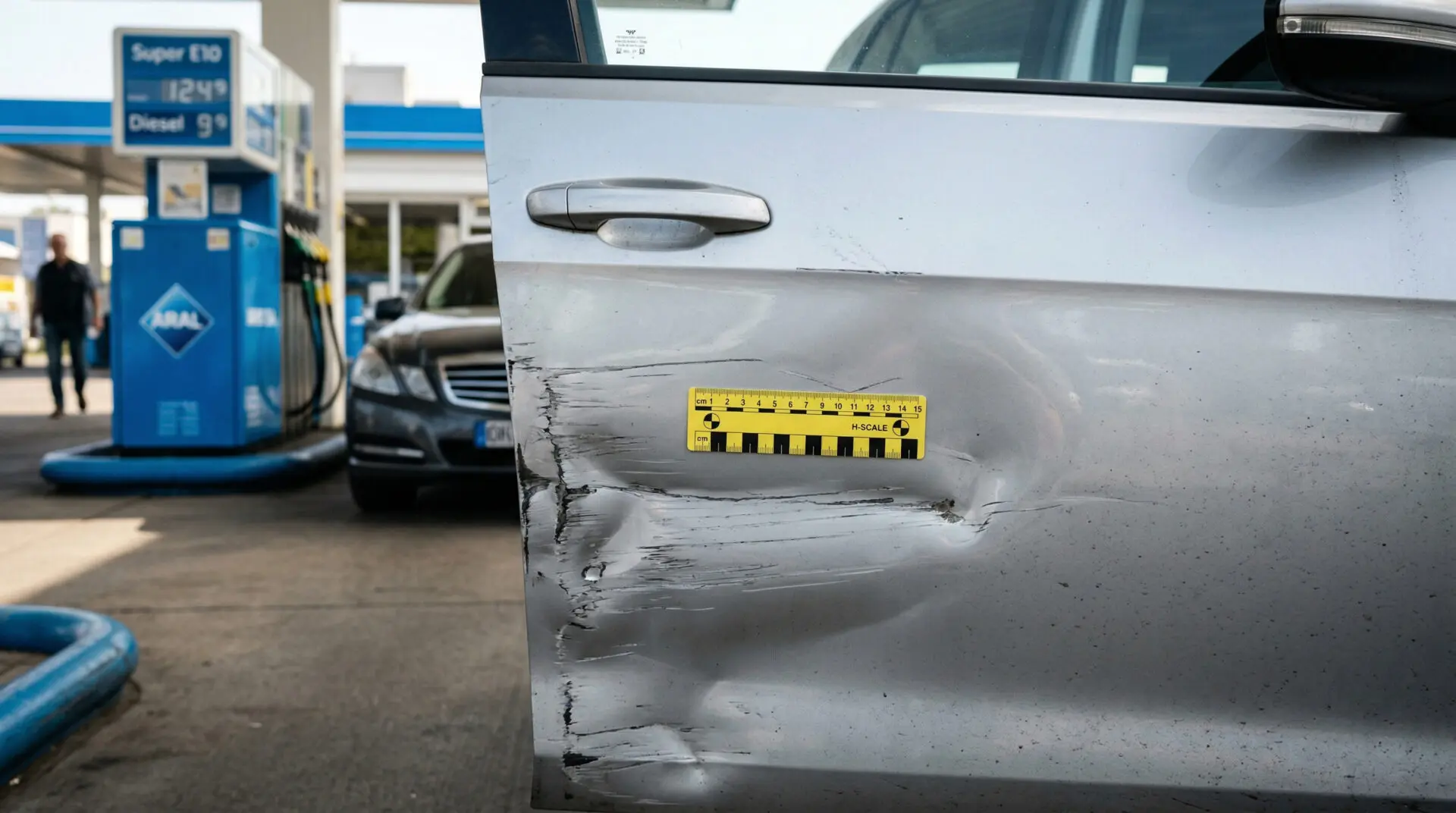
Documentation is everything. But even perfect photos won’t save you from procedural costs if you jump the gun.
The Prüffrist Trap: Why Patience Isn’t Just a Virtue, It’s a Financial Necessity
Swiss insurance law, like its German counterpart, grants liability insurers a Prüffrist of four to six weeks. This isn’t a suggestion, it’s a legal shield. The clock starts only when you submit a complete, specified claim with exact amounts. Not “I want compensation for my injuries”, but “I claim CHF 2,150 for medical co-pays, CHF 800 for bike replacement, and CHF 500 Integritätsentschädigung based on a 5% facial scar.”
File early, and you’ve just volunteered to fund the entire legal process. The insurer can simply say, “We were still reviewing”, and the court will nod along. You’ll be labeled the “provoking party” under the principle of Prozesskostenrisiko (process cost risk). Even if they eventually pay your damages, you’ll be lucky to cover your lawyer’s coffee bill.
Worse, the Salamitaktik (salami tactic) of sending documents piecemeal resets the clock. Each new medical certificate or repair quote restarts the Prüffrist. You must bundle everything, everything, into one comprehensive claim letter. One shot. One clock.
When Does Suing Actually Make Economic Sense?
Here’s the brutal truth: only when your provable damages exceed CHF 10,000 does litigation start making sense. Below that, you’re gambling.
-
Calculate Net Recovery Potential: Total damages minus legal fees (CHF 3,000 minimum), court costs (CHF 500+), and expert fees (CHF 1,500+). If the result is negative, walk away.
-
Assess Evidence Quality: Do you have ironclad proof of liability? A police report, witnesses, video? Swiss courts are conservative. “Probably their fault” loses.
-
Check Your Rechtsschutzversicherung: Legal protection insurance is common in Switzerland. If you have it, use it. They’ll cover fees and tell you if your case is viable. No insurance? Be extra cautious, hidden healthcare costs are just one example of how unexpected expenses can derail your finances.
-
Evaluate the Insurer’s Position: Did they formally deny liability or just delay? A denial triggers different cost rules. Delays require waiting out the Prüffrist.
-
Consider the Integritätsentschädigung Threshold: For minor injuries, this might be CHF 300, 800. If that’s your entire non-medical claim, litigation is financial suicide.
The Smarter Path: Alternative Dispute Resolution
Swiss courts expect you to try mediation first. It’s cheaper, faster, and costs are split. Many cantonal courts mandate it for claims under CHF 20,000. A mediated settlement of CHF 3,000 where you pay CHF 500 in fees beats a CHF 5,000 court victory where you net CHF 500.
Another angle: pressure the insurer with a perfected claim. Send that comprehensive, CHF-amount-specified letter. Set a clear payment deadline. If they miss it, then you have a stronger cost-recovery position. The German case law shows this works: insurers who receive complete documentation and still delay face tougher court scrutiny.
Your Decision Checklist
- Have I waited six weeks after sending a complete, specified claim? If no, stop.
- Are my damages provably over CHF 10,000? If no, reconsider.
- Do I have Rechtsschutzversicherung? If no, add CHF 3,000+ to your risk.
- Is the insurer formally denying liability or just slow? Slow means wait.
- Can I document every franc of my claim? Vague claims die in court.
- Am I emotionally ready to lose money for principle? Because that’s often the real cost.
Digital legal consultations can help assess viability before you commit real money.
The Bottom Line
The Swiss system isn’t designed to enrich injured parties, it’s designed to compensate direct losses efficiently. That cyclist with the facial scar? The smart move wasn’t suing. It was filing a perfected claim, waiting six weeks, then accepting the CHF 600 Integritätsentschädigung offer. Net gain: CHF 600. Alternative? Sue, spend CHF 4,000, win CHF 1,200, and net a CHF 2,800 loss.
Your scar will fade. The debt from a foolish lawsuit won’t.
The economics are relentless: Swiss litigation is a tool for clear-cut, high-value disputes, not moral victories. Treat it like a business decision, not therapy. Because in Switzerland, the only thing more painful than the injury is the bill from a premature day in court.