
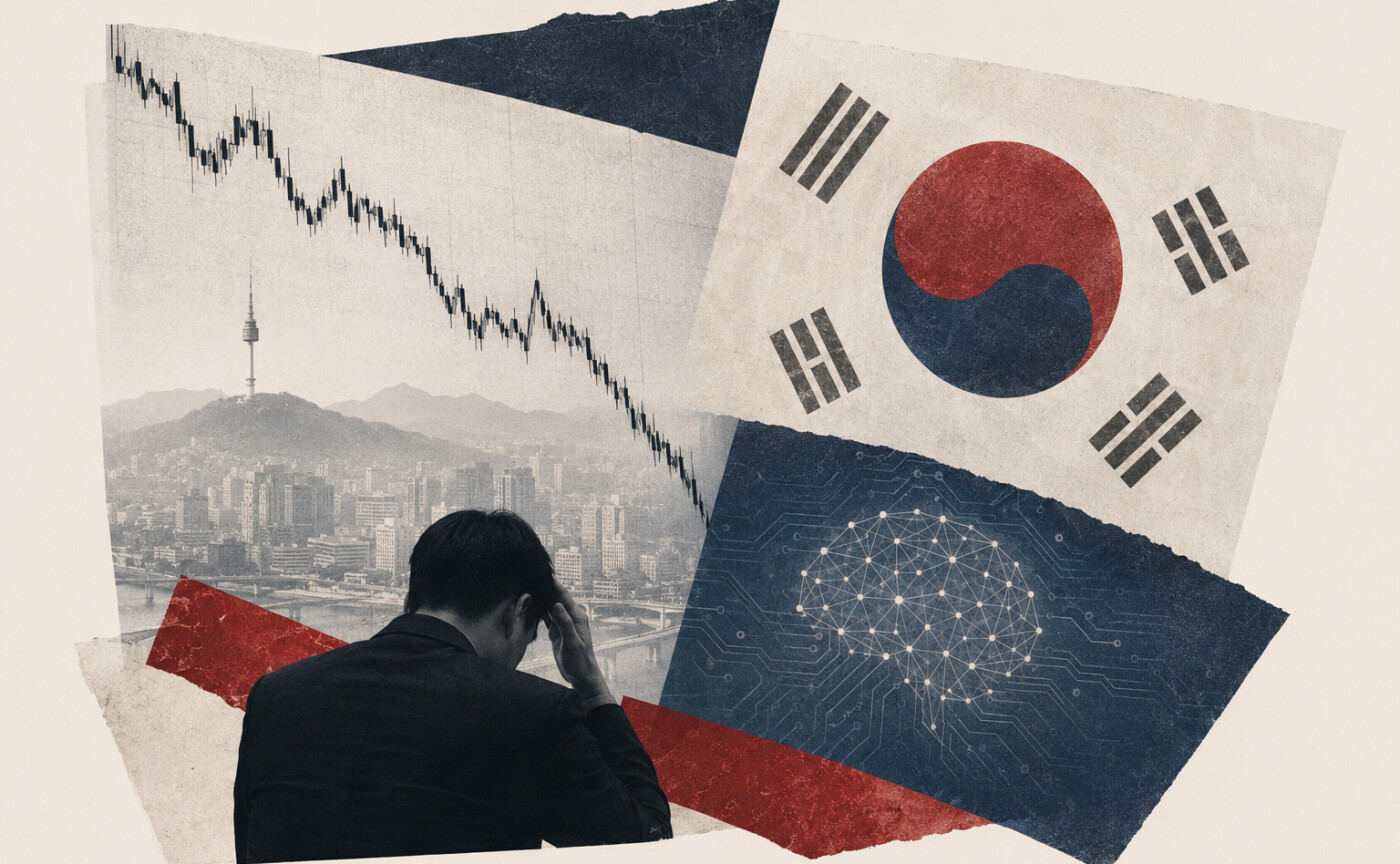
Imagine you’re a retail investor in Seoul. You’ve watched housing prices climb beyond reach. The social safety net feels thinner than a receipt. Your friends are making fortunes on two stocks, Samsung Electronics and SK Hynix, using a shiny new toy: leveraged ETFs on single stocks, legalized just two months ago. Everyone’s buying. The charts go up. Life feels good.
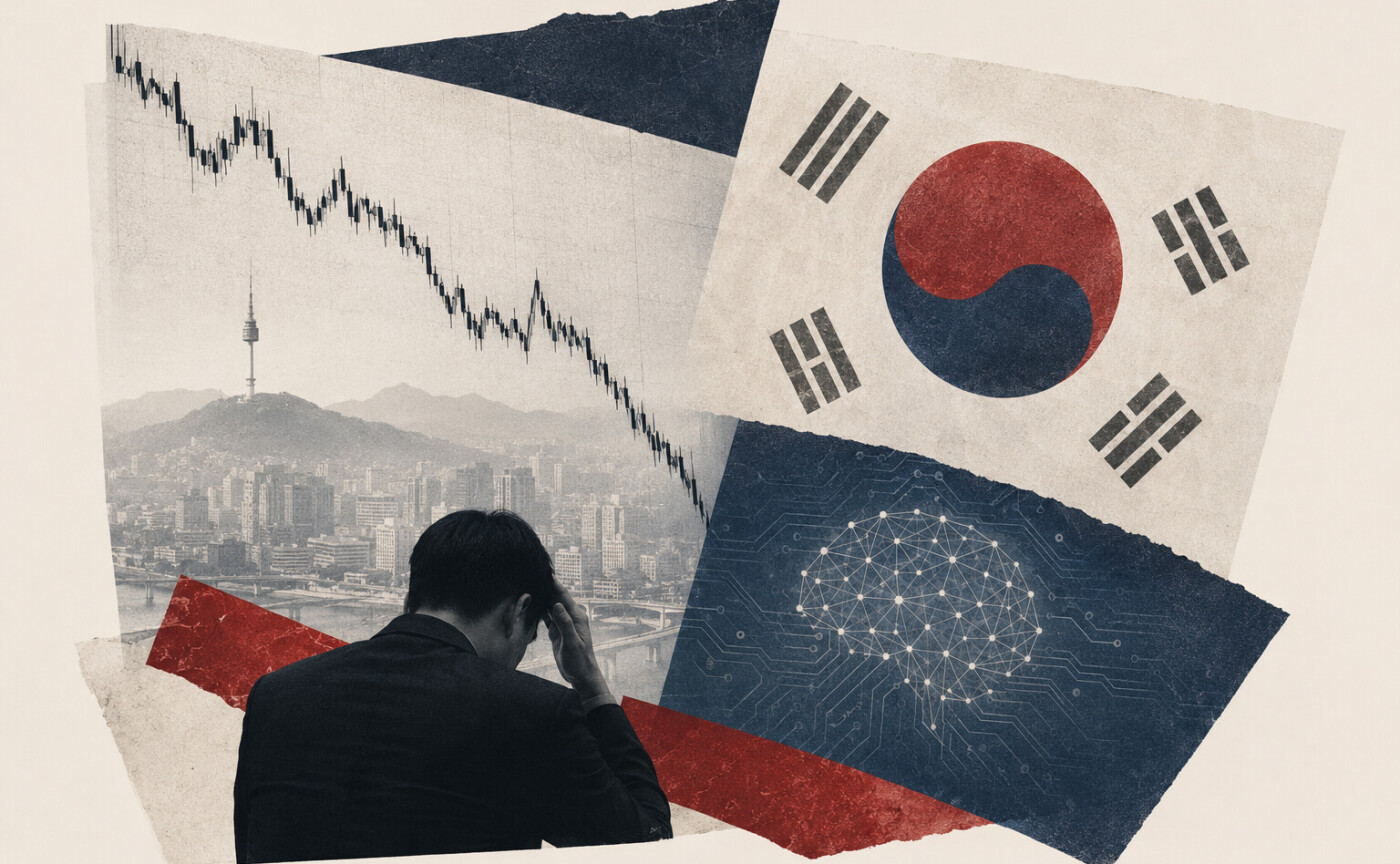
Then, in the span of two trading days, the Kospi (Korea Composite Stock Price Index) loses nearly 17%. Within a month, it’s down almost 40%. About 2 trillion USD in market value evaporates. Margin calls cascade like dominoes. And who’s on the other side of those trades? Western institutional investors, systematically taking profits while Korean retail, known locally as “the ants”, gets obliterated.
This isn’t just a South Korean story. It’s a masterclass in what happens when retail investors, driven by desperation and a lack of financial education, arm themselves with leverage and walk onto a field where institutions play a different game entirely.
Two-Thirds of the Market: The Korean Anomaly
In the US and Europe, retail investors typically account for 15% to 30% of trading volume. In South Korea, that number has been closer to two-thirds. That’s not a typo. We’re talking about a market where the little guy doesn’t just participate, they dominate.
This didn’t happen by accident. Cultural factors play a massive role. Housing in Seoul is brutally expensive, and the unique Jeonse (Jeonse) rental system, where tenants deposit 50-75% of a property’s value as a lump sum rather than paying monthly rent, traps enormous amounts of household capital. When property became unaffordable, that capital needed somewhere to go. The stock market said “welcome.”
Combine that with a social system that’s far less forgiving than Germany’s Sozialstaat (welfare state), and you get a population willing to take extreme risks. As one observer noted, many Korean retail investors view the market like lottery tickets: “go big or go home.” And they went big.
The May 2026 Tinderbox
In May 2026, South Korean regulators lit the match. They legalized leveraged ETFs on single stocks. Suddenly, investors could amplify their bets on Samsung and SK Hynix by factors of 2x, 3x, or more.
The response was, to put it mildly, insane. These new products quickly captured 40% of the entire Korean ETF trading volume. That’s not a healthy market discovering price efficiency. That’s a casino with slot machines running at full capacity.
The concentration was staggering. Two stocks, Samsung Electronics and SK Hynix, both riding the AI chip boom, became the entire playbook. Investors weren’t diversifying. They were doubling down on a single narrative.
The Crash: A Perfect Chain Reaction
The trigger came in late July 2026. Disappointing numbers from SK Hynix and growing doubts about whether the massive AI infrastructure spending would ever pay off sent the chip sector into a tailspin.
Here’s where the leverage physics kicked in:
- SK Hynix and Samsung shares start falling.
- Leveraged ETFs magnify those losses. A 10% drop in the underlying stock becomes a 20% or 30% drop in the ETF.
- Retail investors who bought on margin face margin calls. They must sell or deposit more capital.
- Most don’t have the capital. So they sell. Into a falling market.
- Those sales push prices lower, triggering more margin calls.
- The cycle accelerates until the market is in a freefall.
On July 28, the Kospi dropped 10.84% in a single day. The next day, another 5.98%. Circuit breakers kicked in. Up to 1.9 trillion EUR in market value vanished at the peak. According to the Handelsblatt, these leveraged ETFs acted as “brand accelerants” (brand accelerants) for the decline.
Where the Money Actually Went
Here’s the part that keeps me up at night. The money didn’t disappear. It changed hands.
Western institutional investors, pension funds, hedge funds, asset managers, had been watching this bubble inflate. They knew exactly what would happen when sentiment turned. They had the data, the risk models, and the liquidity to act.
As the Korean ants scrambled to meet margin calls, institutions stepped in to buy at distressed prices. They sold into the rallies that preceded the crash. They hedged their positions. And when the music stopped, they were left holding the chairs while Korean retail investors were left holding the bags.
This isn’t speculation. The data confirms it. Foreign investors sold a net 18.5 trillion Won (about 13 billion USD) of Korean stocks in July, perfectly timing their exit before the worst of the fall. They saw what was coming and got out. Meanwhile, many of the risks of speculative bubbles driven by retail investor enthusiasm became a cruel reality on the ground in Seoul.
The Human Cost
This isn’t an abstract financial story. Reports have emerged of Korean retail investors taking their own lives after being wiped out. In front of the parliament building in Seoul, citizens placed around 40 funeral wreaths to protest the government’s handling of the leveraged ETF crisis.
Finance Minister Koo Yun-cheol apologized in parliament for approving these products “without sufficient review.” The apology rings hollow for the families of those who lost everything.
The underlying social driver is deeply troubling. Korea has one of the lowest birth rates in the world. Young people have given up on traditional paths to prosperity, the housing market is closed, good jobs are scarce, and the social safety net is minimal. For many, the stock market wasn’t an investment strategy, it was the only perceived path to upward mobility. When that path turned into a trap, the consequences were devastating.
Regulatory Whack-a-Mole
South Korea’s response was swift but arguably too late. On July 29, the government announced a cap: retail investors can now only put 20% of their total assets into leveraged single-stock ETFs. They also raised trading costs and announced new simulation requirements for investors before they can use real money.
A minimum deposit of 30 million Won (about 18,100 EUR) was introduced. New product launches were suspended. The government promised round-the-clock market monitoring.
But here’s the problem: identical leveraged products are still available on exchanges in New York and Hong Kong. As critics have pointed out, domestic regulations can’t contain a global market. If Korean retail investors still want to gamble, they’ll find a way, through foreign brokerages or offshore accounts.
This is reminiscent of how authorities struggle to regulate other forms of speculative behavior. The end of frictionless, low-cost trading that fueled retail participation makes these regulatory interventions even more complex.
What German Investors Should Learn
You might be reading this from Berlin, Munich, or Hamburg, thinking: “That’s Korea. Our market is different.”
You’re partially right. German retail investors account for a much smaller share of trading volume. The BaFin (Federal Financial Supervisory Authority) has tighter rules on leverage products. The social safety net means fewer people are gambling their rent money.
But the same dynamics are at play, just in milder form.
1. Leverage is a One-Way Street to Ruin
The Heiliger Amumbo (Holy Amumbo) jokes on German finance forums are funny until the margin call hits. Leverage amplifies gains and losses equally. The math doesn’t care about your conviction in the AI thesis. When prices fall 40% in a month, a 2x leveraged ETF loses 64%. Recovering from that requires a 177% gain. Good luck.
2. Institutions Are Not Your Friends
They’re not trying to help you get rich. They’re trying to extract profit from market inefficiencies. When retail investors pile into a single sector with leverage, institutions see a gift. They will sell into your buying frenzy and buy during your forced liquidation. That’s not malice. That’s the job.
3. Concentration is the Silent Killer
Korean retail investors bet everything on two semiconductor stocks. German investors do the same thing, just with different names. Look at your Depot (portfolio) right now. How much of it is in SAP, Siemens, and a few DAX-heavy ETFs tracking the same sectors? The concentration risk in retail portfolios and unintended exposure to dominant tech equities is a global phenomenon, not just a Korean one.
4. The Social Underpinnings Matter
The Korean crash wasn’t just about bad trading. It was about a generation that felt it had no other option. When people view the market as their only escape from economic stagnation, they make desperate decisions. This applies everywhere, including Germany, where real wages have stagnated for parts of the population and housing in major cities has become unaffordable.
The Aftermath: What Comes Next?
South Korea’s Kospi has lost roughly 2 trillion USD in market value from its peak. Samsung and SK Hynix reported combined profits of about 100 billion USD in the same month the index suffered its worst monthly loss ever. The disconnect between fundamentals and price movement is staggering.
Foreign investors have returned to buying, picking up bargains at prices that make no sense for a country producing the world’s most advanced memory chips. Meanwhile, the Korean ants nurse their wounds, and the government scrambles to piece together a regulatory framework that should have existed before the match was lit.
The broader lesson for the long-term sustainability of passive index investing in volatile markets is being stress-tested in real-time. If heavily leveraged retail speculation can crater a market this fast, what happens when a similar dynamic spreads to a larger, more interconnected global market?
The Final Score
Let’s be blunt about this: the Korean ants got played. They were the prey in a system designed by and for larger predators. The institutions won. They always do when the chips are down and leverage is in play.
The tragedy isn’t just financial, it’s structural. The Korean government approved these products without educating the public about their risks. The financial literacy gap is a policy failure that costs lives. The banks lent money to people who couldn’t afford the downside. And when the crash came, those same banks collected their collateral and moved on.
For the rest of us watching from Germany, the takeaway is uncomfortable but necessary: if you’re playing with leverage, you’re not investing. You’re gambling. And in a casino owned by institutions, the house always wins. The only question is how you react to the markets, do you understand what you’re buying, or are you just following the crowd into a trap?
The real lesson from South Korea’s July 2026 crash isn’t about Korean exceptionalism. It’s about universal human nature, leverage physics, and the cold reality that in financial markets, someone always pays for the party. Make sure it isn’t you.