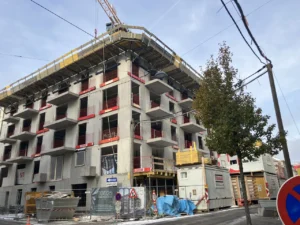
Would you do it again? That’s the question burning through German finance forums right now, and it’s not just theoretical. A recent discussion among Immobilieninvestoren (real estate investors) reveals a market grappling with serious buyer’s remorse, while simultaneously spotting opportunities in the wreckage of the Zinsschock (interest rate shock).
The timing matters. If you bought a Wohnung (apartment) in Munich in 2021, you’re probably staring at your Nebenkosten (ancillary costs) spreadsheet right now wondering if you’ve made a terrible mistake. But if you’re sitting on cash, watching sellers squirm at 3.26% financing rates, you might be thinking this is your moment.
The Regret Camp: Trapped in the Low-Rate Frenzy
Let’s be honest, many who bought during the Niedrigzinsphase (low-interest phase) got caught up in a collective delusion. Prices in Cologne hit factors of 30 times annual rent. Frankfurt was worse. Berlin? Don’t even ask. The Reddit sentiment is clear: investors who jumped in at the peak feel like they paid a premium for a front-row seat to a market correction.
The numbers back up their pain. After a decade of upward movement, purchase prices for condominiums dropped around 10% in real terms in 2023. That’s not a crash, it’s a correction that still leaves prices elevated, but it’s enough to make you feel like the dumb money. One investor put it bluntly: liquidity has dried up, and while prices have fallen, it’s mostly among sellers who must sell, not those who want to. The stubborn ones still list at 2021 prices, creating a Mexican standoff of unrealistic expectations.
What’s eating at these investors isn’t just paper losses. It’s the operational reality of German property ownership. Your Mieteinnahmen (rental income) gets devoured by Instandhaltung (maintenance), Verwaltung (management fees), and the ever-present threat of Mietausfälle (rental defaults). Add in Grunderwerbsteuer (real estate transfer tax) of 3.5-6.5% depending on your Bundesland (federal state), and you need serious appreciation just to break even.
The kicker? Many financed at what they thought were “low” rates, only to watch the ECB deposit rate climb to 2.0% while their property value stagnates. That leverage that looked so attractive in 2020 now feels like a chokehold.
The Renewal Camp: High Rates, Low Competition, Real Deals
Here’s where the narrative flips. Experienced investors argue the current Hochzinsphase (high-interest phase) is actually more attractive than the low-rate environment. Why? Because Zinsen hoch, Kaufpreise tief (high rates, low prices) is a better equation than the reverse.
The logic is brutal and simple. When rates were at 1%, every Hansel und Grätzel wanted in. You’d show up to a Besichtigung (viewing) with 30 other potential buyers. Prices hit Faktor 30, 35, even 40 in hot markets. Now? The herd has thinned. Sellers who actually need to move are negotiable. In Cologne, some investors report buying at factors under 20, right-rheinisch (east of the Rhine) even at 16. That’s not a 30% discount, it’s a fundamental shift in bargaining power.
One seasoned investor frames it perfectly: low rates are counterproductive because they attract incompetent competition. High rates separate the tourists from the professionals. If you can afford to buy now, you face very little Konkurrenz and can negotiate accordingly.
The math works differently too. Yes, you’re paying 3.26% instead of 1%, but you’re buying at a lower base. On a €300,000 property, a 20% price reduction saves you €60,000, enough to cover years of higher interest payments. And if rates eventually fall, you’re sitting on a property bought at a discount with potential for refinancing gains.
The German Specifics: Why This Market Is Different
You can’t have this conversation without acknowledging Germany’s bizarre relationship with property. With a 47.3% homeownership rate, Germany is EU Schlusslicht (tail-ender). Romanians own at 95%. Even the French, with their love of renting, outpace Germany.
Why? Start with Kaufnebenkosten (purchase ancillary costs) of 10-15% of the purchase price. Add Eigenkapitalbedarf (equity requirements) of 20-30%. Layer on Mieterschutz (tenant protection) so strong it makes landlords feel like guests in their own properties.
The result is a nation that would rather save than borrow, 42% of Germans prefer saving for big purchases over taking on Schulden (debt).
This cultural aversion to leverage means German investors approach property differently. The typical German buyer isn’t flipping condos, they’re building a decades-long Vermögensaufbau (wealth accumulation) strategy. When that strategy hits a speed bump, the emotional impact is heavier.
The Alternative Revolution: 11% Returns Without the Headache
Perhaps the most telling sign of sentiment shift is the rise of platforms promising Immobilienrendite (real estate returns) without Eigentum (ownership). Companies like Mintos and Indemo are attracting capital from investors who’ve had enough of toilets and tenant drama.
Mintos offers 8-9.5% annual returns with monthly cash flow from rental income, starting at just €50. No Verwaltung, no Instandhaltung, no 3:00 AM calls about burst pipes. Indemo goes further, targeting 21.8% returns by investing in distressed Spanish property loans bought at 30-40% discounts. These aren’t REITs, they’re direct participation in specific assets, opened up to retail investors.
This is the real renewal story. It’s not about whether to buy property, it’s about whether property as we knew it is still the right vehicle. When you can get 11% returns without dealing with the Finanzamt (Tax Office) over your Nebenkostenabrechnung (ancillary cost statement), suddenly being a traditional landlord feels like choosing to churn butter by hand.
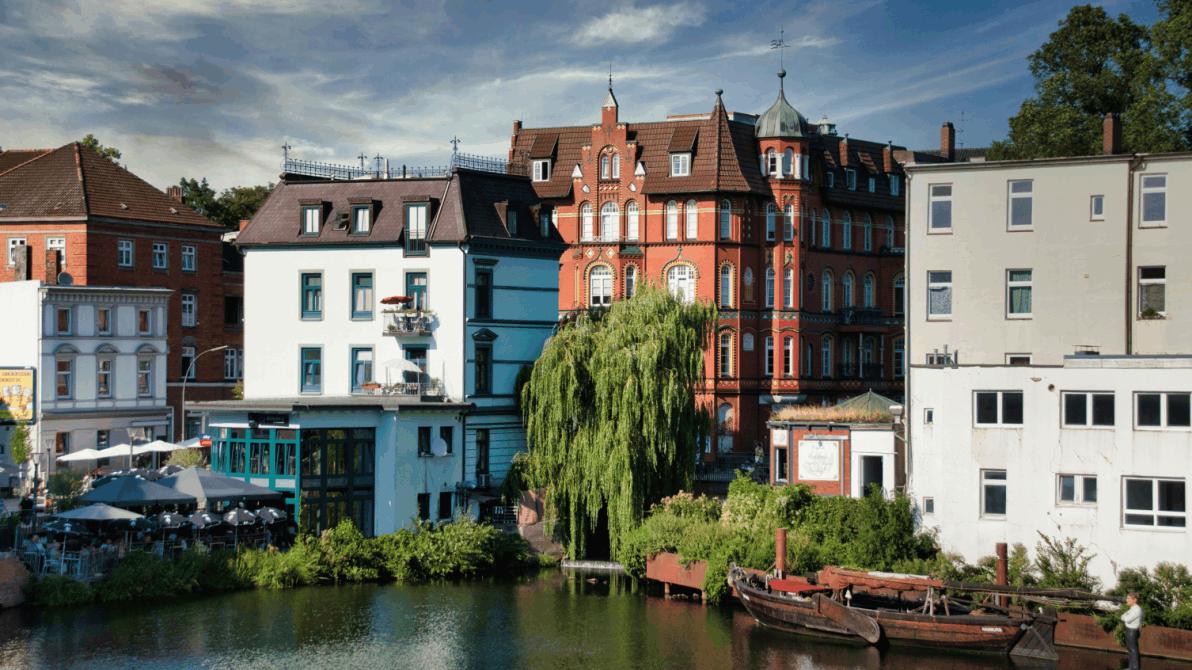
Regional Reality Checks: Munich vs. Leipzig vs. Berlin
The national averages lie. The real story is in the Postleitzahlen (postal codes).
Munich
At €9,000+ per square meter, Munich remains absurd. Even with a 1% price increase, you’re looking at paying Manhattan prices for a city where the biggest excitement is a new S-Bahn line. The math only works if you believe Munich will become its own sovereign state with printing presses.
Leipzig
The HWWI (Hamburg Institute of International Economics) predicts Leipzig will see the best salary growth and youth inflow of any major German city. Prices are still reasonable, yields are viable, and the city has momentum. This is where the renewal crowd is hunting.
Berlin
Stabilizing but weird. The ImmoScout24 WohnBarometer shows purchase prices up 5.4% year-over-year, but Mietdynamik (rental dynamics) is flattening. Berlin remains a tenant’s market disguised as a landlord’s opportunity. You buy for speculation, not cash flow.
East Germany
The Vogtlandkreis in Saxony: €900/m². Greiz, Thuringia: €944/m². At these prices, you could buy a whole floor for what a parking space costs in Munich. But you’ll also be the only person under 45 in the district.
The Verdict: Would I Do It Again?
Here’s the uncomfortable truth: the question is wrong. It’s not about whether to invest in German real estate, it’s about how and where and why.
If you’re buying a single 1-Zimmerwohnung (one-room apartment) in a trendy Berlin neighborhood hoping for 5% yield, you’re doing it wrong. The numbers don’t work, the competition is fierce, and you’ll spend more time dealing with the Mieterbund (tenant association) than collecting rent.
But if you’re targeting a multifamily house (MFH) in a stable Mittelstadt (medium-sized city) at Faktor 16, with 20% Eigenkapital and a 15-year horizon? That’s a different equation entirely. The key is buying when others can’t, not when others won’t.
The real renewal isn’t in traditional ownership, it’s in the fragmentation of the asset class. Some will build portfolios of physical properties in overlooked regions. Others will allocate to digital platforms offering exposure without operational headaches. The smart money is doing both.
For those nursing regret: stop calculating what you could have done differently and start calculating exit strategies. The reality of passive rental income rarely matches the dream, and moving assets from property to ETFs might be your best move.
For those seeing opportunity: do the actual math. Use the Stiftung Warentest calculator. Factor in every cost, every risk, every regulatory headache. Then make offers that would insult the seller’s grandmother. You’re not being cheap, you’re being realistic in a market that’s finally facing reality.
The German property market isn’t broken. It’s just grown up. The question isn’t whether you’d do it again. It’s whether you’re willing to play by the new rules.