
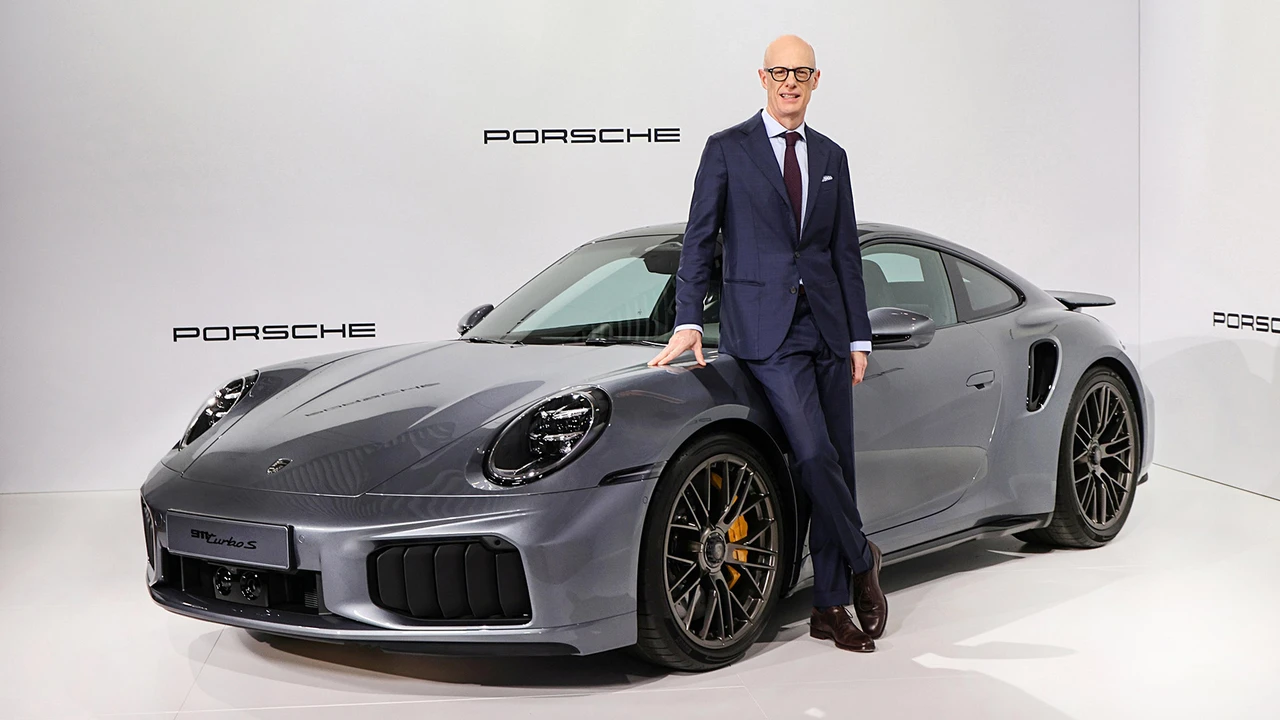
The German automaker everyone wants to be isn’t doing so hot right now. If you’ve been watching the headlines, you know the drill by now: a flurry of “Krisenstimmung” (crisis mood) announcements from Wolfsburg to Stuttgart. But when Porsche, the crown jewel of German engineering and profit margins, announces it’s swinging the axe again, you know the industry isn’t just coughing, it’s choking.
This isn’t just sad news for the 41,000 people working at Porsche AG. If you have a portfolio with a DAX-heavy ETF, German bonds, or specifically invest in the automotive sector, this directly affects your bottom line. Let’s peel back the layers on this job cut announcement, figure out what it actually means for the stock, and decide if this is a buying opportunity or a flag to run from.
The 4,000-Job Question: What’s Actually Happening?
You’ve likely seen the figures, up to 4,000 additional jobs on the line. But the devil is in the details. According to reports from Die Zeit and Handelsblatt, this is not your usual “leaner and meaner” corporate jargon. The new CEO, Michael Leiters, is apparently championing a mantra that should terrify middle management: “die Treppe von oben kehren” (sweep the stairs from the top).
The focus this time isn’t on the assembly line workers stamping out 911s. It’s on the management and Verwaltung (administration) structures that ballooned over the last decade. The Entwicklungsstandort Weissach (Weissach development center), the brain of the company, is facing a significant review of its capacity.
For investors, this is a classic paradox. When a luxury goods company starts slashing R&D and management, it usually means one of two things:
1. They are saving the company from bankruptcy (bad news).
2. They are stripping fat to protect margins during a downturn (potentially good news for the stock).
So, which is it for Porsche?
The Numbers Behind the Pain
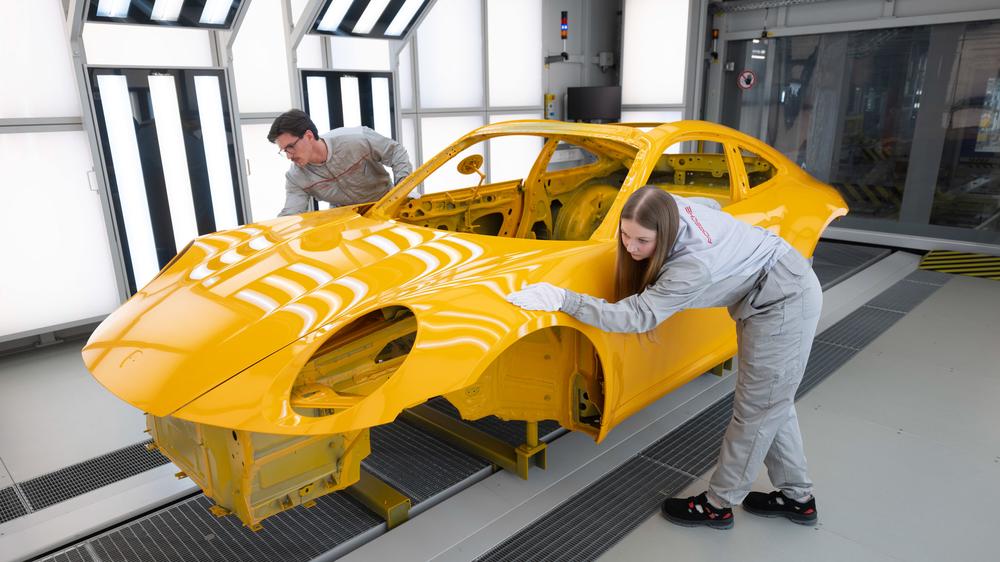
To understand the scope, look at the cumulative damage. Porsche had already announced 1,900 job cuts in the Stuttgart region via natural attrition. Another 2,000 temporary contracts have ended. They closed three subsidiaries, impacting 500 more employees. On top of that, they cut a Vorstand (management board) position from eight to seven.
Stack that against the fact that the company still employs over 41,000 people globally. We aren’t seeing the “70,000 job cuts” scope that VW is facing, but strike for strike, Porsche is taking a heavier relative blow to its administrative class.
The Electric Shock: Why Porsche is Struggling
Let’s be brutally honest. The conventional narrative that “Germany missed the boat on E-Mobilität (E-Mobility)” is true for the mass market, but for Porsche, the problem is reversed.
As one seasoned observer on the Finanzen subreddit put it: “Porsche was awkward and sexy. Now it beeps when you go 2 km/h over the limit.”
This hits the nail on the head. Porsche’s brand value was never efficiency or environmental friendliness. It was raw emotion, the sound of the flat-six engine, and analog feedback. The transition to electric has theoretically solved a problem no one had. The Taycan is a brilliant engineering feat, but it competes in a space where a Tesla Plaid or a Chinese Nio can offer insane acceleration for half the price.
The result? A collapse in Verbrenner (combustion engine) sales without a corresponding surge in EV uptake. The revenue hole is massive.
Is the Stock a Buy, a Sell, or a “Hold Your Breath”?
The market is sending mixed signals. The stock surged by over 6% in the week following the latest job cut rumors. That is the distinct sound of investors applauding cost-cutting rather than crying over lost revenue.
Here is the reality check from the analyst desks:
– JPMorgan: Overweight with a target of €50.
– Bernstein: Market Perform with a target of €45.
– Current Price: Around €46.
The stock has been cut in half from its all-time high of over €90 shortly after the IPO in 2022. For a long-term investor, the valuation looks tempting. For a short-term trader, the volatility is a playground.
But the big picture question remains: Can Porsche exist as a luxury brand if its products lose their identity in the electric soup? The next major unlock for investors is the “Zukunftspaket” (Future Package) scheduled for release at the end of July. If this package convincingly shows how they will maintain the “magic” of the brand without the sound of a roaring engine, the stock could double. If it feels like a spreadsheet of cuts, the slide might continue.
Beyond Stuttgart: The Rot in the Whole Engine Block
You can’t talk about Porsche without looking at the parent company, Volkswagen Group, and the wider German economy.
The ICE age is over. The German model of high-cost labor, massive energy bills, and complex bureaucracy is cracking. The Steuervergünstigungen für Dienstwagen belasten den Staatshaushalt und beeinflussen indirekt die Kostenstruktur der Autoindustrie (Tax subsidies for company cars burden the state budget and indirectly influence the cost structure of the automotive industry) is a perfect example of a system that worked for the old world but makes less sense in the new one.
We are seeing the cracks spread to the entire ecosystem:
– Volkswagen: Planning to cut up to 100,000 jobs. Four German plants are at risk.
– Mercedes-Benz: Scrapping bonuses and pushing for a 40-hour work week.
– Bosch (Supplier): The Betriebsrat (Works Council) is calling for a government task force to save the industry.
– Audi: Up to 15,000 jobs on the line at Neckarsulm.
Auto expert Ferdinand Dudenhöffer summed it up starkly: “The next five years will be cruel. We haven’t hit rock bottom yet.”
For investors, this means the risk is not isolated to Porsche. If you are holding a German small-cap ETF tied to the Zulieferer (suppliers), you are sitting on a powder keg.
Conclusion: The Three Scenarios for Porsche Investors
The next 12 months for the Porsche AG (WKN: PAG911) stock will likely be decided by your time horizon and risk tolerance.
Scenario A: The Phoenix (Good)
- The shift to electric attracts a new, younger buyer who values digital luxury.
- The job cuts successfully flatten the cost structure.
- The stock reclaims €60+ by the end of 2027.
- Play: Buy the dip on major drops.
Scenario B: The Stuck in Neutral (Mixed)
- The company executes cost cuts but struggles to grow revenue.
- Margins stabilize, but the growth narrative is dead.
- The stock trades in a range (€40 – €50).
- Play: Wait for the Q2 earnings release on July 29th to see the margins.
Scenario C: The Detroit (Bad)
- China’s economy takes longer to recover.
- Brands like BYD and Xiaomi capture the high-end EV market.
- The emotional pull of the brand fades.
- Play: Avoid or short.
Right now, the market is betting on Scenario A and B. The job cuts are painful for Stuttgart-based workers, but for the equity holder, they are a necessary evil. Watch the end of July closely. If management can’t convince the market they have a viable future beyond “fewer people, more beeps”, then the current rally will look like a dead cat bounce.