
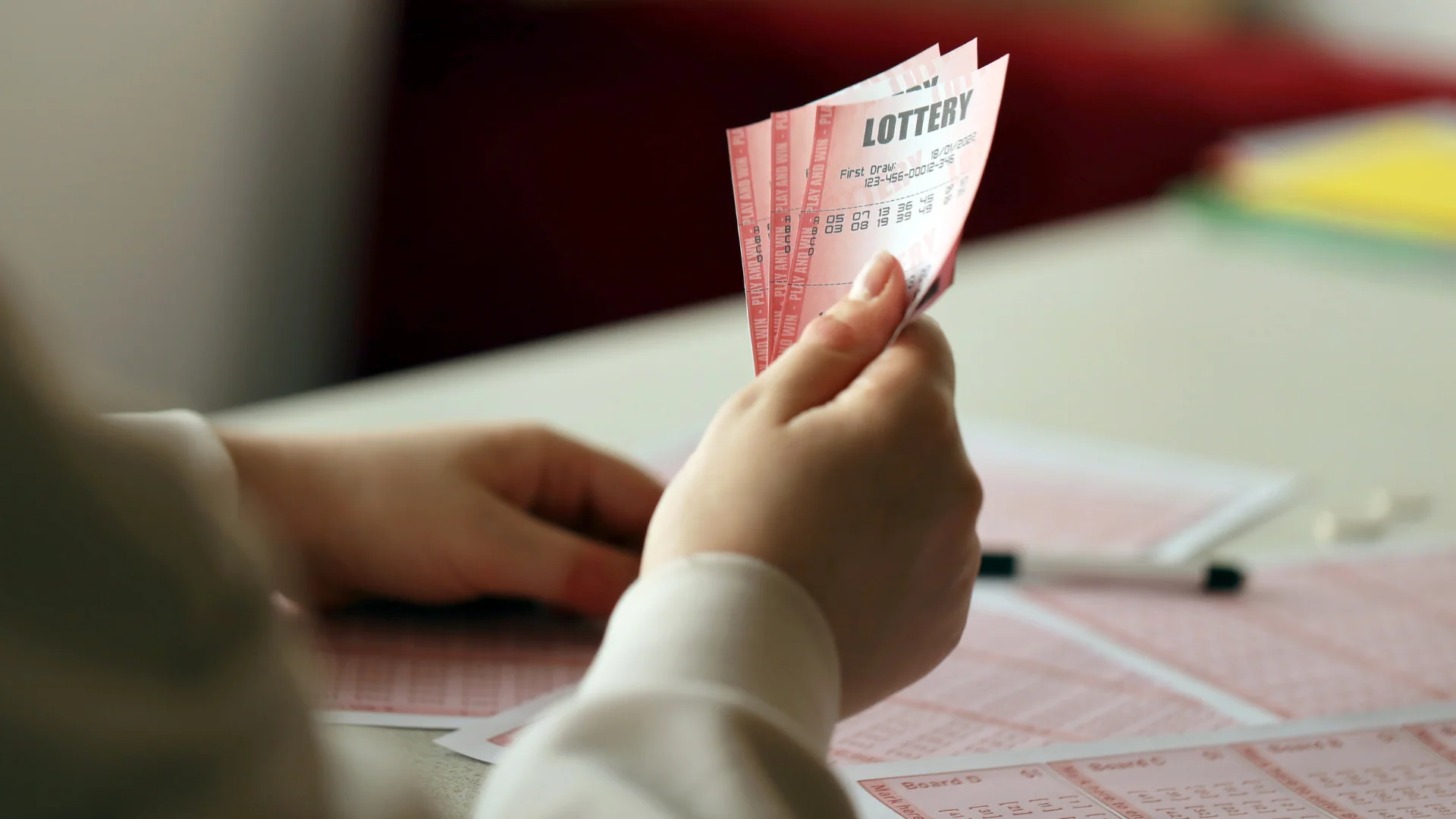
It sounds absurd. It sounds like exactly the kind of thing personal finance gurus would scoff at. But here’s the uncomfortable question I want to tackle: In a country where 40 percent of the population has no meaningful savings, is buying a €10 lotto ticket actually a rational investment in the only currency many people have left, hope?
The finance bros will hate this. Let’s dig in anyway.
The Price of Entry into the Investment Game
Let me introduce you to a scenario that’s playing out across Germany right now. A low-income worker, let’s call him Markus, takes home minimum wage. After rent, utilities, food, and the Deutschlandticket (Germany’s national public transit pass), there’s maybe €50 left at the end of the month. The financial advice industry tells Markus to start an ETF-Sparplan (ETF savings plan) with €10 a month. Ten years later, he’d have… roughly €1,500, assuming modest returns. That’s not nothing. But it’s also not exactly a life raft.
Meanwhile, rent prices keep climbing. The Mietpreisbremse (rent brake) is being challenged in courts, and the gap between what people earn and what housing costs keeps widening.
When Markus puts that same €10 into Lotto (the German lottery), something different happens. For the duration of that ticket, he’s not trapped in a system that’s relentlessly squeezing him. He’s just a few numbers away from never having to check his bank balance again.
Is that delusion? Or is it a survival mechanism?
The Real Value Isn’t in the Odds
Let’s get the math out of the way, because it’s brutal. The probability of winning the German lottery jackpot, 6 correct numbers plus the superzahl (bonus number), is 1 in 140 million. To put that in perspective, imagine driving from Berlin to Monaco, a distance of roughly 1,400 kilometers. Somewhere along that route, there’s a single one-centimeter line painted on the asphalt. You’re driving blindfolded and must toss a coin out the window. For it to land exactly on that line… that’s your chance of winning Lotto.
But here’s what the pure math misses: Nobody is buying the probability of winning. They’re buying the certainty of a few days of possibility.
People pay for purely psychological experiences all the time. They pay €15 for a cinema ticket and get two hours of escape. They pay for therapy, for meditation apps, for a glass of wine after a brutal shift. The German word for this is “Seelenfrieden” (peace of mind). And as one commenter on a popular finance forum put it: spending €10 for a month of dreaming is cheaper than most people’s daily coffee and cigarette budget.
For someone who can never participate in the traditional investment game, Lotto offers something ETFs can’t: the chance to escape the system rather than slowly grind inside it.
Why the System Pushes People Toward Hope Over Strategy
The uncomfortable truth is that poverty in Germany isn’t just about income. It’s about the feeling of having no future. Bettina Kohlrausch pointed out in Die Zeit that social position means more than the monthly bank statement, the sense of status loss and lack of control can be more damaging than the material deprivation itself.
When Markus looks at his options, here’s what he sees:
- A €10 monthly ETF investment won’t change his life trajectory
- Government pension projections (Rentenlücke) suggest he’ll be working well past 67
- Housing costs are eating a growing share of his income
- Every economic forecast says the cost of living will keep rising
Now consider the Lotto alternative. For 10 euros, Markus gets:
- A concrete vision of financial freedom (even if statistically impossible)
- A conversation starter with friends about what he’d do with the winnings
- A reason to check something with excitement rather than dread
- The feeling that he’s not completely locked out of wealth
This isn’t rational in the traditional economic sense. But it’s deeply human. And when the Armutsquote (poverty rate) hits 16.1 percent, the highest since reunification, we need to ask why our standard advice fails the very people who need it most.
The Shadow Side: When Hope Becomes A Trap
I’m not here to defend Lotto as a financial strategy. Let me be very clear about that. The danger is real, and it’s not theoretical. Around 4.6 million people in Germany face “erhebliche materielle Entbehrung” (significant material deprivation), they can’t afford basics like new clothes or a week’s vacation. For that group, Lotto isn’t a harmless escape. It can become a dangerous hope tax.
The line between “buying a few days of possibility” and “gambling addiction” is thinner than you’d think. The original Reddit poster who sparked this debate set a strict self-imposed limit of €10 per month, acknowledging the risk of addiction. That’s the right approach, but even that requires a level of self-awareness and discipline that the most vulnerable people often lack.
Here’s the most important rule: Never base real financial decisions on lottery winnings. Don’t take on debt expecting to pay it off with a jackpot. Don’t skip rent to buy tickets. Lotto should be an entertainment budget line, not a retirement plan.
What Wealthy People Get That Poor People Don’t
There’s a painful irony in the financial advice industry that tells low-income people Lotto is foolish while simultaneously selling them products with fees that guarantee poor returns. The real difference between classes in Germany isn’t access to Lotto, it’s access to meaningful investment opportunities.
Let me show you what I mean using some insights on how cash and investment habits shape wealth:
- Wealthy Germans have access to financial advisors, tax optimization strategies, and inherited assets
- They can afford to tie up money in ETFs and real estate with 10-to-30-year horizons
- They’re not one late payment away from losing their housing
- They can ride out market volatility without panic
When you’re living paycheck to paycheck, the system isn’t just discouraging investment, it’s preventing it. The opportunity cost of not investing in the stock market while watching others build wealth is a documented psychological trigger for financial despair.
For someone at the bottom, Lotto offers a mathematically irrational but emotionally necessary counterweight to a system that tells them daily: “You are locked out.”
Is There a Better €10 Purchase?
Here’s where I break with pure sympathy and get practical. The issue isn’t that Markus wants hope. The issue is that German society provides him so few legitimate pathways to create it.
Yes, €10 in an ETF-Sparplan (ETF savings plan) won’t make you a millionaire. But if Markus has any spare income, even €10 a month, there’s a smarter hierarchy of uses:
- First, build a €1,000 emergency buffer (Notgroschen). This is the highest-returns asset you can own. It’s the difference between a crisis and a catastrophe.
- Second, cut fees. If you have any old insurance policies, bank accounts, or contracts, checking for cheaper alternatives is a guaranteed return on effort.
- Third, consider a small ETF allocation and treat it as education, not just investment. Every euro you put in is a stake in the system, a reason to understand markets better.
- Fourth, invest in skills. I know this sounds like a LinkedIn meme, but a 50-euro course in a practical skill (Excel, basic bookkeeping, a trade certification) has a far higher expected return than Lotto.
But here’s my closing thought for the finance purists who’ve been scrolling with increasing annoyance: When you’ve done all that, if you still have €10 a month left and Markus gets genuine psychological relief from dreaming about becoming a millionaire, that’s a consumption choice, like a movie subscription. And for 9 euros less than a single Döner visit, it might be the cheapest effective mental health support the system offers.
The Real Scandal Isn’t the Lottery
The real scandal, underneath all this debate about Lotto, is that Germany’s social system has left 40 percent of the population without meaningful savings while housing costs explode. A society that gives its citizens the choice between “hopeless grind” and “statistically impossible escape” has failed them. Calling Markus’s Lotto habit irrational is technically correct, ignorantly so.
The German banking system operates with the same efficiency as a Deutsche Bahn train, usually impeccable, until there’s construction on the line. And right now, there’s a lot of construction on the line for low-income citizens trying to build wealth.
So what do we do? We stop treating this as a character flaw of the poor and start treating it as an indicator of systemic failure. The cash trap that keeps people out of investing isn’t just about misallocation, it’s about the fundamental absence of on-ramps for anyone not starting with a comfortable cushion.
Meanwhile, Markus will probably keep buying his €10 ticket. He knows the odds. He’s not delusional. He’s making the most rational choice available to him in a society that’s priced him out of every other dream.
And honestly? I can’t bring myself to blame him for it.