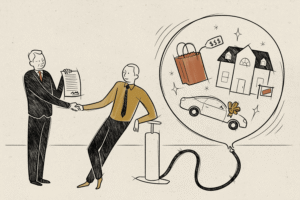
You’re sitting in your Berlin flat, staring at your bank account. €4,500 net landed this month. Not bad. Yet somehow, you’re still counting days until the next paycheck. That €1,200 Warmmiete (warm rent) seemed reasonable when you signed the lease. The €89 gym membership felt like self-care. The €45 weekly organic delivery? A necessity for your health. This is lifestyle inflation, and it’s eating your wealth alive.
The German banking system operates with the same efficiency as a Deutsche Bahn train, usually impeccable, until there’s construction on the line. Your salary progression follows the same pattern: predictable, reliable, and suddenly derailed by expenses you didn’t see coming. High earners across Germany face a peculiar problem: the more they make, the less they keep. But a growing cohort is fighting back with behavioral strategies that look almost pathologically frugal on paper.
The High-Income Trap No One Talks About
Here’s what your financial advisor won’t say: earning €80,000 in Munich today leaves you with roughly €48,000 after taxes and social contributions. That number drops further when you factor in the 2026 social security hike that just made it worse. The real pain isn’t in the deductions, it’s in what happens next.
Many international residents report waiting weeks for banking appointments in major German cities, despite Germany’s reputation for efficiency. But the true waiting game happens in your own head. You wait for permission to spend. You wait for the next salary bump to justify the bigger apartment. You wait until you’re “comfortable” to start investing seriously. This waiting is lifestyle inflation’s secret weapon.
The prevailing sentiment among high earners is that German bureaucracy ranks among the most confusing systems they’ve encountered. But the internal bureaucracy of your own spending habits? That’s the real nightmare. One software engineer in Stuttgart described it perfectly: “I work to afford things I can’t use because I’m always at work.”.
The Japanese Method Taking Over German Kitchen Tables

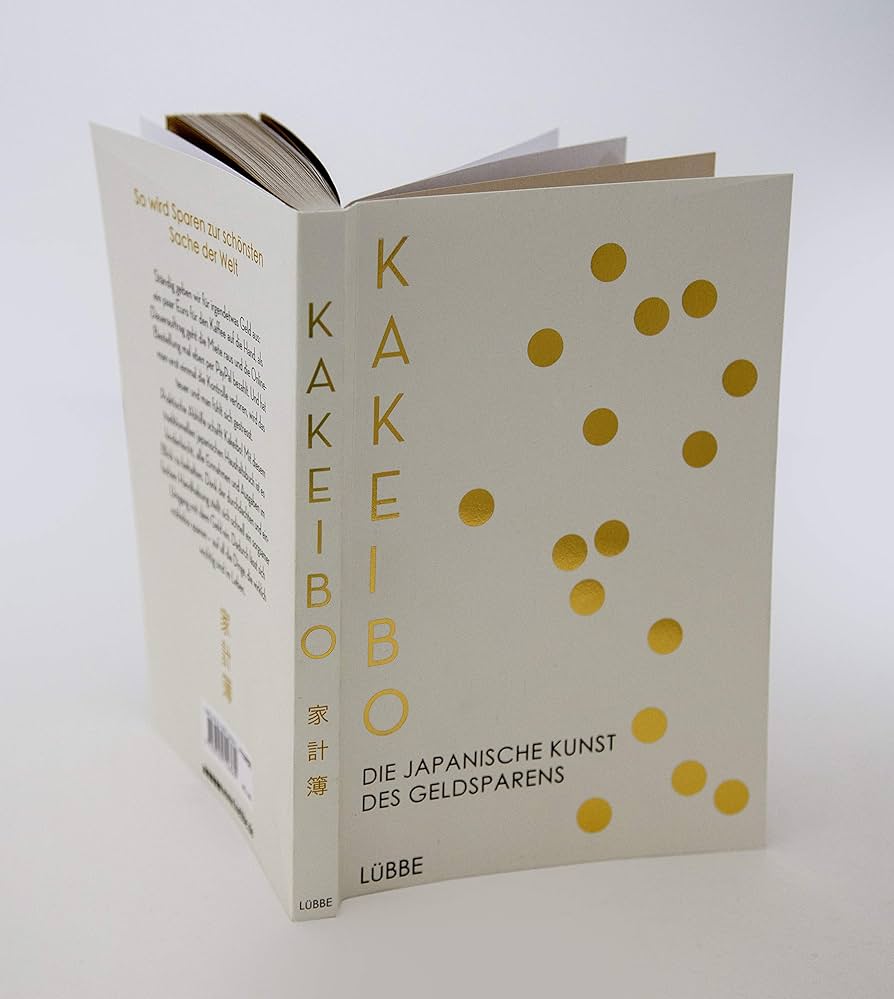
Enter Kakeibo (household ledger), a century-old Japanese method that’s spreading through German expat communities like wildfire. Created by Hani Motoko, Japan’s first female journalist, this isn’t another app or complex spreadsheet. It’s pen, paper, and brutal honesty.
The method works because it forces you to write down every single expense, yes, even that €3.50 Döner at 2 AM, by hand. Neurological research shows this physical act triggers different brain regions than digital tracking. You can’t lie to yourself with a pen.
Here’s how it works in practice:
- Calculate your actual monthly Gehalt (salary) after fixed deductions
- Set a savings target (start with 20%, not 50%)
- Divide spending into four categories: existenzielle Ausgaben (essential expenses), Freizeit und Kultur (leisure), Extras (non-essentials), and unvorhergesehene Ausgaben (emergencies)
- Track everything manually, no exceptions
Many newcomers express frustration, finding the Berlin rental market nearly impossible to navigate without local contacts. But Kakeibo makes you realize you’re spending €200 monthly on “convenience” that brings no actual convenience.
Mindset Over Money: The Philosophy of Enough
The most successful high-earning savers in Germany share one trait: they’ve killed the consumption impulse at its root. As one Frankfurt consultant put it, “We buy things we don’t need with money we don’t have to impress people we don’t like.” This quote, often misattributed to Mark Twain but actually from journalist Robert Quillen, hits differently when your net worth is on the line.
This financial expectation often confuses immigrants, with many calling it the most challenging adjustment to German economic life. The pressure to “fit in” through consumption is intense. Your colleagues have the new Audi. Your neighbor renovated their balcony. The Instagram algorithm shows you Copenhagen design furniture daily.
But here’s the counterintuitive truth: the less you own, the freer you feel. A software developer in Hamburg discovered this accidentally. “I moved into a 45-square-meter apartment in Sternschanze. Suddenly, every purchase required three considerations: where will I store it, when will I use it, and can I borrow it instead?” Her savings rate jumped from 15% to 40% without any income increase.
German-Specific Weapons Against Lifestyle Creep
The Sparkasse savings account might be secretly destroying your wealth through inflation, but German financial institutions offer powerful tools if you know where to look.
Separate Konten (accounts) for psychological warfare: Open a Girokonto (checking account) for fixed costs, a second for variable spending, and a third for investments. Automate transfers on payday. When your “fun money” account hits zero, you’re done. No credit cards to bridge the gap, German banks make those surprisingly hard to get anyway.
The Kleinanzeigen (classified ads) lifestyle: Before buying anything over €50, check eBay Kleinanzeigen. Not for the discount, but for the reality check. Seeing 47 listings for barely-used pasta makers cures the sourdough starter fantasy fast. This circular economy approach also appeals to environmental consciousness, a powerful motivator in Germany.
Housing as the ultimate lever: Evaluate rising fixed costs like property carefully. That €300,000 apartment in Leipzig looks affordable until you calculate the Nebenkosten (additional costs) and decades of interest. Many high earners intentionally rent small, even when they can afford more. As one Munich product manager explained, “The smallest sufficient apartment is actual luxury because it minimizes life admin.”.
When Your Partner Treats the Sparkasse Like a Security Blanket
Lifestyle inflation becomes relationship kryptonite when partners have different risk tolerances. You’re ready to dump €40,000 from your Sparkasse into ETFs, they want to keep it “safe” in a Tagesgeldkonto (daily interest account) earning 0.3%.
Managing shared spending behaviors in relationships requires more than separate accounts, it demands shared vocabulary. The Kakeibo method works brilliantly here because it’s neutral. The numbers speak, not opinions. “We overspent our Freizeit budget by €180 this month” starts a better conversation than “You spend too much on concerts.”.
The Math Your Employer Hopes You Won’t Do
Understanding purchasing power decay over time reveals the true cost of lifestyle inflation. That €60,000 salary from 2020? It’s worth €45,000 now. Your 5% annual raise doesn’t compensate for 7% inflation plus lifestyle creep.
Calculate your real disposable income after taxes, then track what percentage goes to fixed costs. If it’s over 50%, you’re trapped. The goal is to keep fixed costs at 30-40% of net income, regardless of salary. This means saying no to the €2,200 Altbau (old building) apartment in Prenzlauer Berg even when your boss lives there.
The 35% Rule and Other Radical Benchmarks
The Kakeibo method claims you can save 35% of your Gehalt without extreme deprivation. High earners who’ve mastered this share common habits:
- They question every subscription: That €9.99 Spotify, €7.99 Netflix, €12 Readly, €29 gym app? That’s €600 annually for digital services you use 40% of the time.
- They delay gratification systematically: Want the €1,200 e-bike? Wait 30 days. Still want it? Check Kleinanzeigen. Still want it? Calculate how many hours you worked to afford it. Most desires dissolve by step two.
- They treat savings like taxes: Non-negotiable, automatic, and taken off the top. Before the Warmmiete, before the organic delivery, before the gym.
The Final Reckoning
Your salary is not your wealth. Your spending is not your identity. The most powerful financial move you can make in Germany isn’t earning more, it’s wanting less.
Start tonight. Take a notebook. Write down every expense from memory. The gaps will horrify you. Then implement one Kakeibo category for a month. Just one. Most people discover they’re spending €150-300 monthly on “Extras” they can’t even remember.
The Japanese method isn’t magic. It’s a mirror. And in a country where efficiency is religion, nothing is more efficient than spending money only on what genuinely improves your life. Everything else is just lifestyle inflation wearing a convincing costume.
Your future self, the one who retired at 50 to a garden in Portugal, will thank you for being slightly weird today. The Deutsche Bahn might be delayed, but your wealth building doesn’t have to be.